Bank of England rate rises likely, Huw Pill signals
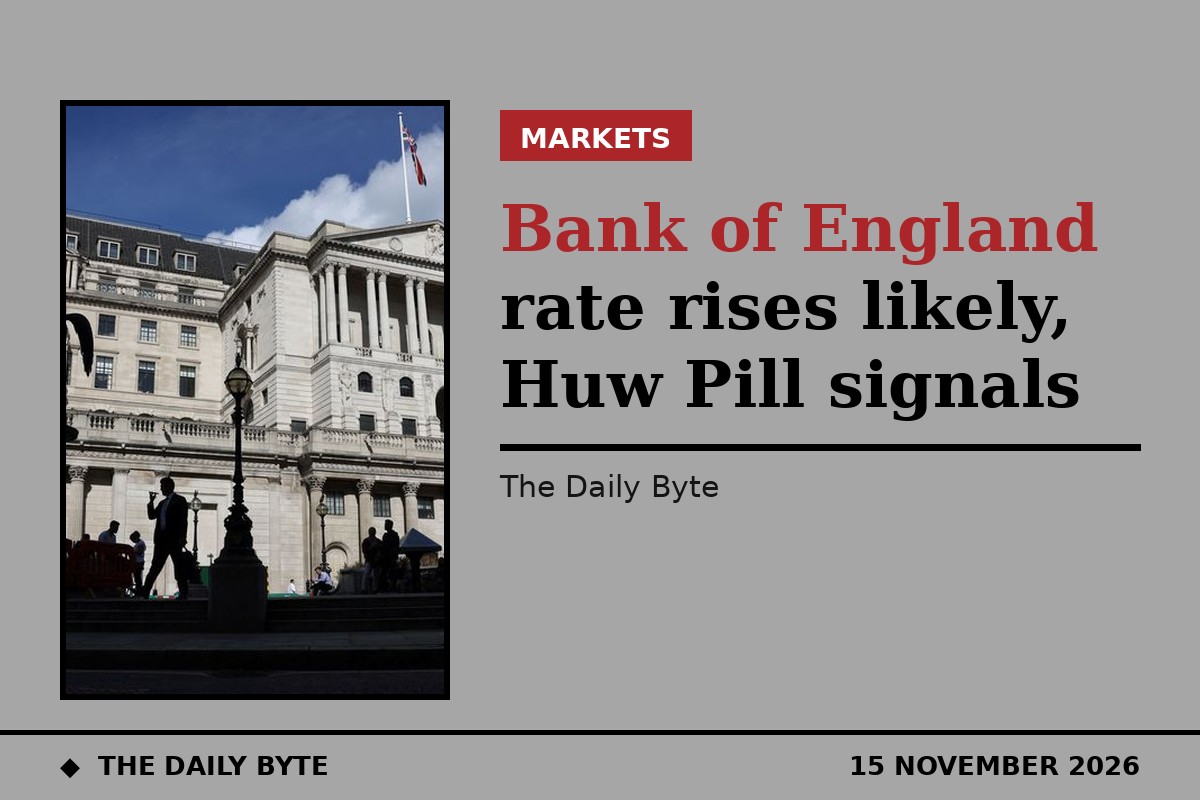
The Bank of England will probably need to raise interest rates again next month and further in 2027 to bring inflation back under control, its chief economist, Huw Pill, has said.
Pill told the Financial Times in an interview published on Saturday that this month's increase in Bank Rate, from 3.75% to 4%, was a "significant step" towards getting monetary policy into a better place, but that "we have further to go".
"My view would be we will see evidence that motivates further rises," Pill said, adding that the Bank would do "what is necessary to get inflation back to 2% through time".
December meeting in focus
Pill's remarks point to another quarter-point rise when the Bank's Monetary Policy Committee meets on 17 December, and to further increases next year. The Bank raised rates on 5 November in its first increase since August 2023, by a vote of eight to one. Catherine Mann, an external member of the committee, wanted a larger half-point rise.
The chief economist's warning was echoed by fellow rate-setter Megan Greene, who said on Saturday that it was better to act proactively now to get on top of inflation than to take a more cautious approach and risk significant second-round effects, in which higher energy costs feed into wages and wider prices.
Financial markets are now betting on a further rise in December followed by two or possibly three more quarter-point moves in 2027, which would take Bank Rate close to 5%. Reuters reported that markets currently price in about 90 basis points of tightening by the end of 2027.
Inflation heading towards 5%
The Bank's concern is driven by energy prices. UK consumer price inflation stood at 3.5% in September, well above the Bank's 2% target, and the Bank's November forecasts see it rising to around 5% by the middle of next year, pushed up by high oil and gas prices linked to the war in the Middle East.
Pill said he put a very low probability on an end to the conflict and a fall in energy prices, a view the Financial Times read as a signal that he is set to vote for another quarter-point increase in December.
Not everyone agrees on the timing. A Reuters poll of economists taken between 11 and 13 November found that 64 of 65 expected Bank Rate to stay at 4% in December, with February the most common expectation for the next increase. The Bank's own November projections showed a market-implied rate path reaching about 4.9% in 2027, although the Bank stressed that market pricing is not a commitment by policymakers.
What it means for borrowers
Further rises would mean higher borrowing costs for households with variable-rate mortgages and for businesses taking on new loans, while savers could see better returns on deposits. The Bank has been clear that its decisions are taken meeting by meeting, and the December vote will depend on fresh evidence on inflation, wages and business pricing.
Pill also signalled that he would not seek a third term as the Bank's chief economist when his current term ends in September 2027.


