Bank of Japan tipped for December rate hike
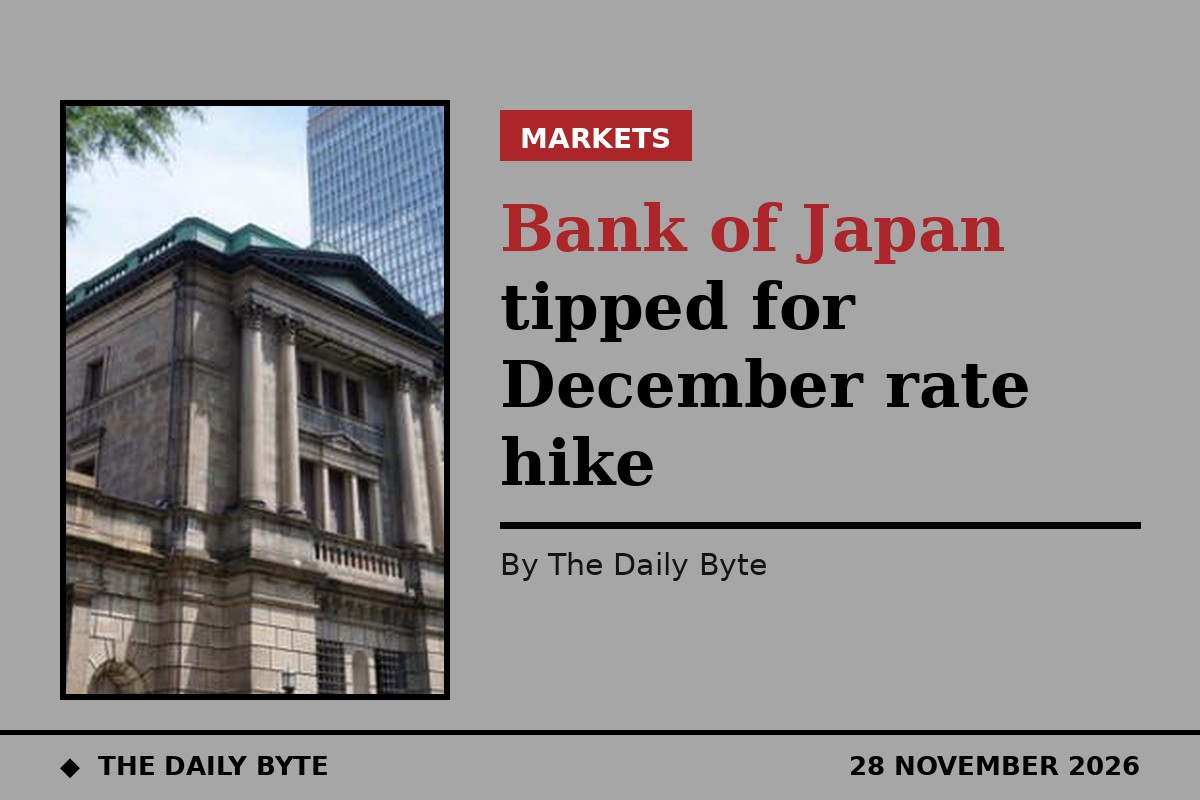
The Bank of Japan is expected to raise interest rates for the third time this year at its December meeting, according to a majority of economists in a Reuters poll, in what would be the first year since 1989 in which the central bank has tightened three times. In the survey of 71 economists conducted between 11 and 18 November, 61 of them, or 86 per cent, expected the overnight call rate to rise by 25 basis points to 1.50 per cent at the meeting on 17 and 18 December, three months after the bank's last increase.
The poll, published on 19 November, also pointed to further tightening in early 2027. Nearly 60 per cent of economists expected the policy rate to rise another 25 basis points to 1.75 per cent by the end of March, three months earlier than forecast in an October poll. Among those asked where rates would stop, 48 per cent put the terminal rate at 1.75 per cent, while an equal share expected it to reach 2 per cent or higher.
Governor Kazuo Ueda told parliament on 19 November that the central bank should continue raising interest rates, after Japan's core consumer inflation moved above the 2 per cent target for the first time in nine months in September. The case for higher rates has been made even though Japan's economy unexpectedly contracted in the July to September quarter, its first contraction in a year, and the Nikkei 225 share index has fallen around 7 per cent this month.
The yen is the sharpest pressure point. The currency is back near 160 per dollar despite the authorities having spent nearly $100 billion selling dollar reserves to support it. A large majority of economists in the poll, 83 per cent, said market volatility would not deter the Bank of Japan from raising rates next month.
Traders, however, have grown less certain than the economists. Market pricing put the chance of a December increase at 70 per cent on 26 November, down from about 85 per cent a week earlier, according to analysis by FXStreet. The same pricing implies the policy rate reaching 1.56 per cent after the March meeting and 1.75 per cent by October 2027, a slower path than the one the bank has kept since June.
Part of the reason is the Federal Reserve, which decides first. The Fed meets on 9 December, and traders put the chance of a quarter-point rise in its federal funds rate to between 4.00 and 4.25 per cent at more than 90 per cent. The gap between the two central banks' rates is about 2.6 percentage points, and a matching move by the Bank of Japan on 18 December would leave it unchanged. Fed Governor Christopher Waller has argued that a half-point rise may be needed in December, which would widen the gap further.
Japan's finance ministry has spent 27.1 trillion yen buying yen on six trading days this year, yet the currency is back near 160 per dollar, the level traders treat as the ministry's line. Finance Minister Satsuki Katayama said on 13 November that the yen's moves had been one-sided and rapid, and that Tokyo would coordinate with the US Treasury, which joined Japan in buying yen on 31 July.
Inside the bank, the debate is about how far and how fast to go. Board member Naoki Tamura has said the rate should reach a neutral level, which he puts at around 2 per cent, as soon as possible. Bank staff put the neutral rate at between 1.1 and 2.5 per cent, a range wide enough to hold five more quarter-point rises or none. Two of the nine board members voted against September's increase to 1.25 per cent, and the terms of Tamura and fellow hawk Hajime Takata both end in July 2027, when Prime Minister Sanae Takaichi would choose their replacements.
What matters most on 18 December may not be the decision itself but the words around it. A rise with language like September's would probably leave the yen where it is or a little lower, as the last three increases did. A hold, priced at less than one in three, would arrive nine days after a Fed rise had widened the gap to about 2.9 points, and would probably send the yen back through 160. The signal traders will watch for is any reason to expect the next move by March, whether in the statement or at Governor Ueda's press conference.


