Bank surcharge doubles to 6% for 15 months
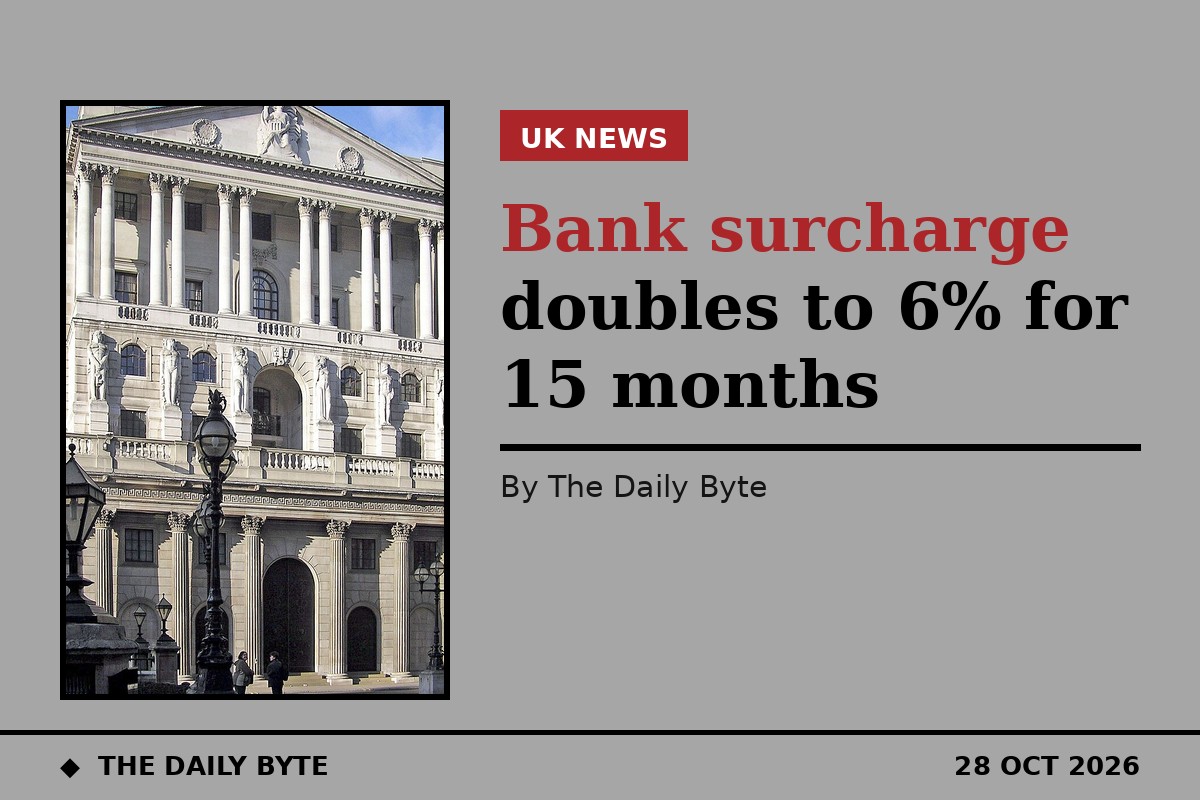
Chancellor John Healey has doubled the Bank Corporation Tax Surcharge from 3% to 6% for 15 months, starting in January 2027 and ending on 31 March 2028. The government says the temporary increase will raise an estimated £1.5 billion to help pay for immediate support with household energy bills, at a time when energy costs have risen sharply because of conflict in the Middle East. The surcharge applies to bank profits, and ministers have framed it as a time-limited contribution from lenders rather than a permanent rise in the general rate of corporation tax.
Paying for the £100 energy payment
The money will help fund a £100 Household Energy Payment in 2027 for up to 20 million households in council tax bands A to D in England, with funding for similar support elsewhere in the UK, alongside an extension of the temporary VAT cut on electricity bills until 1 July 2027, which the government says will take around £50 off the annual price cap in April 2027. The surcharge was previously cut to 3% three years ago, when the main corporation tax rate rose, and it had stood at 8% between 2016 and 2023.
Banks push back, shares rise
The industry response was mixed. JPMorgan Chase, which employs about 23,000 people in Britain, said the decision “lacks principle”, while shares in NatWest, Lloyds and Barclays rose on the day amid relief that the Chancellor had not gone further, after speculation the rate could return to 8% or be replaced by a windfall tax. Campaigners who had urged a bigger levy on lenders may also be disappointed, but for households the key question is simpler: whether the energy support funded by the surcharge arrives in full, on time, and for everyone the government says it will reach.
Sources: GOV.UK, Morningstar / Dow Jones.