Canada Approves Bay du Nord Deepwater Oil Project
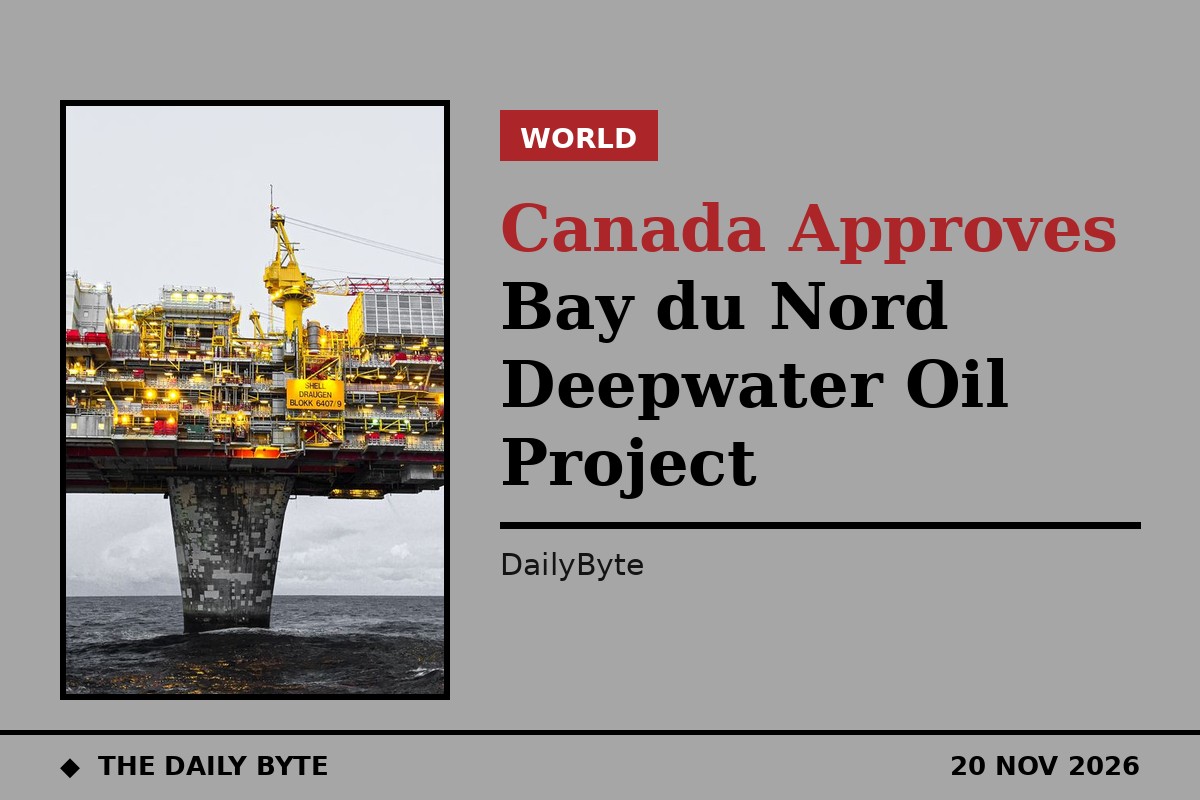
Canada and Newfoundland and Labrador have jointly approved Equinor's development plan for the Bay du Nord offshore oil project, clearing the final regulatory hurdle for the $14-billion venture and moving it a step closer to a final investment decision early next year.
The announcement was made in St. John's on Friday 20 November by Joanne Thompson, the federal fisheries minister, alongside Tony Wakeham, the Premier of Newfoundland and Labrador. The joint approval allows Equinor and its project partner, Shell, to advance towards a final investment decision in early 2027.
Bay du Nord, in the Flemish Pass Basin about 500 kilometres east of St. John's, would be Canada's first deepwater oil development — and, according to the Canadian Press, the farthest-from-shore oil project on Earth. Wells would be drilled more than a kilometre below the ocean surface, and the field holds an estimated 400 million barrels of recoverable oil, with first oil expected in 2031.
What the approval unlocks
The Canada-Newfoundland and Labrador Offshore Energy Regulator approved Equinor's development plan on 4 November, after a comprehensive review that included a 60-day public, industry and Indigenous engagement process held from 22 June to 20 August 2026. Under Atlantic Accord legislation, approval of the development plan is a fundamental decision requiring the sign-off of both the federal energy minister and the provincial energy minister. Both have now given it.
The federal government had already approved the project in principle in the spring of 2022, but Equinor still had to submit a detailed development plan to the joint regulator for scrutiny. It lodged the plan in May, and the regulator's approval followed in November.
Ottawa says the project, over an estimated 20-year operating life, is expected to generate $20 billion in government revenues, contribute $50 billion to Canada's GDP and create thousands of jobs. The provincial government puts projected direct revenues at approximately $6.4 billion, and Premier Wakeham said the decision would bring "over 31 million person-hours of work over 25 years" and significant opportunities for local businesses.
Ownership and the provincial stake
Equinor, the Norwegian energy company, is the majority owner and operator of Bay du Nord. Shell recently announced it was buying a 30 percent share of the project. The Newfoundland and Labrador government is also considering purchasing a 10 percent stake, an option the province says it is strongly weighing.
"Newfoundland and Labrador's offshore sector is a key driver of good jobs, energy security and economic growth, and today's joint approval of Equinor's Bay du Nord project reflects our shared commitment to growing the sector stronger," said Tim Hodgson, the federal energy minister.
Premier Wakeham said the approval "marks a major milestone for Newfoundland and Labrador's offshore energy industry and our economy," adding that the project "represents billions of dollars in future royalties" and would reinforce the province's position as a world-class offshore energy jurisdiction.
Emissions and the road ahead
The government says oil produced in Newfoundland and Labrador's offshore is already 30 percent below the global average for greenhouse gas emissions at extraction, and that Bay du Nord's emissions are expected to be 50 percent below the global average for offshore oil projects.
Even so, the final decision still rests with Equinor. All that remains now is for the company to make its final investment decision, expected early next year. Climate scientists have urged governments to turn away from fossil fuels, but the Newfoundland and Labrador government hopes Bay du Nord will not be the last oil and gas development in its offshore territory.
The offshore industry sustains nearly 20,000 jobs in the province, according to the federal government, and Ottawa presents the project as part of its push to develop natural resources responsibly while reinforcing Canada's role as a stable and reliable energy supplier.


