BBC Cuts Will Bite Deeper, NAO Warns in £500m Plan
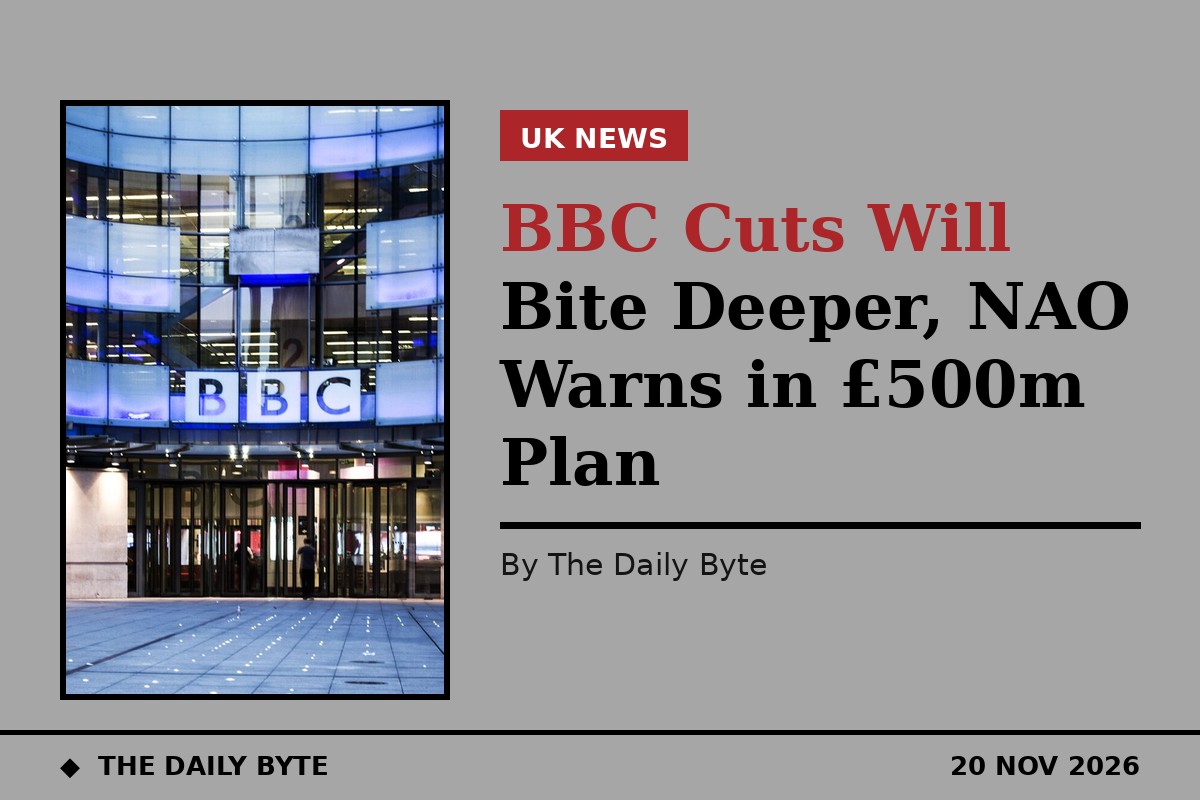
The BBC faces further job losses and programme cuts that will be more noticeable to audiences as it tries to save another £500 million, the public spending watchdog has warned.
A report by the National Audit Office (NAO), published on Friday, found the corporation expects to deliver its existing £700 million savings and reinvestment programme a year ahead of schedule. But it warned the next round of cuts will be harder to achieve and will have a greater impact on what audiences see and hear.
The new programme, which runs through to March 2029, aims to deliver at least a further £500 million in recurring annual savings. It is expected to reduce the BBC's workforce by around 11 per cent compared with March 2026 — cuts the corporation has already announced, including around 1,800 roles — alongside further changes to the scale and scope of its services.
Why the BBC is cutting
The NAO said the BBC's finances remain under pressure from falling licence fee income, rising production costs, changing audience behaviour and growing competition from streaming and digital platforms.
Licence fee income fell by 26 per cent in real terms between 2016-17 and 2025-26, the report found, while the BBC's public service broadcasting operations recorded a deficit of £209 million in 2025-26.
The proportion of UK adults using BBC television, iPlayer, radio or online services in an average week fell from 90 per cent in 2021-22 to 81 per cent in 2025-26. Weekly users of iPlayer rose over the same period, from 10.7 million to 15.4 million.
Unlike the £700 million programme, under which savings were reinvested in digital services such as iPlayer and digital news, the new £500 million target is intended to close the BBC's funding gap and improve its long-term financial sustainability.
Programmes already axed
The BBC has already announced plans to reduce spending by around 10 per cent, including cuts across its news, nations and content divisions. Programmes already cancelled include Celebrity Mastermind, Blankety Blank and Live at the Apollo, alongside Radio 4 programmes including The World Tonight.
The corporation has also announced plans to close the linear broadcast services of BBC Three and BBC Scotland, with both becoming online-only channels, and to close Radio 4 Extra as a linear station.
By March 2026 the BBC had reinvested £489 million of savings from its £700 million programme in its digital-first priorities, with the remainder used to reduce overall spending.
Watchdog's concerns
The NAO also raised concerns about how the BBC managed its previous savings. It found the corporation had not monitored the programme in a way that showed the cumulative non-financial impacts of individual savings, such as their effects on audiences, programme quality and organisational capability.
The report recommends the BBC review whether its governance arrangements for delivering savings remain appropriate for the scale and pace of the new, more demanding programme.
Gareth Davies, head of the NAO, said: "As the BBC approaches Charter renewal in just over a year's time, there is no doubt that there are difficult choices ahead. BBC leaders can take lessons from its £700 million programme for its new, more demanding programme, including strengthening its risk management approach and developing a consistent way to understand the wider consequences of its savings initiatives on audiences and service provision."
In response, Bérangère Michel, the BBC's group chief financial officer, said the corporation welcomed the report and was pleased the NAO had acknowledged the savings already delivered, with the programme on track to meet its target one year ahead of schedule.
She said the BBC had to "make tough decisions due to sustained financial pressures driven by declining licence fee income, changing audience behaviour, increased competition and rising costs", adding: "We have consistently argued that the current funding model is not sustainable and needs reform."
Sources: National Audit Office; Press Association via Grimsby Telegraph.