Belgian Breach Hits 1.2m in 82 Municipalities
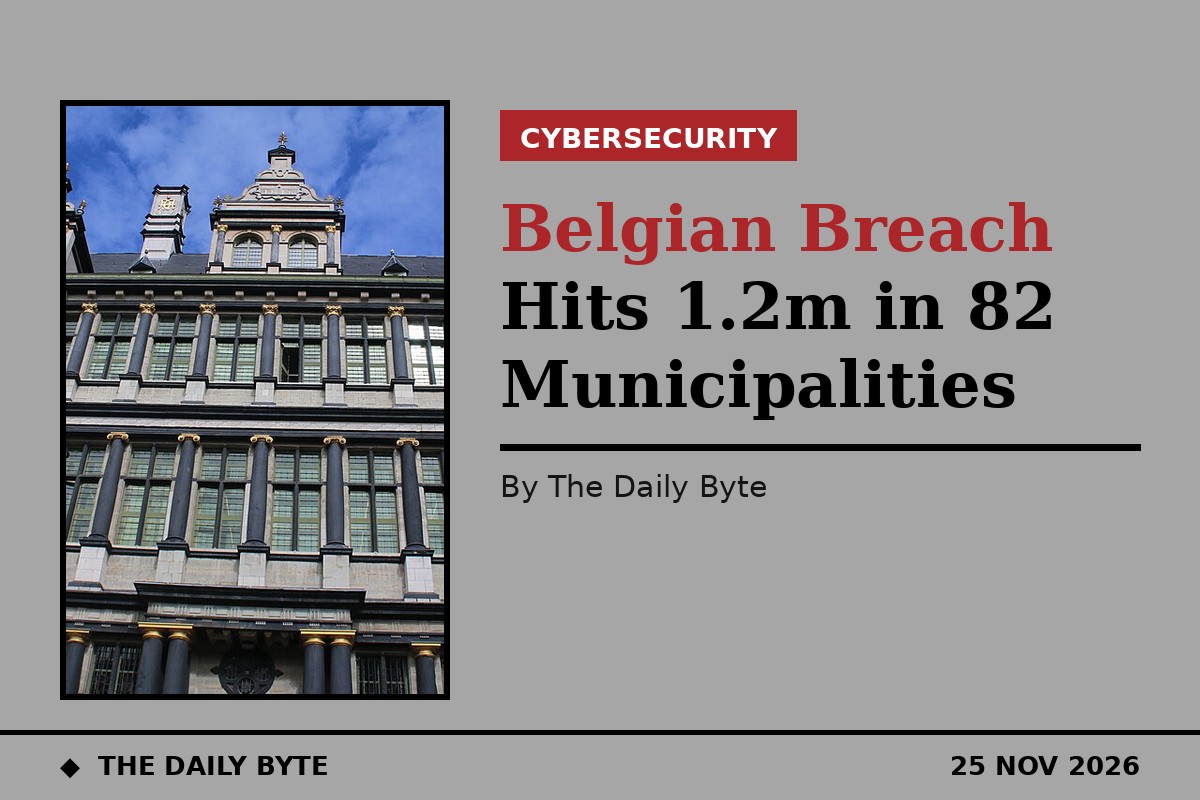
Personal data covering about 1.2 million people in Belgium's Flemish region was stolen in a cyberattack on a service provider used by 82 municipalities, researchers said on 25 November 2026. The figure is the population of the affected municipalities, which Belgium's cybersecurity centre has not confirmed.
How the attackers got in
Secutec, a Belgian firm, and SOCRadar linked the attack to a hacker using the name BabidiGhost and the Ghost Hunters group. The campaign ran from 6 to 15 November and targeted more than 50 organisations in Belgium, France and Switzerland. In Flanders, the attacker reached a central server run by a recycling-centre provider. Its management interface was online behind a weak administrator password, and municipal data on the server was neither separated nor encrypted. The attacker took 23 archives totalling 8.6 GB.
What was taken
The stolen data includes names, addresses, dates of birth, gender, national register numbers, identity card numbers and bank account numbers. Some records also include vehicle licence plates; passwords from municipal configuration files were taken too. The attacker reached folders for 65 municipalities directly and obtained data for 17 more through an intermunicipal association. All five Flemish provinces were affected, East Flanders worst hit. Data from several municipalities has been shared, and data from at least one sold.
An AI agent did the technical work
The attacker had little technical skill, researchers said, and instead used a jailbroken version of China's DeepSeek language model to direct an AI agent. He sent over 5,800 commands to the model; only 41 were blocked. The AI agent wrote the code that probed known flaws in older software and copied out the data. Secutec said basic defences such as multi-factor authentication would have blocked the attack. Sources: ITdaily and EuropeSays.