Belgium ends funding for forensic institutes
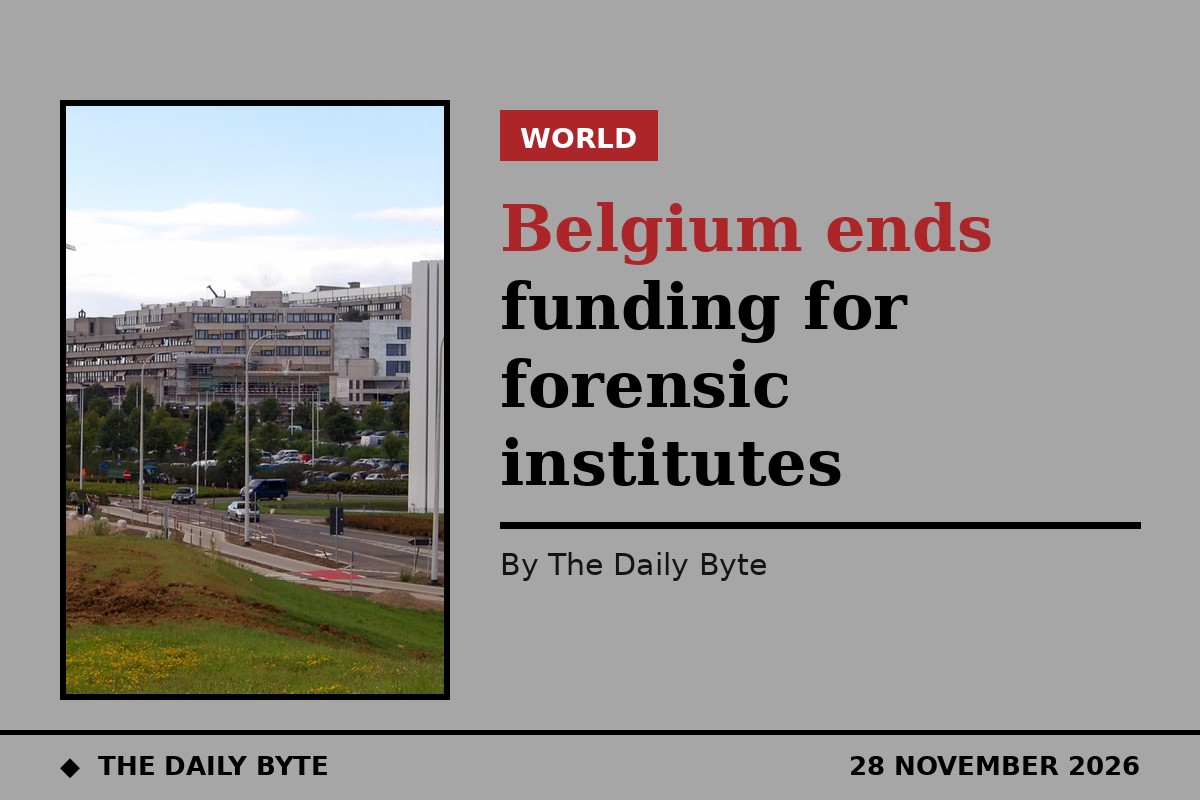
Belgium has ended state funding for its two forensic medical institutes and scrapped plans for four more, a decision forensic doctors warn will leave more killings undetected. The federal Justice FPS, the justice ministry's administration, has stopped the subsidies for the institutes at UZ Leuven and UZ Saint-Luc in Brussels, according to a letter seen by the Belgian outlets BRUZZ, De Morgen, HLN and VRT NWS.
The institutes were created to bring forensic medicine inside hospitals, where autopsies can draw on scanners, mortuaries and medical expertise already on site. UZ Leuven proposed the first forensic medical institute in Belgium three years ago, and a second later opened at UZ Saint-Luc in Sint-Lambrechts-Woluwe in Brussels. UZ Leuven received an annual budget of 1.2 million euros for its institute, which takes on more than a third of all forensic autopsies in Flanders.
Four further institutes were planned, in Ghent, Antwerp, Liege and Charleroi, after an evaluation. De Morgen reports that the same letter scraps those projects too, ending the plan to build a network of five institutes across the country.
Justice Minister Annelies Verlinden, of the CD&V party, said the government keeps investing in forensic medicine but wants to use the available funds differently and in a more targeted way. She said the government wants to move away from subsidies and project calls towards a simplified system of judicial costs, with forensic doctors paid a fair fee reflecting the actual costs of their work.
The National Institute of Criminalistics and Criminology, known as the NICC, is developing the new fee system, but its details have not yet been published. A new NICC building in Brussels should be ready by 2031 and is to include a new autopsy room, according to the material seen by the outlets.
Forensic doctors reacted with alarm. Wouter Van Den Bogaert, head of forensic medicine at UZ Leuven, said the decision was taken without consultation with forensic doctors. "We gaan dertig jaar terug in de tijd," he said, meaning "we are going back thirty years in time." He warns that undetected homicides will increase and that autopsies will be of lower quality because the duty rotas that keep specialists available around the clock will disappear. He also criticised the fact that no evaluation was carried out of the two projects in Leuven and Brussels before the funding was cut.
The doctors say the institutes guaranteed a permanent on-call system covering all regions at any hour. They argue that working inside hospitals cut costs, since CT scans, a mortuary and medical expertise are already there. Subtle signs of suffocation, poisoning or violence are easy to miss without specialised training, which they say takes five years. They reject payment per case, saying it would lead to cherry-picking of easy and lucrative cases.
The figures behind the warning are stark. Belgium's autopsy rate is about one percent of deaths, against a recommended target of ten percent. Sweden, cited as a model, reaches about six percent. Forensic doctors say an official's predecessor estimated that one in every three or four murders goes unnoticed. They had expected to double the autopsy rate in the coming years under the earlier plans.
For now, the institutes in Leuven and Brussels lose their dedicated funding while the replacement fee system is still being designed. The doctors' warning is that, until a working alternative is in place, fewer suspicious deaths will be examined by specialists, and more will be recorded as natural deaths without ever being investigated.


