Bessent Moved to Military Base After Iran Threats
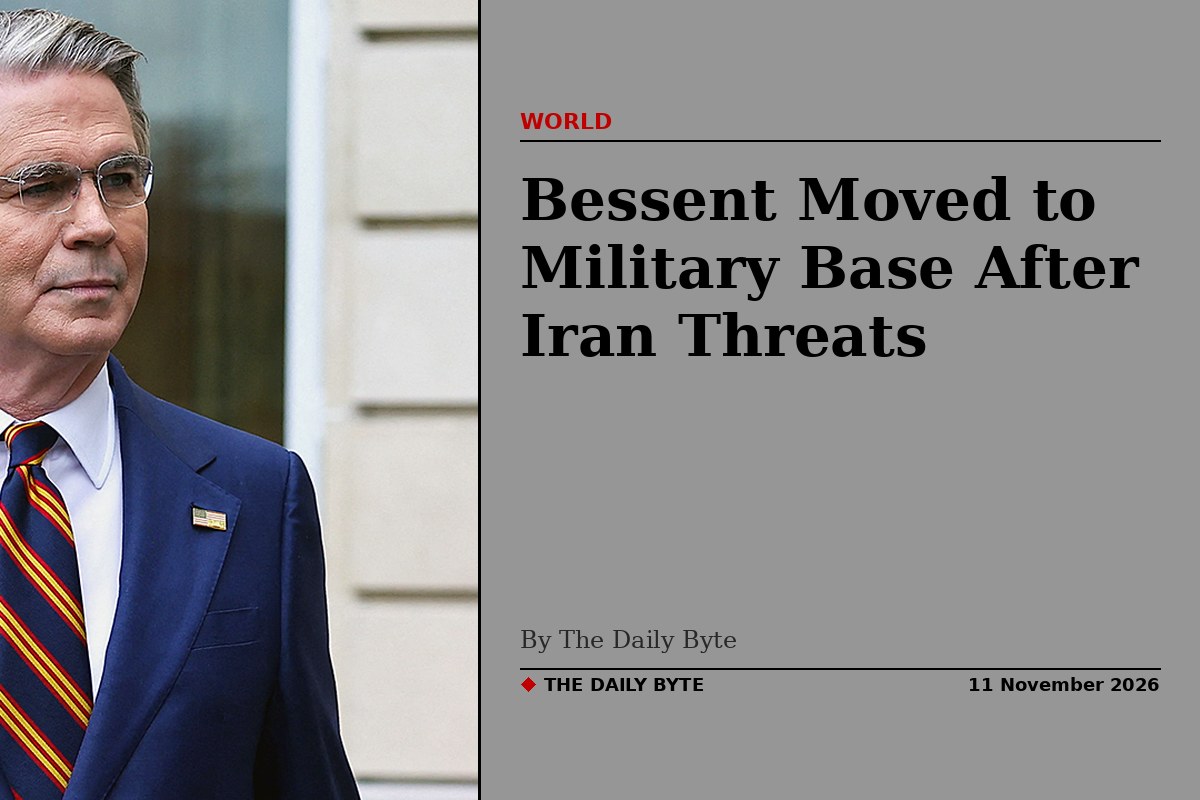
US Treasury Secretary Scott Bessent has moved out of his home and onto a military base after Iranian threats against his life, the New York Times reported on Tuesday, citing sources with knowledge of the matter.
The report, carried by Reuters, said the move followed an assessment by US officials that Iranian plotting against current and former American officials had reached a more advanced stage. Intelligence about threats to Mr Bessent helped inform that assessment, according to the newspaper.
The New York Times did not identify the base, and it did not give a precise date for the move. The severity of the threats to Mr Bessent was not immediately clear, the report said, and it did not establish that the authorities had stopped a plot or that an attack had been attempted.
Protection stepped up for senior officials
A Treasury spokesperson told the New York Times that Mr Bessent “will not be deterred by the Iranian regime’s threats” and remained committed to the administration’s campaign to squeeze Iran’s economy. The department’s statement did not confirm the reported relocation.
Reports of the same account said Secretary of State Marco Rubio and Defence Secretary Pete Hegseth had also moved onto military bases. The New York Times reported that several people connected to the Trump administration had taken the same step, although the details for each official were not set out in full.
The development follows a warning late last month from a senior intelligence official in the Trump administration, in a memo seen by Reuters, that lethal plots by Tehran against American citizens had reached “advanced stages”. Iran has previously denied plotting to attack officials and people on US soil.
US officials have also noted, according to the report, that Iran’s ability to carry out large-scale attacks in the United States and in other territories overseas is limited. That assessment sits alongside the heightened protection now reported for senior figures in Washington.
The pressure campaign against Tehran
Mr Bessent has been the face of Washington’s economic pressure campaign against Tehran during the US-Israeli war on Iran, which began on 28 February. He has led the effort since August, using tougher sanctions and restrictions on trade routes to isolate Iran financially, according to the New York Times.
The campaign has run in parallel with the military confrontation, which has killed thousands of people, and with a naval blockade around Iran that has disrupted shipping through the Strait of Hormuz. Tehran has insisted that the United States must meet conditions it set out in a June interim agreement before the strait can reopen and negotiations can resume.
Iran’s top security official, Mohsen Rezaei, said on Tuesday that there were currently no negotiations taking place between Tehran and Washington, in an interview with the pro-Iran broadcaster Al-Mayadeen. After a meeting with the mediator Qatar on Monday, US President Donald Trump played down the likelihood of major warfare restarting soon, while remaining unwilling to accept the existing Iranian truce plan.
The reported move of the Treasury Secretary onto a military base underlines how the confrontation has now reached into the personal security of senior American officials at home, even as the fighting itself has eased into a tense and unresolved standoff. Neither the Treasury Department nor the White House has publicly confirmed the relocation, and the New York Times report remains the sole published account of it.
For now, the episode stands as a measure of the threat assessments circulating in Washington: serious enough, in the judgement of US officials, to move cabinet-level figures under military protection, but without any public evidence of a specific plot or an attempted attack.


