Bessent: No Iranian Oil on the Water
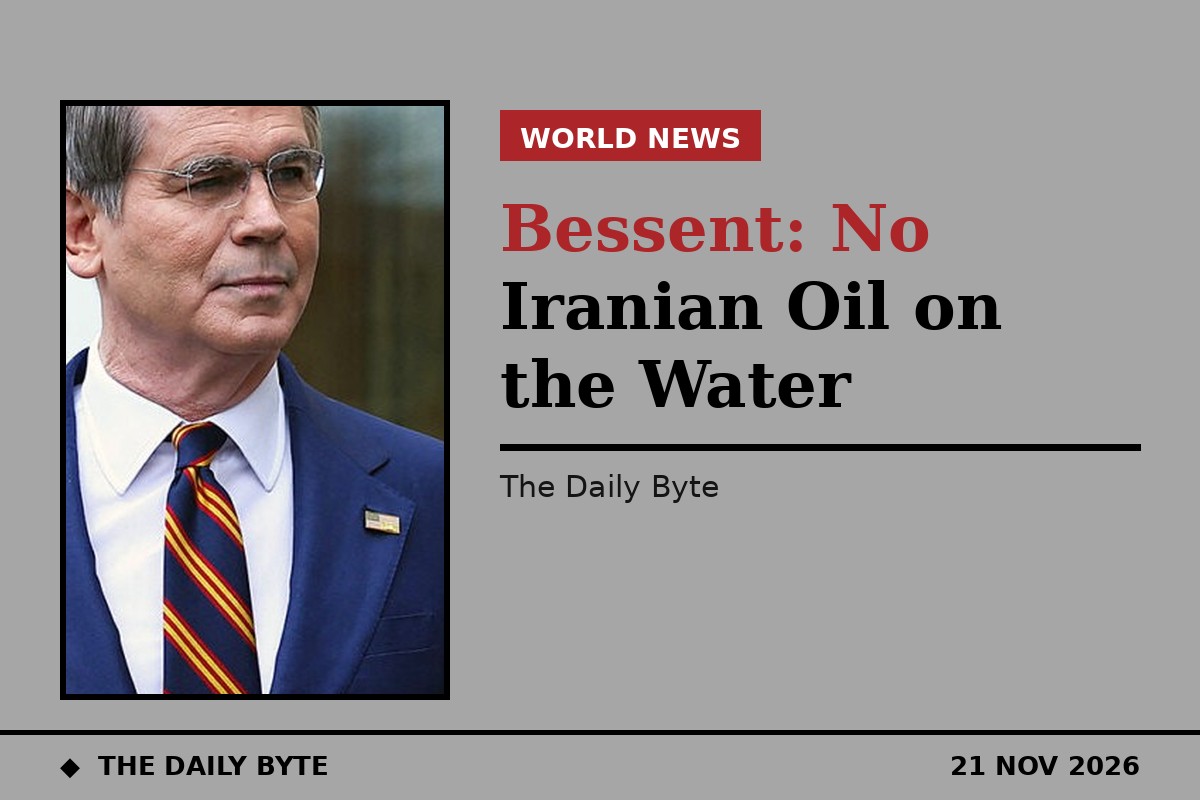
The United States will keep squeezing Iran's economy until Tehran sticks to a deal, Treasury Secretary Scott Bessent said on Friday, claiming that for the first time since Iran began producing oil, no Iranian crude is on the water for anyone to buy.
Speaking in an interview with CNBC, Bessent described Operation Economic Outcast, the American campaign against Iran, as the greatest economic isolation of any country in history. Washington has made the economic isolation of Iran a cornerstone of a conflict that began in February with joint American and Israeli strikes against the country.
Alongside a United States Navy blockade of Iran's ports, the Treasury Department has moved to sever Iran's financial lifelines to the outside world with sweeping sanctions against aviation, shipping, banking and digital exchanges. The conflict has halted Iran's oil exports, which were a mainstay of its economy before the fighting started.
For the first time in history since Iran has started producing oil, they have no oil on the water, so there is no Iranian crude for anyone to buy, Bessent said. What we have seen is the world can live without Iranian crude.
He said the previous night had seen the biggest amount of crude come through the Strait of Hormuz since the conflict started. After the war began, Iran attempted to block the strait, the critical entrance to the Arabian Gulf through which about one-fifth of the world's oil and liquefied natural gas flowed before the conflict. The American military and its allies in the region have since used a shipping lane along the south of the strait to rebuild exports of crude oil back to pre-war levels, although the flow of tankers is taking place at considerable risk, with Iran carrying out regular attacks on vessels attempting to transit the waterway.
Living on a military base
Bessent has faced threats of his own and was forced to move out of his family home and on to a military base over fears that he could be targeted by Iran. Asked whether he was still living on the base, the treasury secretary replied that he would not be cowed by Iran.
If the Iranians are after me, it means that they are being squeezed. We are going to continue squeezing them, he said.
Bessent recently accompanied President Donald Trump to China for his meeting with Chinese President Xi Jinping and Russian President Vladimir Putin. He said there was a consensus between the three superpowers that Iran can never have a nuclear weapon and that freedom of navigation in the Strait of Hormuz is paramount. With China being one of Iran's key oil customers and Russia having important ties to Tehran, some observers had looked for signs that the meeting could help push the two sides back to negotiations.
The last week has seen an increase in hostilities, with Iranian attacks on America's Gulf allies such as Bahrain and Kuwait and daily strikes against shipping. The Treasury Department also announced fresh sanctions on Friday against Iranian oil traders and government-linked facilitators accused of helping Tehran sell oil abroad.
Europe joins the pressure campaign
Bessent also announced on Friday that the European Union had officially joined Operation Economic Outcast, the American-led campaign designed to make it harder for Tehran to access the international financial system. The European Union has officially joined Operation Economic Outcast and we appreciate their strong and early stance, he said in a post on X.
He said the United States stands firm with its allies in trying to prevent the Iranian government from using the global financial system to fund its nuclear ambitions, weapons programmes and terror proxies, and warned that the pressure campaign was far from over. We will not stop until every remaining financial lifeline has been severed, he said.
The Treasury Department said Washington will keep working to deny Tehran the revenue it uses to destabilise the region and threaten American partners. For Iran, whose oil income once bankrolled its government and its network of allied armed groups across the region, the squeeze is now the central front of the war, and Bessent's message on Friday was that it will not ease until Tehran accepts a deal on American terms.


