Betano Suspends Flamengo Sponsorship Over Ban
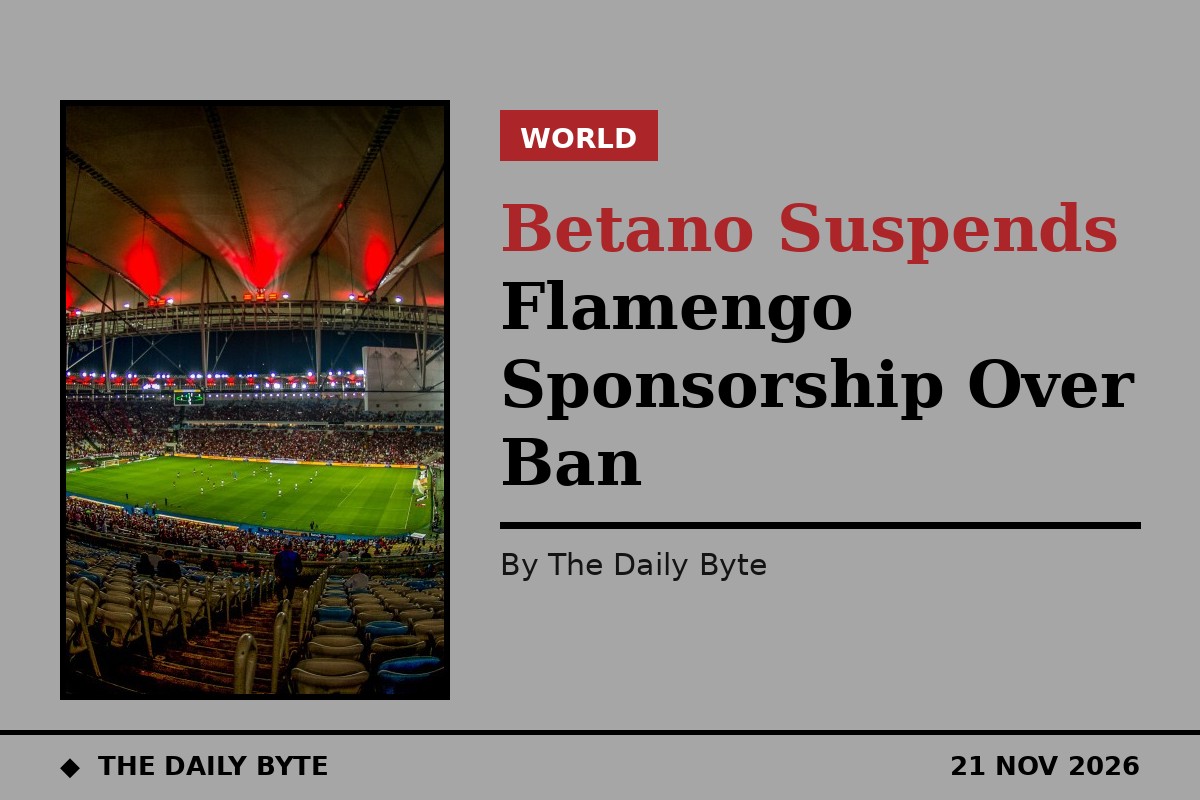
Betano has suspended its sponsorship of Flamengo, one of Brazil's biggest football clubs, blaming the country's ban on betting firms and the uncertainty hanging over the sport's finances.
The betting company announced the decision on Tuesday 18 November, saying it had suspended its prime partnership with the Rio de Janeiro club until there was clarity about the operating conditions of the sector. The move comes under Provisional Measure No. 1,394/2026, the emergency decree through which President Luiz Inácio Lula da Silva banned online betting in Brazil.
Flamengo expects to feel the loss immediately. According to Globo Online, the club is likely to suffer an accounting loss of up to R$90 million in 2027 after the sponsor's departure. The figure emerged from the club's budget proposal for next year, which was presented to its Board of Administration on Monday night.
Flamengo's 2027 budget takes a hit
The budget puts Flamengo's total revenue for 2027 at R$1.535 billion — 14.9 per cent higher than in 2024, but 16.6 per cent less than the amount predicted in the 2026 budget. The club believes growth in operating revenue will be enough to meet its financial obligations, but the plan also has to absorb the possible loss of a further R$350 million in revenue, alongside significantly higher amortisation and depreciation costs linked to investment over recent seasons.
The club's plans to build a new stadium at the Gasometer site in Rio are also on hold, with the project not expected to be realised in the near future.
The suspension leaves Flamengo searching for a replacement for one of its most important commercial partners at a moment when the whole Brazilian game is counting the cost of the ban. Club executives estimate the ban will cost Brazilian football some R$2.5 billion a year, according to Globo Esporte.
Clubs seek federal support
At least 35 clubs from Brazil's top two divisions have now joined forces to seek funding from the federal government to make up for the lost sponsorship money. The initiative, led by Corinthians president Osmar Stábile and Internacional's Alessandro Barcellos, was agreed at a meeting of club executives in Rio de Janeiro earlier this week.
The clubs are seeking explanations of how they can finance the shortfall and meet what they owe, including player wages, image rights payments and debts to other clubs. They are looking at credit lines from the National Bank for Economic and Social Development (BNDES) or Caixa Econômica Federal, although the proposal still has to be negotiated with the federal government and no amounts, conditions or lenders have been agreed.
The clubs stressed they were not asking for direct transfers of public money, but for access to financing tools already available to other parts of the economy. The government and the clubs had previously discussed a credit line of up to R$20 billion before Lula signed the provisional measure, but that idea never came to fruition.
Not every club is on board. Palmeiras president Leila Pereira rejected the letter, pointing to the financial management of Brazilian clubs and noting that many had been unable to balance their books even when betting sponsorships were paying far above normal market rates.
From the 2028 season, teams that fail to pay their players will start the Serie A and Serie B campaigns with three points deducted, with heavier penalties if payment is still not made — a further incentive for clubs to find a way through the crisis.
Betano says it held on as long as it could
Betano said it had been adapting to the new reality of the regulated market since the provisional measure was published on 25 September, with the aim of maintaining social projects and preserving jobs. But the ban meant it could no longer use its brand on Flamengo's shirts or on the commercial assets covered by the agreement.
"The continuation of this scenario, however, led the company to decide to suspend the sponsorship until there is a definition regarding the operating conditions of the sector," Betano said. The company said it had tried to keep the partnership going for as long as possible.
Betano also reaffirmed its respect for Flamengo, its athletes, professionals and supporters, and said it remained committed to Brazil and to building "a responsible, regulated and safe market". The uncertainty over the future conditions in which the industry can operate, and the continued uncertainty around fixed-odds betting, were central to its decision, the company said.
Legal challenges to the ban are also working through the courts, leaving clubs, sponsors and supporters waiting to learn what Brazilian football's finances will look like once the dust settles.


