Bill Gates mine visit fuels Chile copper ownership row
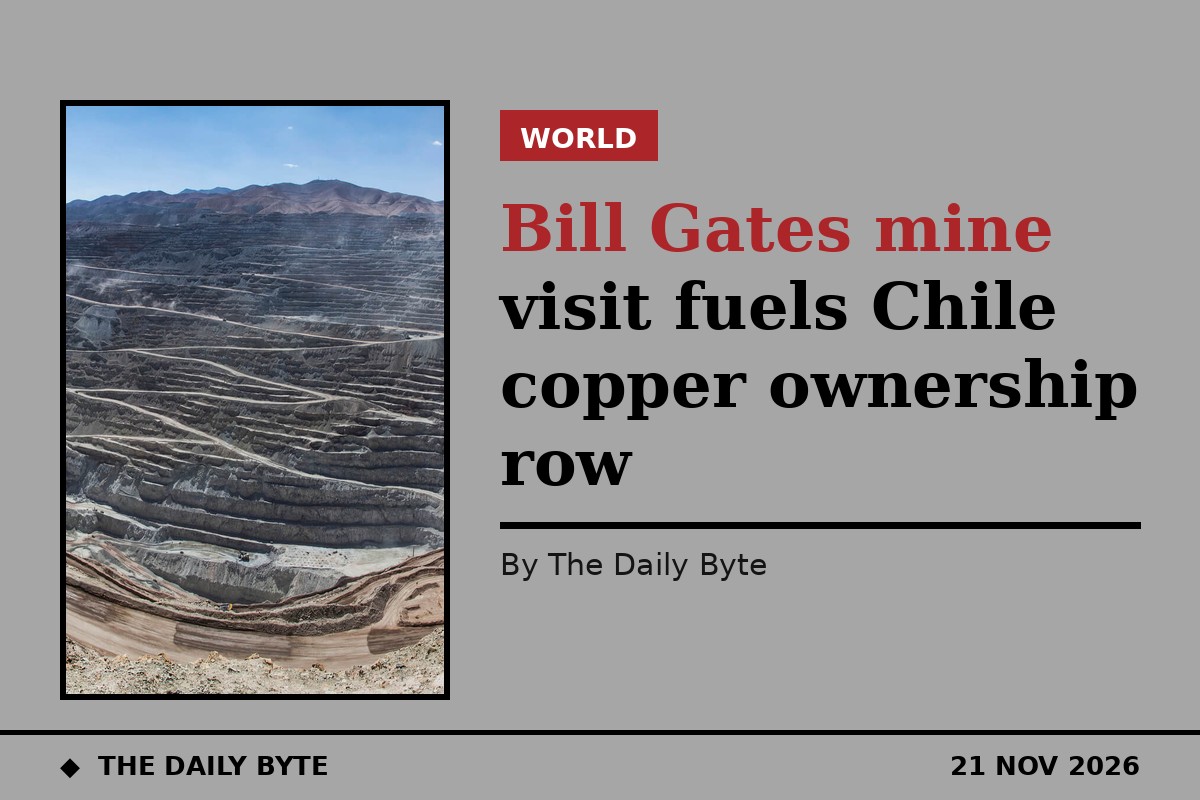
A private visit by Bill Gates to Chile’s most famous copper mine has turned into a political row, with opposition lawmakers formally demanding to know who approved the tour and whether any investment or partnership was discussed.
Gates toured Chuquicamata, the century-old open-pit copper mine in northern Chile, in early November. He came on a private trip, asked for discretion according to people at the company, and announced nothing. Within days of the visit becoming public, opposition deputies sent Codelco, the state company that owns the mine, a formal request to disclose how the trip was authorised, who took part, whether confidentiality agreements were signed and whether investment, partnerships or the search for private-sector partners were discussed.
“We are concerned about safeguarding public assets and understanding the circumstances under which this visit took place,” said Valentina Caceres, a deputy from the left-wing Frente Amplio. “Codelco belongs to all Chileans, and we have a right to know who authorized the tour, who participated and what topics were discussed.” Codelco has yet to respond, and there was no immediate response to requests for comment from Gates’s venture firm or his foundation.
Why the visit landed so badly
The timing did the damage. On Thursday, November 5, Codelco chairman Bernardo Fontaine told an extraordinary shareholders’ meeting that 42,100 tonnes of copper had been wrongly booked as production in 2024 and 2025, much of it counted twice by different divisions. He put the accounting charge at 120 million to 140 million dollars and lowered the 2026 production forecast to slightly above 1.2 million tonnes, from guidance of 1.331 million to 1.357 million.
Six days later, on Wednesday, November 11, Finance Minister Jorge Quiroz said private investors could eventually take a minority stake in Codelco, though not now. On Friday, November 13, Economy and Mining Minister Daniel Mas said the government was studying a change in the law to let private companies into some Codelco deposits, processing plants and shared infrastructure. He added that Codelco would stay state-owned and that minority shareholders were not under discussion.
Into that sequence walked one of the world’s richest men, whose climate fund, Breakthrough Energy Ventures, backs KoBold Metals, a company that uses artificial intelligence to explore for copper and lithium. The lawmakers’ request names KoBold. There is no public evidence that Gates was negotiating anything, and mining consultant Juan Ignacio Guzman has cautioned against reading the visit as a signal.
The numbers behind the argument
Codelco’s difficulty is arithmetic. Fontaine has said the company invested about 32 billion dollars over eight years while annual output fell from 1.7 million tonnes to 1.3 million. Net debt stood at 24.3 billion dollars on June 30, 2026, by the company’s own half-year report, or 2.8 times adjusted earnings. Codelco now expects about 1.3 million tonnes a year for the next four years, well short of what it once produced.
A state company with one shareholder has few ways to raise money. It cannot sell shares. It can borrow, which Codelco has done heavily; it can ask the treasury to leave more profit in the business; or it can bring a partner into a specific asset and let that partner pay for part of the work. The third route is the only one that adds capital without adding debt or drawing on the budget, and that is why ministers keep returning to it.
The wider figures point the same way. The Chilean Copper Commission’s ten-year survey, published on Thursday, November 19, shows planned copper investment in Chile unchanged at about 93.9 billion dollars, most of it to extend existing mines. The country that produces more copper than any other is spending to hold its position, and its largest producer is the one with the least room to spend.
An old argument about who owns the copper
History explains the sensitivity. Chile nationalised its large copper mines in 1971, and many on the left read any opening to private capital as an echo of the privatisations carried out under Augusto Pinochet’s dictatorship. The Socialist Party and the unions accuse President Jose Antonio Kast’s administration, in office since March 2026, of overstating Codelco’s problems to prepare the ground for asset sales, allegations the government and the company’s leadership reject.
The Copper Workers Federation has warned against privatising the company piecemeal. Fontaine has repeatedly denied any plan to privatise Codelco while arguing that partnerships with private companies are essential to developing its mineral holdings and restoring output given its finances. The next markers are Codelco’s reply to the lawmakers’ request, followed by the bill Mas has described. If the bill names the assets open to partners and caps private ownership in each, it has a chance in Congress; if it is drafted loosely, the unions’ argument will carry more weight.


