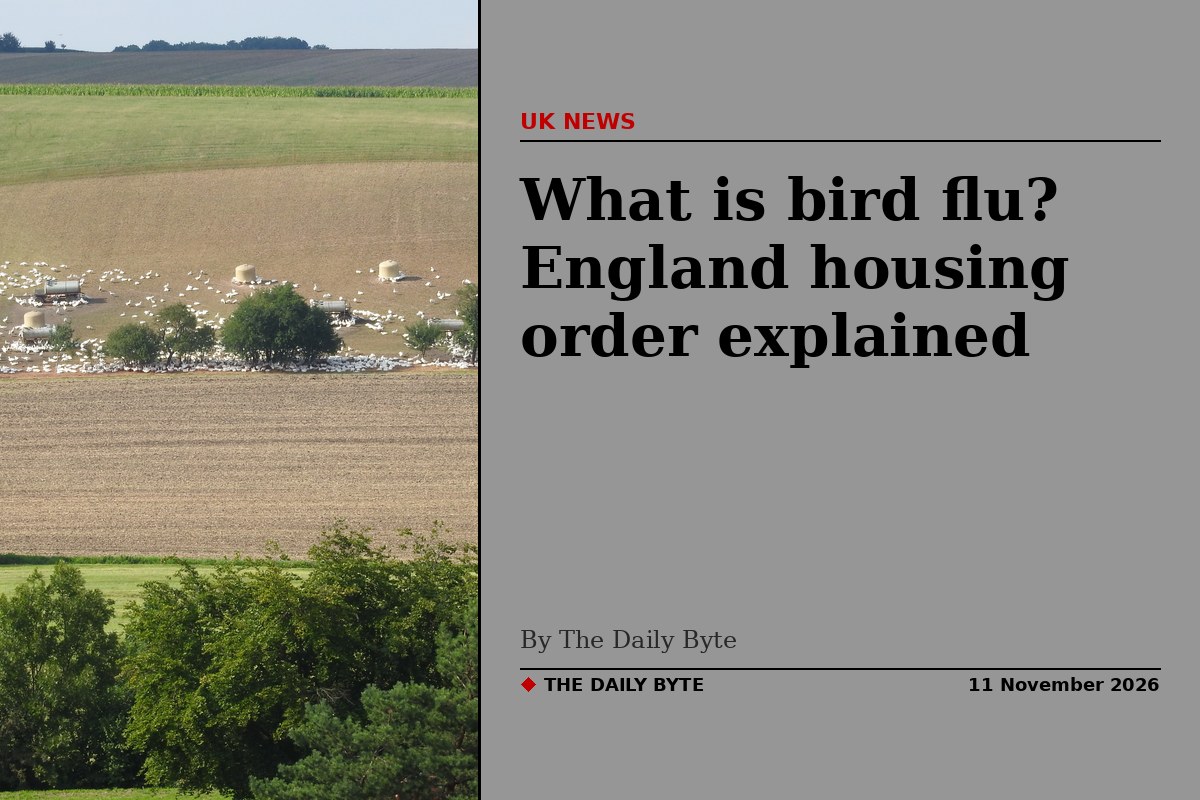
Bird Flu Housing Order for Poultry in England
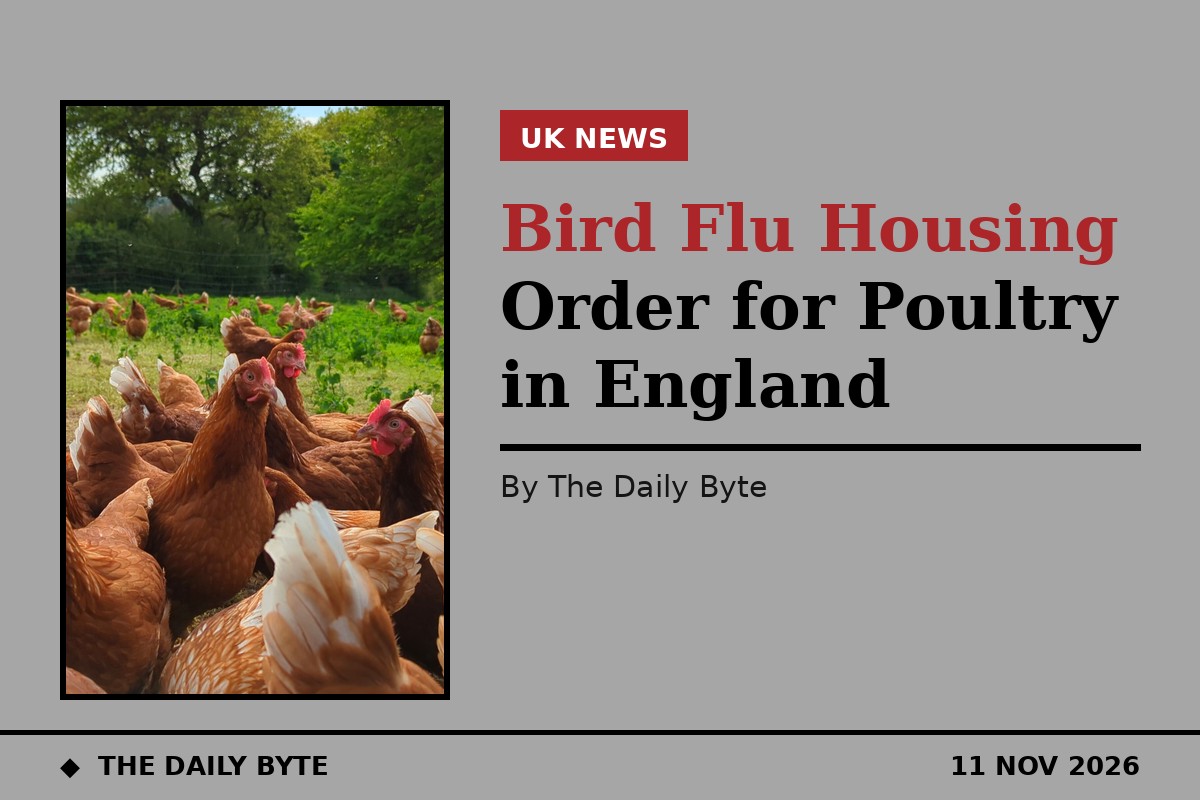
All poultry and captive birds in England must be kept indoors from 00:01 on Friday 13 November 2026 under a mandatory housing order issued by the UK Chief Veterinary Officer. The order follows a rising number of confirmed cases of highly pathogenic avian influenza, or bird flu, in kept birds and increasing findings in wild birds. An England-wide biosecurity zone is already in force, having taken effect at 9am on Wednesday 11 November.
GOV.UK announced the order on 11 November, and FarmingUK reported that the restrictions will apply to keepers with 50 or more birds, and to anyone who sells or gives away eggs, poultry products or live birds, whatever the size of their flock. Some zoo birds are among the specified exemptions.
Who must house their birds
The housing order covers the whole of England. Keepers of 50 or more birds must house all poultry and captive birds, and so must smaller keepers who sell or give away eggs, poultry products or live birds. The order is aimed at cutting contact between kept birds and wild birds, which is how the virus most often reaches a flock.
Separately, the England-wide Avian Influenza Prevention Zone requires every bird keeper, including people with pet birds, commercial flocks or a few birds in a backyard, to follow enhanced biosecurity measures. Those measures include reporting changes in egg production, keeping mandatory records, disinfecting footwear, and cleansing and disinfecting housing and concrete walkways regularly.
Keepers must also cleanse and disinfect clothing, footwear, equipment and vehicles before and after contact with poultry, reduce the movement of people, vehicles and equipment to and from bird areas, carry out effective vermin control, keep fresh disinfectant at the right concentration at farm and housing entry and exit points, keep feed and water out of reach of wild birds, and prevent poultry from reaching ponds and watercourses.
Why the order was made now
England has recorded five H5N1 cases this season, the first on 19 October. The latest confirmed case was in commercial poultry near Dersingham, in King's Lynn and West Norfolk, on Monday 9 November. A 3km protection zone and a wider 10km surveillance zone were declared around that premises, and all poultry on the premises will be culled.
Two further outbreaks were confirmed on Saturday 7 November, near Pocklington in East Yorkshire, where 14,000 free-range laying hens were affected, and near Garstang in Lancashire, at a mixed commercial premises holding seasonal turkeys and geese. Scotland has also introduced its own nationwide prevention zone, in force since noon on Tuesday 10 November.
The British Free Range Egg Producers Association welcomed the restrictions, saying it had been calling for mandatory housing measures for the past fortnight. Its head of strategy and producer engagement, Gary Ford, said: "We welcome the housing order and the implementation of an AIPZ in England as sensible measures. We have been calling for a housing order for the last two weeks and we are very pleased that Defra have listened."
What keepers should do
UK Chief Veterinary Officer Christine Middlemiss said: "Bird keepers are urged to comply with the housing measures and to exercise robust biosecurity, remaining alert for any signs of disease and reporting suspected disease immediately to the Animal and Plant Health Agency." She added: "Having avian influenza confirmed in your flock can be devastating, I understand the impact this disease can have on the poultry sector and am extremely grateful for the continued cooperation of the industry."
Keepers in England who suspect infection should contact the Animal and Plant Health Agency on 03000 200 301. The government says the UK produces around 8 million turkeys every year and does not currently anticipate any overall impact on the availability of Christmas turkeys or other seasonal poultry for consumers.
The current risk to human health from avian influenza remains very low, according to the UK Health Security Agency, which continues to monitor the situation. The Food Standards Agency says properly cooked poultry and poultry products, including eggs, are safe to eat.
Frequently asked questions
When does the bird flu housing order start in England? The mandatory housing order takes effect at 00:01 on Friday 13 November 2026. The England-wide biosecurity zone came into force at 9am on Wednesday 11 November.
Who has to house their birds? Keepers of 50 or more birds, and anyone who sells or gives away eggs, poultry products or live birds, whatever their flock size. The biosecurity rules apply to all bird keepers, including pet and backyard flocks.
Is bird flu a risk to people? The UK Health Security Agency assesses the risk to human health as very low, and the Food Standards Agency says properly cooked poultry and eggs are safe to eat.