BISP expands skills training, digital payments for families
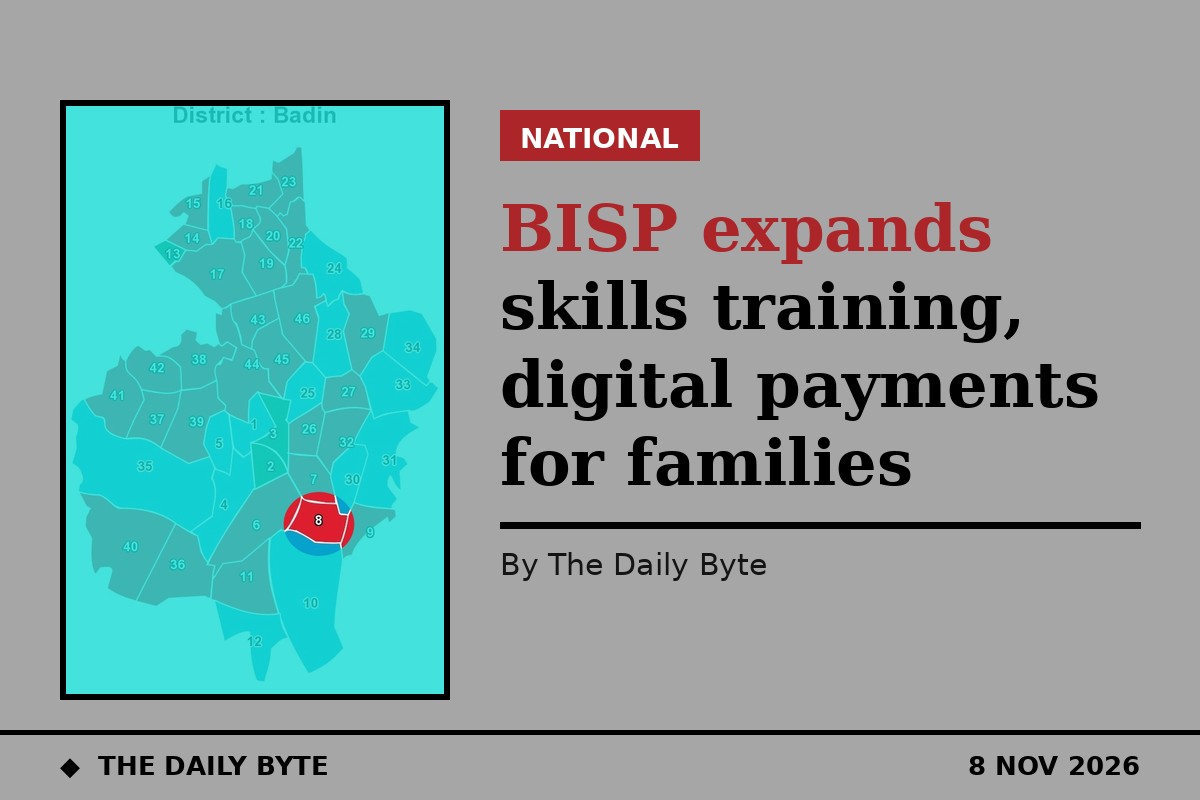
The Benazir Income Support Programme (BISP) will expand vocational training and a more flexible digital payment system for low-income families, its chairperson Senator Rubina Khalid has said during a visit to Badin in Sindh. She described financial assistance as a right of eligible households rather than charity.
Speaking to journalists at the Deputy Commissioner's Office, Senator Khalid said more than 10 million families, comprising around 60 million people across Pakistan, were benefiting from the programme. She said BISP was working to strengthen women's financial independence through the Benazir Hunarmand Programme, which offers market-oriented technical and vocational training to members of beneficiary families, particularly women and young people.
The training is intended to equip participants with practical skills, improve their employment prospects and help families move towards greater self-reliance.
On payments, she said interoperability through 1LINK would allow eligible women to withdraw their assistance from authorised retailers of participating banks across Pakistan. Under the proposed arrangement, beneficiaries would no longer be restricted to a particular bank or geographical area when collecting their money, improving convenience, transparency and financial inclusion.
Senator Khalid said the Benazir Taleemi Wazaif programme currently supports 12 million children, while 2.2 million women benefit from the Benazir Nashonuma programme. She also highlighted the programme's role in encouraging women to obtain Computerised National Identity Cards, which enable them to register for financial assistance and access government services. In the past, she noted, many women in Khyber Pakhtunkhwa did not hold identity cards, and BISP had encouraged a large number to obtain them.
During the visit she met civil society and local government representatives, heard complaints about BISP services and directed officials to address them on a priority basis. The Public Purview reported that provincial assembly members and district officials attended.