Bithumb Breach Widens to Passports and Bank Data
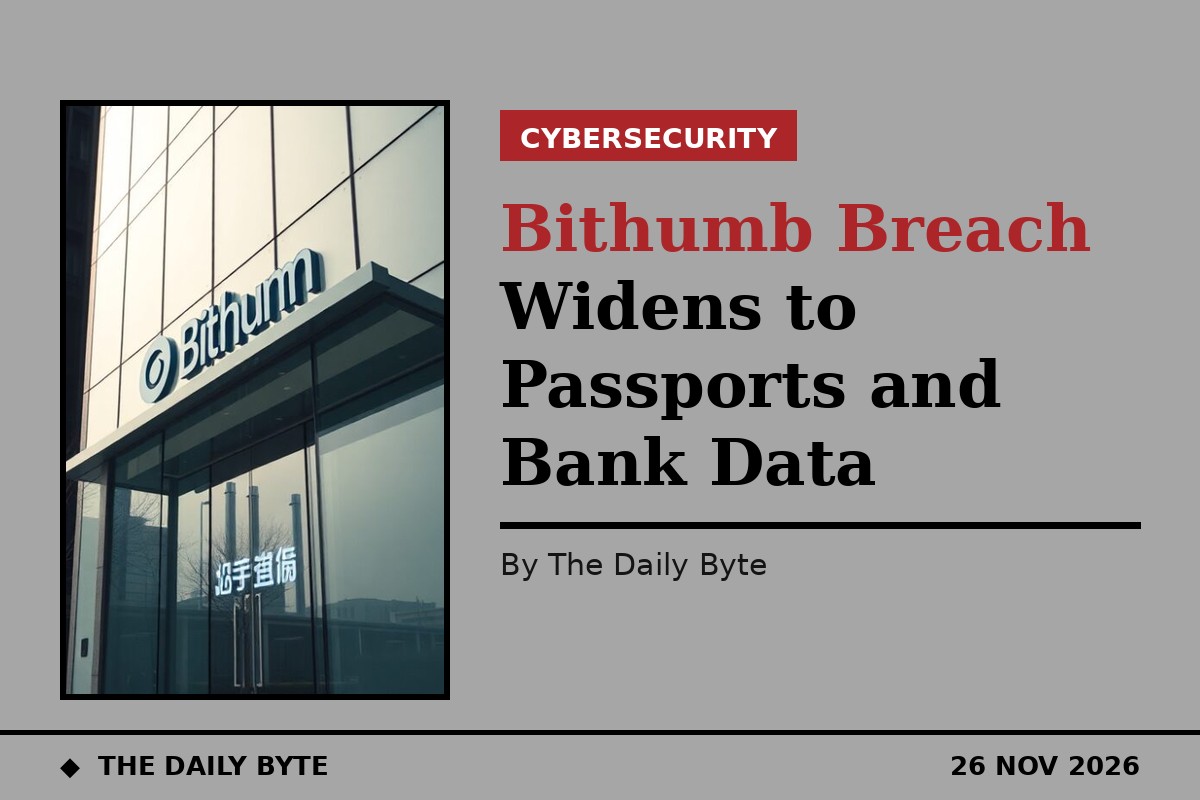
South Korean cryptocurrency exchange Bithumb has admitted that its October security breach was far worse than it first disclosed, with attackers inside its internal systems for 15 days and personal data exposed across 19 categories, including passport numbers and bank account details.
The exchange published the expanded disclosure on Wednesday, 25 November, after a follow-up investigation found the intrusion reached further than the account it gave in late October. Bithumb has promised full compensation for confirmed losses and warned customers about phishing attempts impersonating the exchange.
The update makes Bithumb one of several major breach disclosures this week, alongside password manager 1Password and Standard Chartered's crypto custodian Zodia.
From 59 minutes to 15 days
Bithumb first disclosed the breach in late October, saying an unauthorised party had accessed its internal mobile groupware system. At the time, the exchange identified about 7,159 affected people, made up of 6,444 customers and 715 employees and partner staff, and described unauthorised access lasting roughly 59 minutes on 27 October.
The follow-up investigation tells a different story. Bithumb now says the confirmed intrusion period ran from 1:49 p.m. on 12 October to 3:22 p.m. on 27 October, an exposure window of 15 days, one hour and 33 minutes. The disclosure does not establish whether access was continuous throughout that period.
The victim count has also grown past the original 7,159, though Bithumb has not disclosed a revised total. The additional people affected include customers and employees of partner organisations.
What was exposed
The expanded disclosure lists 19 categories of personal information that may have been compromised: membership numbers, names, mobile numbers, email addresses, dates of birth, South Korean resident registration numbers, passport numbers, driver's licence numbers, bank account numbers, residential addresses, gender, nationality, copies of identity documents, occupations, employer names, workplace telephone numbers, workplace addresses, transaction histories and cryptocurrency wallet addresses.
Bithumb stressed that not every affected person had all 19 categories exposed. Within the customer group in the first disclosure, 844 people had personal data exposed in readable form, while another 5,600 customers were affected by leaks of encrypted data.
Resident registration numbers serve as South Korea's national ID number, and the leaked material also included copies of the identity documents customers submit during sign-up checks. That combination is exactly what criminals need to build convincing impersonation and phishing attacks.
Trading systems not directly hit
Bithumb maintains that the intrusion was confined to DaouOffice, its internal workplace system, which it says operates separately from customer trading accounts. The exchange says investigators found no evidence that its trading platform or its central customer databases were directly compromised, and no cryptocurrency was stolen.
That distinction limits the direct financial damage but not the risk to individuals. The stolen records can support personalised phishing attacks for years, because passport numbers, national ID numbers and bank details cannot simply be changed like a password.
Phishing warning and compensation
Bithumb warned customers on Wednesday about fake websites, emails and text messages impersonating the exchange to steal personal information and cryptocurrency wallet credentials. It said it was monitoring suspicious logins and withdrawals more closely and requiring additional identity checks.
The exchange said it will take full responsibility for any damages confirmed from the breach, with each claim reviewed against the facts and relevant law before any payout. It has opened a dedicated consultation channel covering damage reports and financial and legal counselling, and it will notify each confirmed victim individually by email and text message.
Customers can also check whether their own records were exposed through a dedicated online tool, and can file complaints through South Korea's Personal Information Infringement Report Center or seek mediation through the Personal Information Dispute Mediation Committee.
A wider pattern in Korean finance
Bithumb is South Korea's second-largest crypto exchange, which makes any security lapse there a high-profile event for the country's large retail trading base. The incident was also part of a broader wave of cyber incidents that hit Korean financial firms during late October 2026.
Two material gaps remain in Bithumb's disclosure: the final number of people whose information was taken, and the precise extent of the attackers' access to sensitive records. Until those are answered, affected customers should treat any unexpected message claiming to be from Bithumb with suspicion and verify it through the exchange's official channels.


