Biya Sets Cameroon Elections for 7 February 2027
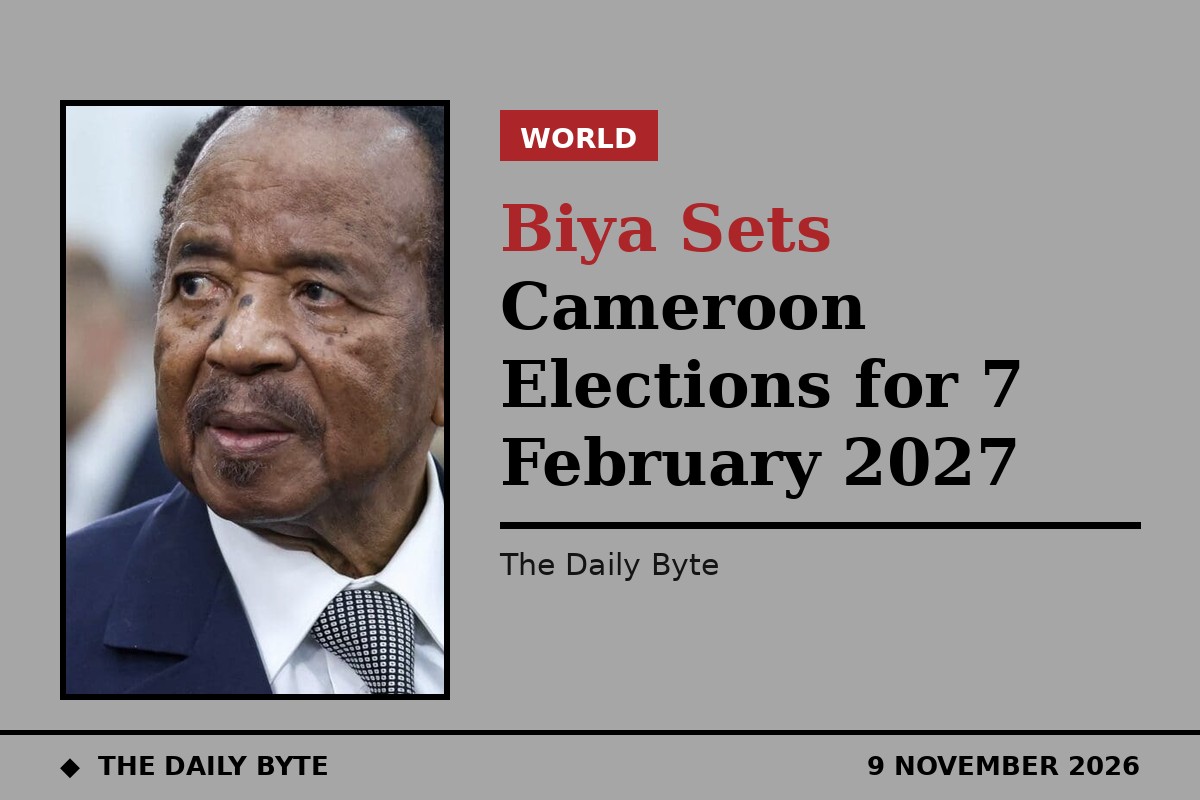
Cameroon will hold long-delayed legislative and municipal elections on Sunday, 7 February 2027, after President Paul Biya signed a decree convening voters to the polls on Monday, 9 November 2026.
The twin elections will choose members of the National Assembly and municipal councillors across the country. They are the first major polls since Biya, 93, won a disputed re-election as president last year, a result opposition groups rejected and which led to protests that security forces violently suppressed.
The decree was read on public radio on Monday. It ends months of uncertainty over whether the polls, already postponed twice, would be held at all.
Twice postponed
The elections were originally due in February 2025. They were first pushed back to February 2026 and then postponed again to February 2027, leaving sitting councillors and members of parliament serving well beyond the mandates voters gave them.
President Biya signed a further decree on 4 May 2026 extending the mandate of municipal councillors from 1 June 2026 to 28 February 2027. The mandate of members of parliament was also extended, to December 2026.
Under Section 86 of Cameroon’s Electoral Code, the electorate must be called to the polls by presidential decree at least 90 days before election day. The 9 November decree meets that deadline for a 7 February vote, with only days to spare. Section 169 of the code requires municipal elections to take place at least 20 days before the sitting councillors’ mandate expires, which also points to early February.
Election body renewed
In a separate decree, President Biya renewed the mandates of the chairperson, vice-chairperson and 10 other members of the electoral board of Elections Cameroon (ELECAM), the country’s election management body, for another four years.
ELECAM will run the twin polls. Opposition parties have long questioned the body’s independence, and the renewal of its leadership by the president is likely to draw fresh scrutiny as campaigning begins.
Parties prepare for the vote
Biya has governed Cameroon since 1982, making him one of the world’s longest-serving leaders. His ruling Cameroon People’s Democratic Movement (RDPC) has completed its internal preparations for the elections, with party conferences in its sections and sub-sections wrapped up before 6 November.
Opposition parties face a tenser climate. Several have been preparing candidate lists and alliances in recent weeks, but they operate in a political environment shaped by last year’s disputed presidential result and the crackdown that followed it.
Candidates will now have a short window to file their papers. Under the electoral rules, final nomination procedures and agreements between parties must be completed within 15 days of the convening of the electorate.
What the elections will decide
The legislative vote will renew the National Assembly, while the municipal vote will fill 360 municipal councils across Cameroon’s ten regions. Control of the councils matters because they run local services and budgets, and they also feed into the election of senators and regional councillors.
For voters, the February polls will be the first chance since the presidential election to pass judgement on the government’s record. For the ruling party, they are a test of whether it can still command support at local level after more than four decades in power.
With the decree signed, the countdown to 7 February has begun. The focus now shifts to ELECAM’s preparations, the publication of voter lists and whether the opposition can unite behind common candidates in time.


