BMI misses 'hidden obesity' in 2.4m Britons, study finds
More than two million people in the UK may be carrying dangerous levels of body fat that the body mass index (BMI) fails to spot, according to a large international study published in the journal Nature on 11 November. Researchers led by King’s College London analysed health data from 844,108 adults in the UK, the United States, China and Spain and compared BMI-based classification with a newer diagnostic framework.
The study found that BMI alone misclassified obesity in both directions. It underestimated obesity in between 5.2% and 8.6% of participants across the study groups, while it overestimated obesity in between 1.2% and 3.1% of participants. Applied to the UK, the researchers estimated that about 2.4 million people have dangerous levels of body fat that BMI misses, while about 1.3 million people classed as obese may have no excess fat and no extra health risk.
What the new framework measures
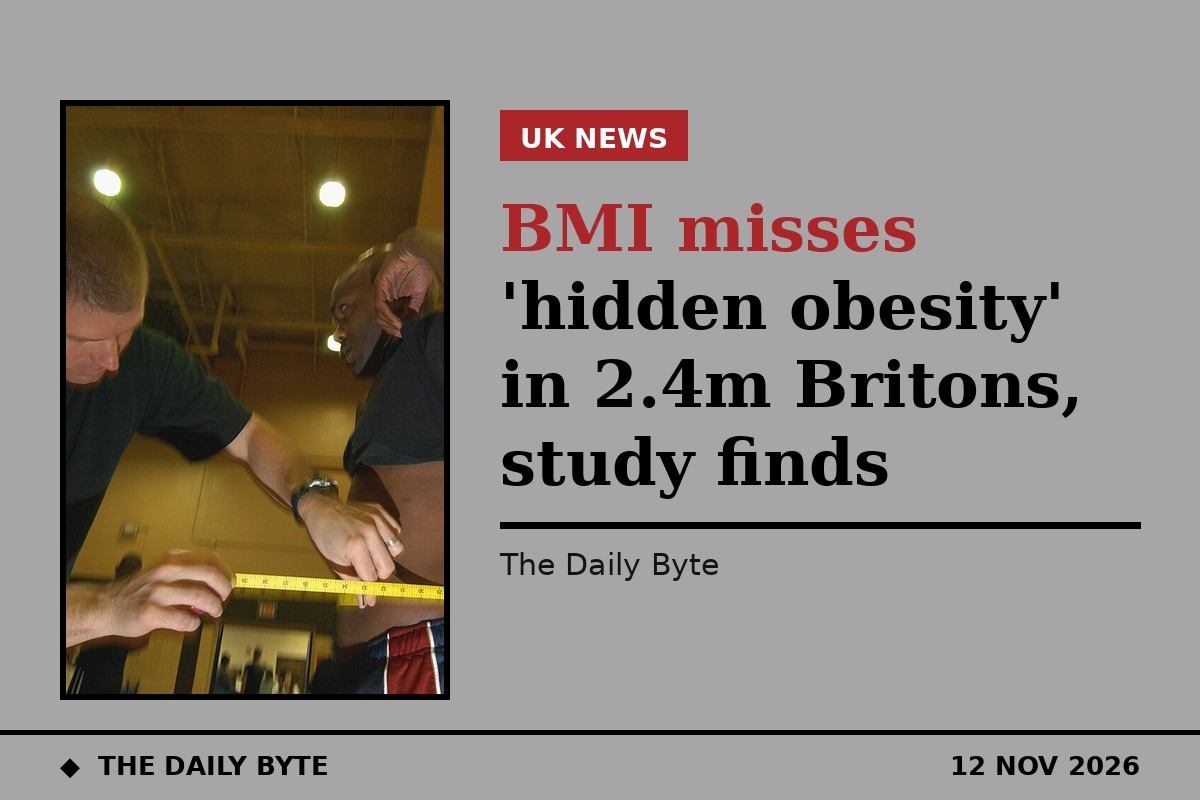
The framework, first proposed by a Lancet Diabetes and Endocrinology Commission in January 2025, keeps BMI as a starting point but adds waist circumference and waist-to-height ratio to confirm excess body fat. It then distinguishes between clinical obesity, in which excess fat is already impairing organ function or daily activities, and preclinical obesity, in which excess fat poses a health risk but organ function remains preserved.
That distinction mattered for survival. Clinical obesity accounted for between 23% and 31% of all obesity cases in the study and was linked to a substantially higher risk of death, while preclinical obesity carried only a modest increase in risk. Only between 10% and 30% of people with preclinical obesity developed clinical obesity over ten years, and adding waist measurements identified obesity in a further 3.3% to 7.4% of participants.
What it could mean for patients
Professor Francesco Rubino, senior author of the study and chair of metabolic and bariatric surgery at King’s College London, said BMI on its own tells doctors nothing about body fat content or whether a person’s organs are working properly, and said the new approach would make more personalised care possible, helping health services target treatment at the people most at risk.
The authors also urged caution about how far the findings can be stretched: the analysis was observational, so it shows a link between the new classification and later health outcomes rather than proving that changing how obesity is diagnosed would itself improve health. BMI remains widely used, and the study does not by itself change clinical guidance, but its authors say the evidence supports moving beyond BMI alone.