Boston Marks Thanksgiving as Day of Mourning
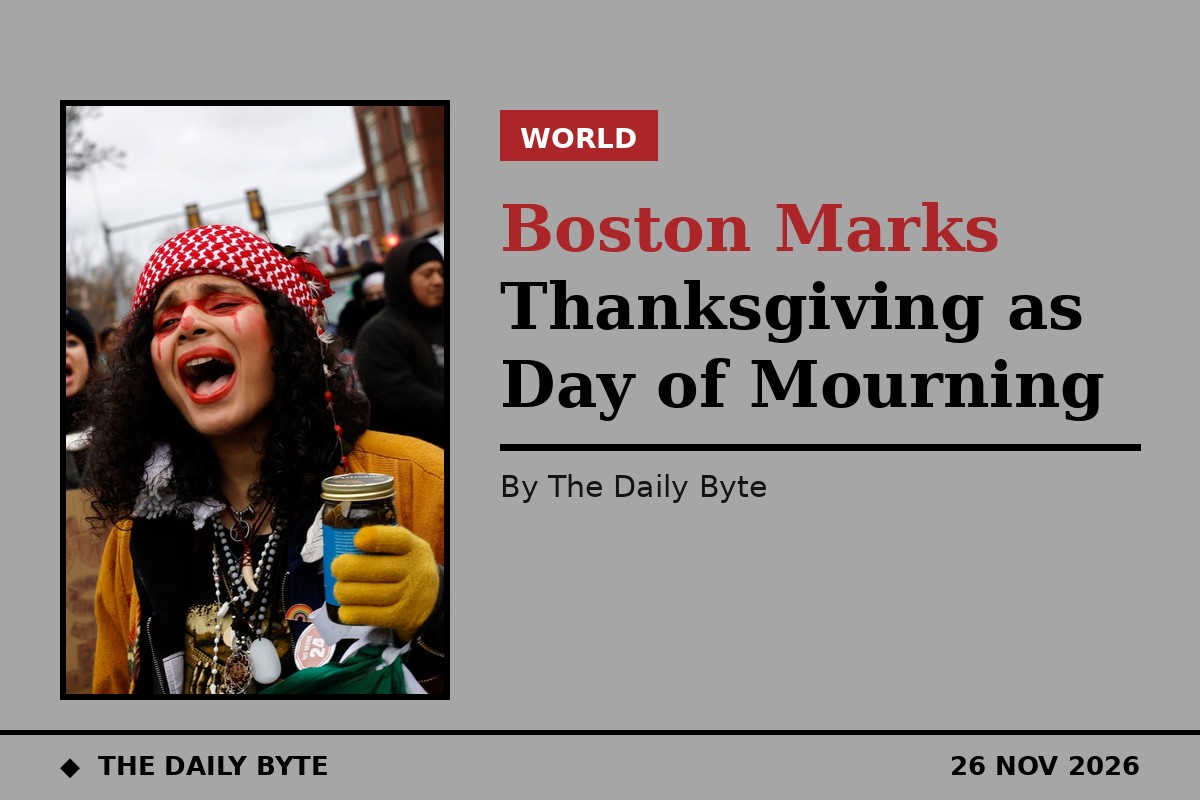
Boston has marked Thanksgiving Day as a National Day of Mourning for the third year running, while the Indigenous observance at the heart of the resolution has ended up in court in nearby Plymouth.
The Boston City Council adopted the resolution on a voice vote at its meeting on 18 November. It recognises Thursday 26 November, Thanksgiving Day, as a National Day of Mourning in the City of Boston. The measure carries no legal weight and makes no change to city operations.
Councillor Benjamin Weber introduced the resolution, and Councillor Julia Mejia was added as a third co-sponsor during the meeting. Eleven other councillors co-sponsored it. Weber first brought the measure in 2024 and filed it again in 2025.
"While many of us will gather on Thanksgiving to celebrate family and gratitude, I hope this resolution serves as a reminder that we must also face the full truth of our country's history," Weber told colleagues, pointing to "the centuries of colonization, displacement, and broken treaties endured by indigenous peoples right here in Massachusetts and across the country."
Mejia said the version of the holiday many people learn growing up leaves out its consequences for Native communities. "The story of Thanksgiving that so many of us grew up learning in school fails to acknowledge the devastating consequences that colonialization had and continues to have on Indigenous peoples," she said.
A gathering held since 1970
The resolution honours an observance held in Plymouth since 1970. Indigenous people and their allies have gathered on Cole's Hill in Plymouth every fourth Thursday of November to mark the National Day of Mourning, a tradition begun by Wampanoag leader Wamsutta Frank James and the United American Indians of New England (UAINE). Thursday's gathering is the 57th.
The resolution commends UAINE, which organises the event, and the North American Indian Center of Boston, and says the council "joins our Indigenous residents who mourn the loss of Indigenous life and culture."
Plymouth court splits the ruling
This year's observance in Plymouth reached court over a dispute about the event's logistics. The argument turns on a 1998 settlement, signed after police pepper-sprayed marchers at the 1997 gathering and arrested 25 people. The settlement resolved the civil rights claims that followed and let UAINE hold the event each year.
On 10 November, the Plymouth Select Board voted to break with the settlement and demanded that organisers provide an insurance policy. UAINE filed an emergency motion on 19 November, after the board voted behind closed doors to demand the policy.
Plymouth Superior Court Judge Brian Glenny ruled on Tuesday. He barred the town from demanding insurance, permits, a bond or indemnification from the organisers. On the stage, he went the other way. "Plymouth has no obligation under the agreement to provide a stage for UAINE," the judge wrote in his 10-page order, concluding that the group could put up a stage of its own.
UAINE said the decision rested on a one-word technicality the town had not raised in more than a decade, and said it is weighing its legal options. "Settlers frequently break their agreements with Indigenous peoples," the group argued in a statement.
Select Board Chair Deb Iaquinto said a town-built stage was "never promised or mandated under the original 1998 agreement." She said the board had floated alternatives since January, including renting a stage or using the concrete one already standing on state conservation land.
Whatever the court decided, the gathering goes ahead. "I can assure you we will be there Thursday," UAINE co-leader Mahtowin Munro told the Plymouth Independent. The Boston resolution itself does not address the Plymouth dispute.


