Brazil Farm Exports to EU Jump 14.8% on Mercosur
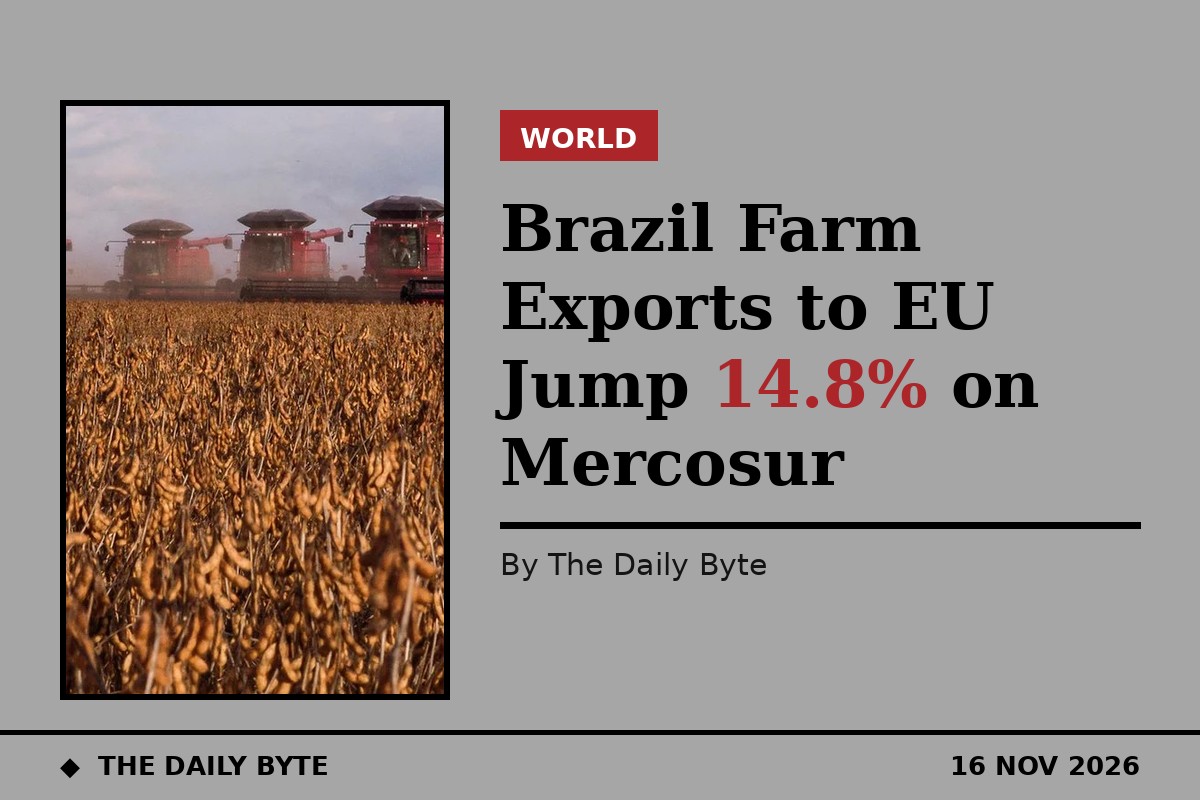
Brazil's agribusiness exports to the European Union rose 14.8% in value during the first five months of the Mercosur-EU trade agreement's provisional application, reaching $12.21 billion between May and September 2026, the agriculture ministry said. Export volumes rose 8.1% over the same period, to 17.74 million tonnes from 16.42 million tonnes a year earlier.
The figures, drawn from the ministry's Agrostat system, cover the first five months since the Mercosur-European Union Partnership Agreement began applying provisionally on 1 May 2026. The agreement was signed on 17 January 2026 after more than 25 years of negotiations and is pending full ratification by both blocs.
Soy, meat and coffee lead the gains
The soy complex — soybeans, soybean meal and soybean oil — remained the largest segment, rising to $4.19 billion from $3.12 billion, an increase of 34.2% in value and 20.5% in volume. Meat exports jumped 103.5% in value, with volumes rising 170%, from 101,000 tonnes to 272,000 tonnes.
Fruit and nut exports rose about 15% in value, and honey was also among the products driving growth. The ministry said gains were spread across a wide range of products rather than concentrated in Brazil's traditional commodity exports, and that the first tariff preferences under the deal are already being used for some products, including roasted and soluble coffee and avocados.
What the figures do — and do not — prove
Agriculture Minister André de Paula said the growth showed the competitiveness of Brazilian agribusiness, adding that the country was competing on quality, safety and high production standards rather than volume alone. Tariffs on coffee are scheduled to phase out by 2030, while the first avocado tariff cut was 20% of the baseline rate, with full removal to follow.
The five-month comparison is an early checkpoint, not a final verdict. Commodity prices, harvests, currency movements and existing demand also shape trade, so the rise alone does not prove the agreement caused all of it. The deal covers a combined market of about 720 million people and more than $22 trillion in economic output, and its supporters say more tariff cuts will open further opportunities as the schedule advances.
The agreement also matters beyond farm trade. It creates one of the largest free-trade areas in the world, linking the EU's 27 member states with Mercosur's members, and European officials have presented it as a way to diversify supply chains at a time of trade tension with other major economies. For Brazil, the EU is already a major market, and the ministry's data suggest exporters are moving quickly to use the new preferences where they apply. Further tariff cuts are scheduled in stages, and the ministry is expected to publish updated figures as more months of trade under the deal are recorded.
Sources: Global Agriculture; AgNavigator. Published 16 November 2026.


