Brazil blocks 47,000 illegal betting sites since ban
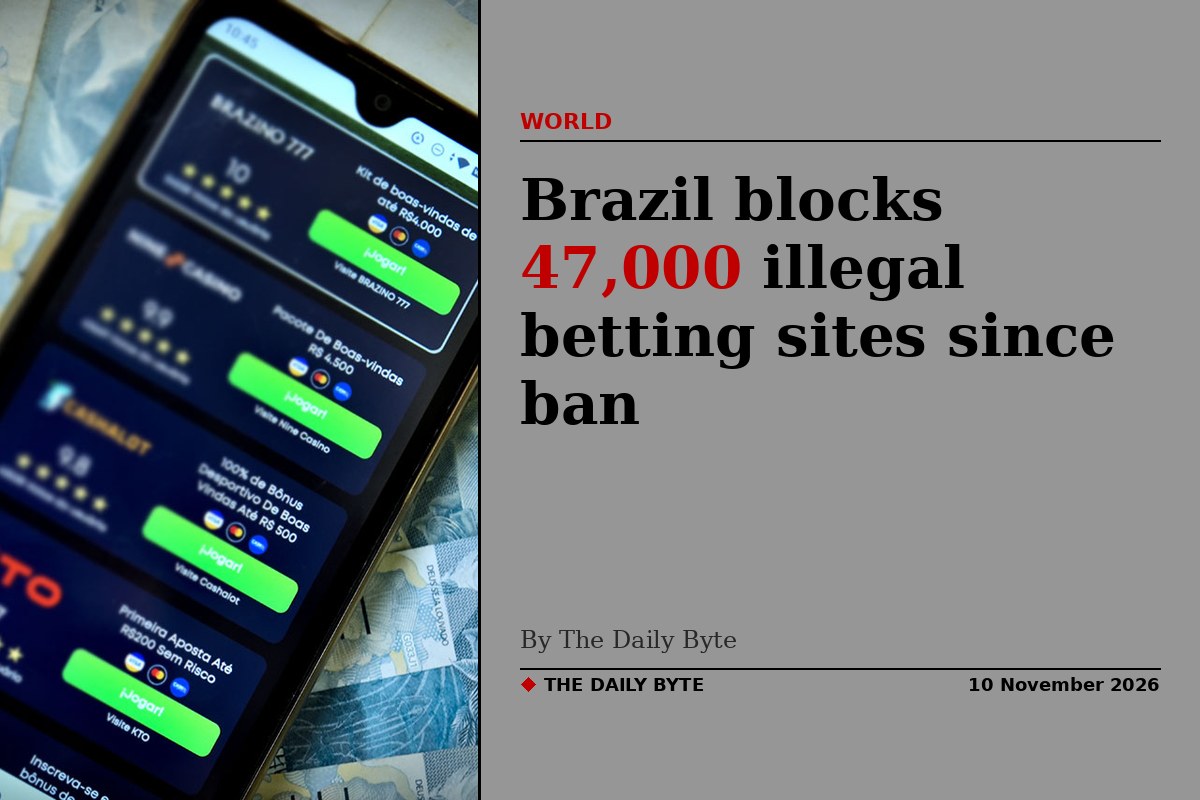
Brazil has blocked more than 47,000 illegal betting websites since its nationwide ban on fixed-odds betting took effect, the country's Finance Ministry has said. The Secretariat of Prizes and Bets, the ministry unit that oversees gambling, reported that the sites were taken down between 25 September and 6 November 2026, an average of more than 1,100 sites blocked every day.
President Luiz Inacio Lula da Silva signed Provisional Measure 1,394/2026 on 25 September, banning fixed-odds betting and online casinos across Brazil, cancelling existing licences and prohibiting betting advertising. The government cited gambling addiction and rising household debt as the reasons for the ban. Licensed betting sites went dark soon after, and the measure also covers operators based abroad that offer bets to people in Brazil.
Enforcement on a huge scale
The scale of the enforcement operation is striking. The Justice Ministry told the Supreme Federal Court it had requested the removal of 36,905 illegal websites between 25 September and 29 October alone. The Secretariat of Prizes and Bets later put the total above 47,000 by 6 November, with new unlicensed sites still appearing: 415 were identified in the two days after the ban took effect, and 543 more appeared in the three days after that, according to industry monitoring.
Industry figures paint an even larger picture of the unlicensed market. The National Association of Games and Lotteries, known as ANJL, said its LegitBet monitoring system identified 60,477 web addresses suspected of offering online betting between the start of its post-ban monitoring and 27 October. The system found betting indicators such as bonus offers, Pix payments and registration forms on 34,134 of those addresses, although the association cautioned that the totals show how many addresses entered its database, not how many authorities have determined to be operating illegally.
Supreme Court hearing ends without a ruling
The ban is now being tested in the courts and in Congress. The Supreme Federal Court spent ten hours on 3 November hearing arguments for and against the measure, with 34 entities taking part, but Justice Luiz Fux, who is leading the case, took no decision and set no date for a ruling. The ban therefore stays in force while the challenge, filed by the ANJL, remains pending.
The industry groups ANJL and the Brazilian Institute of Responsible Gaming have petitioned the court, arguing that the ban is unconstitutional and will cause billions of reais in losses and unemployment. They warn that prohibition could push more gambling activity towards unregulated operators. The institute's executive president, Carlos Lima, has argued that the ban removed supervised companies without stopping the circulation of illegal offers, and the industry advocates a return to a regulated market.
Congress faces a 23 November deadline
A provisional measure takes effect immediately in Brazil but must be voted into law by Congress to become permanent. Congress has until 23 November to vote on the measure, and if it does not decide by then, its validity extends automatically for another 60 days. The measure entered urgency mode on 9 November, which blocks other votes in whichever house holds it.
The stakes are large. Licensed operators took 620 billion reais in bets in 2025 and generated 36.9 billion reais in revenue, according to figures presented at the Supreme Court hearing. Before the ban, more than 60 percent of the market had been operating in the regulated segment, and the regulator had authorised 188 websites. With the ban in force and no licensed betting site operating, the government faces the challenge of policing a market that keeps reappearing under new web addresses almost as fast as the old ones are shut down.


