Brazil Central Bank Sells $1bn as Real Slides
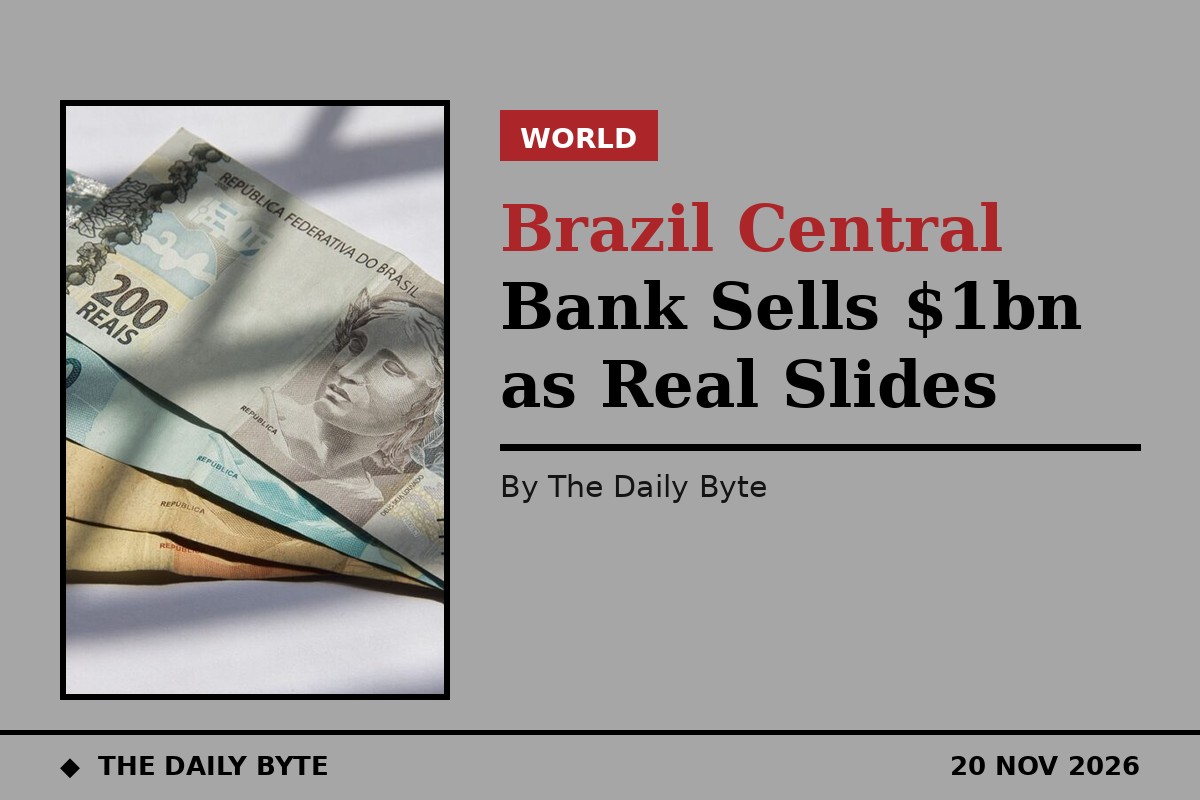
Brazil's central bank sold $1 billion in a spot dollar auction on Thursday, its first outright sale of dollars since December 2024, as the country's currency slid sharply after President Luiz Inácio Lula da Silva's re-election.
The Central Bank of Brazil intervened in the foreign exchange market to slow the real's decline, as investors grew sceptical that the president will put the public finances on a more sustainable path.
The real fell 0.95% against the US dollar on Thursday to 5.92 per dollar, according to Reuters. The currency has fallen from about 5.00 per dollar since Lula's surprise re-election in late October, Central Banking reported, putting it near its weakest level in 19 months.
Markets unconvinced by the fiscal package
The immediate trigger for the sell-off has been disappointment with the Lula administration's fiscal package. Brazil's Senate approved the package, worth about $10 billion, after costly election spending, and completed its vote on Wednesday, rejecting opposition amendments.
The package is intended to improve the government's 2027 budget, but traders have judged it insufficient to stabilise Brazil's public debt. The dollar has now risen for six consecutive sessions, and the relief from Thursday's intervention proved short-lived.
Trading in Tesouro Direto government bonds was also temporarily suspended on Thursday afternoon because of severe market volatility, rattling Brazil's fixed-income market. Only the Tesouro Selic and Tesouro Reserva bonds remained available on the platform during the pause.
Stocks fall as the currency weakens
The Ibovespa, Brazil's benchmark stock index, ended Thursday about 0.7% lower at about 166,300 points, its latest leg down in a slide from roughly 209,000 in early October.
The central bank had already held two dollar auctions with repurchase agreements on Wednesday, also totalling $1 billion, before moving to an outright spot sale on Thursday. The spot auction accepted five proposals, with a cutoff rate of 5.86 reais per dollar.
Brazil's stock exchange, B3, was closed on Friday, 20 November, for the National Day of Zumbi and Black Consciousness, giving markets a pause after a turbulent week.
What happens next
Attention now turns to whether the central bank intervenes again and whether the government can convince investors that its fiscal plans are credible. The currency's slide matters well beyond traders: a weaker real pushes up import prices and inflation, squeezing households and businesses across Latin America's largest economy.
For Lula, who won a fourth term in a runoff in late October, the market reaction is an early test of his economic programme. The central bank's first spot intervention in almost two years shows it is willing to act, but the limited impact so far suggests that traders want stronger fiscal signals, not just dollar sales.


