Brazil Plans 2027 Fiscal Savings After Lula Re-election
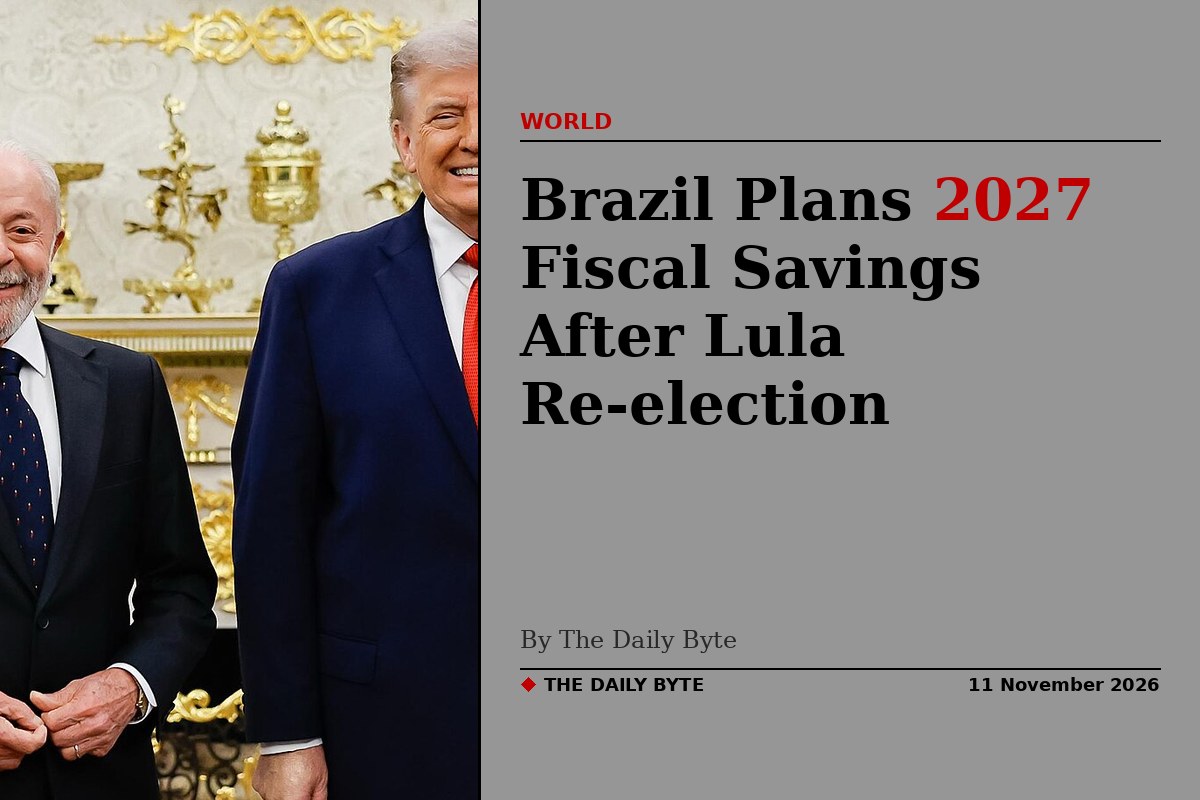
Brazil will unveil measures in the coming days aimed at a fiscal adjustment worth 0.5 per cent of gross domestic product in 2027, as President Luiz Inácio Lula da Silva’s economic team prepares proposals for Congress in an effort to calm investors after his re-election. The package is expected to be presented to lawmakers by next week.
The move follows a sell-off in Brazilian financial markets after Lula won re-election in late October, with investors questioning whether the government would do enough to stabilise public debt. The real has weakened, long-term interest rates have risen and the benchmark Bovespa stock index has fallen since the 25 October runoff, in which Lula defeated right-wing Senator Flávio Bolsonaro.
What is in the package
One central measure would stop extraordinary government revenue from feeding into the calculation of the constitutional minimum spending levels for health and education, even in years when the government records a surplus. A similar rule already applies in years when the government runs a primary deficit, and officials are considering extending it to surplus years as well.
Another pillar could be a fresh cut to tax benefits, according to a government source cited by Reuters. The overall adjustment could amount to between 70 billion and 80 billion reais, or about $12.5 billion to $14.3 billion, next year, the source said. Bloomberg, citing people familiar with the matter, put the spending-cap element of the proposals at between 50 billion and 60 billion reais in 2027.
The bill is expected to be presented by a government-backed lawmaker rather than directly by the government, Reuters reported, and the finance ministry did not immediately respond to a request for comment. The proposals are also designed to give the government greater flexibility to halt spending if fiscal targets come under threat.
Why markets are pressing Lula
Gross public debt has risen by more than 10 percentage points during Lula’s current term to reach 82.9 per cent of GDP, according to Reuters, while the nominal budget deficit stands at around 10 per cent of GDP. Investors have called for concrete action to show that the next government will put the debt trajectory on a stable path while maintaining social and investment commitments.
The central bank paused its easing cycle last week, keeping the benchmark Selic interest rate at 13.75 per cent as it grapples with a worsening inflation outlook. In a televised address on Sunday, Lula reaffirmed his commitment to fiscal responsibility and said he wanted to help bring down high interest rates.
Lula, 81, increased government spending through stimulus measures during the campaign, and his re-election dashed hopes among some investors that a change of leadership would bring tighter fiscal controls. His new four-year term begins on 5 January, and the fact that the current economic team is negotiating the package with Congress points to significant continuity in economic policy and personnel. The team’s stated aim is a gradual adjustment reaching a primary budget surplus of 1.5 per cent of GDP, excluding interest payments, by the end of the next term.
The risks ahead
Meeting those objectives may become harder if economic conditions worsen. Fuel subsidies currently cost the government around 15 billion reais a month, and soaring oil prices could impede efforts to reduce them, while slower growth could dampen tax revenues.
The team is also weighing the timing of any tightening carefully, mindful of the backlash that followed rapid austerity after former President Dilma Rousseff’s re-election in 2014. For now, the test is whether the measures unveiled in the coming days are detailed and credible enough to convince markets that Brazil’s debt can be stabilised without abandoning the government’s spending priorities.


