Brazil Records First Mpox Death of 2026 as Cases Top 1,000
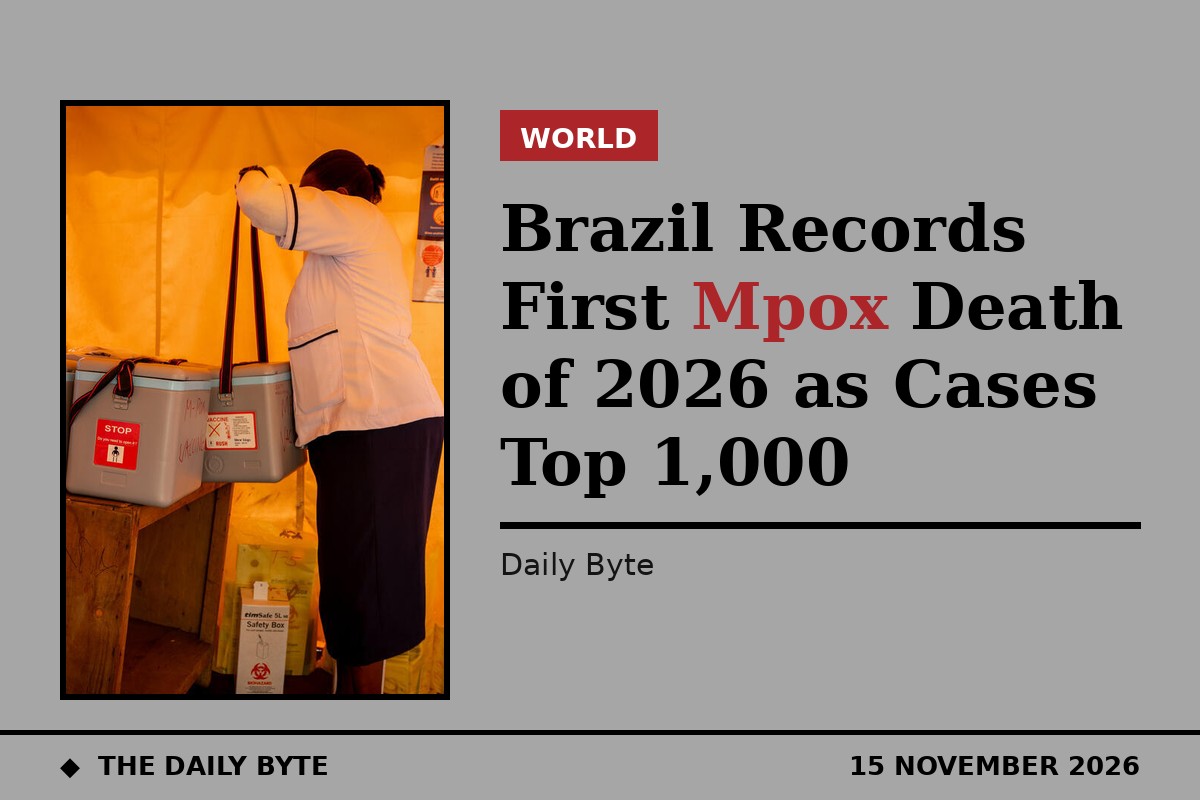
Brazil has recorded its first death from mpox in 2026, with confirmed cases passing 1,000, according to a report from the Fiocruz public health institute, which is affiliated with Brazil's Ministry of Health.
The report, published on Friday, recorded 1,009 confirmed infections across Brazil this year. The death occurred in the city of Rio de Janeiro, where confirmed cases recorded between September and November doubled compared with those recorded during the rest of the year. Most cases this year have been recorded in Sao Paulo and Rio de Janeiro, the country's two largest cities.
Health authorities have stepped up disease surveillance and bought an additional 25,000 doses of mpox vaccine. Despite the rise, officials said the increase did not constitute an outbreak, because case numbers remained considerably below the peak recorded in 2022, when mpox spread rapidly around the world.
Who died, and what is known about the case?
Rio de Janeiro authorities confirmed the death in a patient aged between 40 and 49 who had a pre-existing immunosuppressive condition. The city government said the patient's case was aggravated by an underlying illness, which it did not name.
State health data show Rio has recorded about 390 confirmed cases this year, more than triple the 123 it recorded in all of 2025. Two-thirds of the state's diagnoses have appeared since mid-September, and 55 patients have required hospital admission. The average age of infected people in the state is about 34.
Sao Paulo has recorded a similar number of cases, with the two states together accounting for more than three-quarters of the national total. Brazil's health ministry monitoring panel counted 1,023 confirmed cases as of Thursday, 12 November, with further confirmations taking the total higher by the weekend, according to Brazilian media reports.
Why officials say this is not an outbreak
Fiocruz said the country was not classifying the situation as an outbreak because the current number of cases remained well below the 2022 peak, when Brazil recorded thousands of infections. The institute's report framed the recent rise as a sharp but contained increase concentrated in two states, rather than a nationwide surge.
The government has responded by strengthening surveillance and reinforcing vaccine stocks. The health ministry authorised the purchase of 25,000 vaccine doses, while states have resumed targeted two-dose vaccination for defined high-risk groups. The city of Rio received about 2,000 doses for people with advanced HIV-related immunosuppression, according to Brazilian reporting.
Genomic surveillance has also been expanded. Brazilian health reporting has noted a growing share of clade Ib detections in Rio de Janeiro and Sao Paulo, a lineage first identified in the eastern Democratic Republic of Congo in 2023 and linked to a severe outbreak across several African nations in 2024. Health officials in both states identified the variant early this year.
What is mpox?
Mpox is a viral illness that can cause fever, swollen lymph nodes and a painful rash. It spreads mainly through close physical contact with an infected person, including skin-to-skin contact, and through contaminated materials such as bedding. Most people recover within a few weeks, but the illness can be more severe in people with weakened immune systems, in young children and during pregnancy.
The World Health Organization declared mpox a public health emergency of international concern in 2022, and again in 2024, following its rapid spread across several countries. Vaccination is recommended for people at higher risk of exposure, rather than for the general population.
Brazil has lived with mpox since it was first notified in the country, logging 15,455 cases and 19 deaths in total before this year, according to the health ministry's monitoring data cited by Brazilian outlets.
What happens next
Health officials in Rio and Sao Paulo are continuing targeted vaccination and contact tracing, while Fiocruz and university laboratories track which viral lineages are circulating. The ministry's epidemiological panel is updated as new cases are confirmed, and the coming weeks will show whether the September-to-November rise levels off or continues into the summer.
For now, the official message is one of vigilance rather than alarm: cases are rising in two states, one person has died, and the health system has vaccine and surveillance measures in place. Anyone who develops an unexplained rash or other symptoms after close contact with a suspected case should seek medical advice promptly.


