Brazil Rejects Macron's 'Doped' Meat Remark
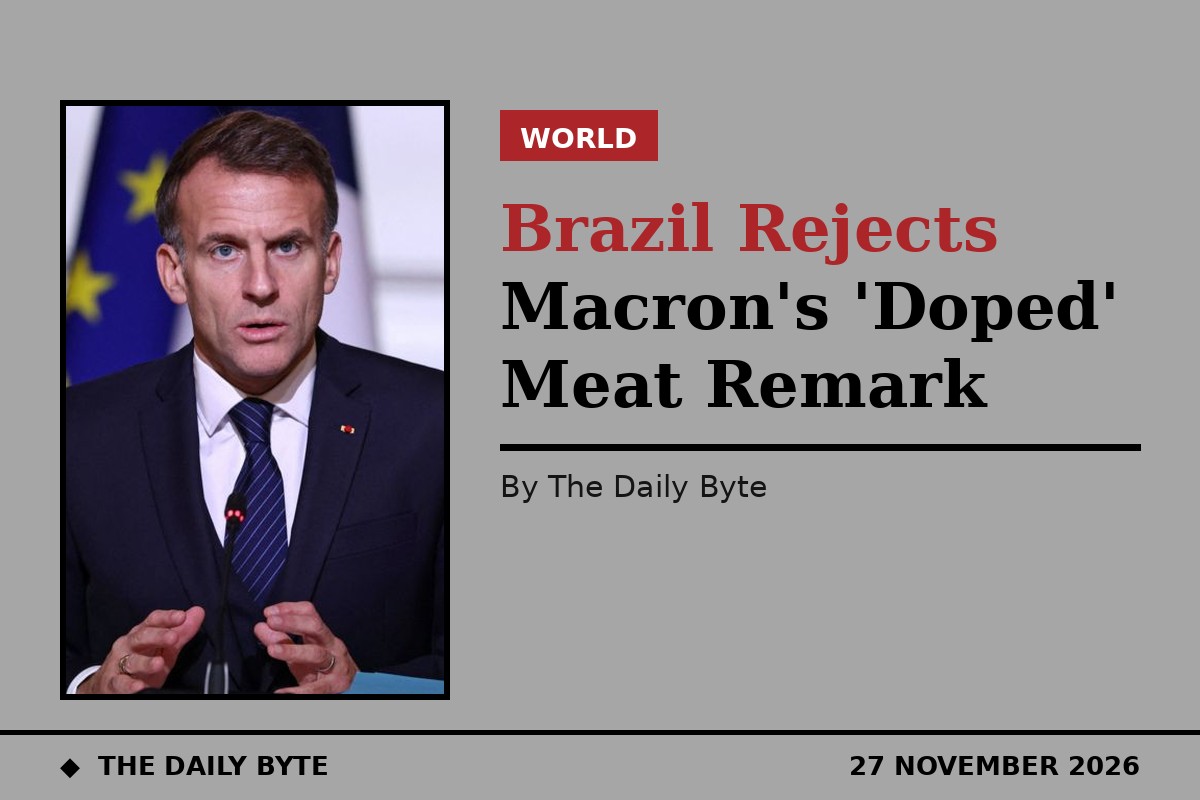
Brazil's government has formally rebuked French President Emmanuel Macron after he described Brazilian meat as "doped", in the latest flare-up of a trade row between the European Union and the South American bloc Mercosur.
In a joint statement issued on Thursday, Brazil's foreign affairs and agriculture ministries said they regretted Macron's remarks, which they said "spread misinformation and contradict the widely available technical and scientific evidence on animal protein production in Brazil".
Macron made the comment on Wednesday while meeting farming union representatives at the Élysée Palace, where he celebrated EU restrictions on imports of Brazilian meat and poultry that took effect in September. He told the gathering he was "proud of the fight we led" against Mercosur.
The remark that sparked the row
"And the 'doped' meat, if I may put it that way, or rather meat from Mercosur countries, especially Brazil, that was arriving in our ports and therefore entering our markets without complying with our rules, was ultimately banned," Macron said.
The EU banned Brazilian meat, poultry and other animal products over the use of antimicrobials in farming, saying Brazil's controls were insufficient. The measure has become a central grievance for French farmers, who argue they must meet strict EU rules while competing against imports that do not.
Brazilian industry groups, including the beef exporters' association Abiec and the animal protein association ABPA, also rejected Macron's wording, describing it as without technical basis and calling for a firm diplomatic response.
Brazil's defence
In its defence, Brazil said it had supplied animal protein to the EU for decades and exported meat to 177 markets. It said the country had a rigorous sanitary control system, corroborated by a recent European audit, and observed stringent environmental requirements.
Brazil is a massive exporter of meat, especially beef, with some $1.84 billion (£1.4 billion) worth going to EU markets alone in 2025, according to the country's agriculture ministry.
Brasilia said it was concerned about the "clearly political nature" of recent EU restrictions and urged France to reconsider its position "in light of scientific evidence". It added that, while its partnership with France was important, "in the face of protectionist pressures, the best interests of the bilateral relationship must prevail, always guided by mutual respect and reciprocity".
An EU committee is due to meet on 7–8 December to consider restoring Brazil's authorisation for poultry and honey exports, a decision that could ease or deepen the dispute.


