Brazil Senate approves Lula fiscal package
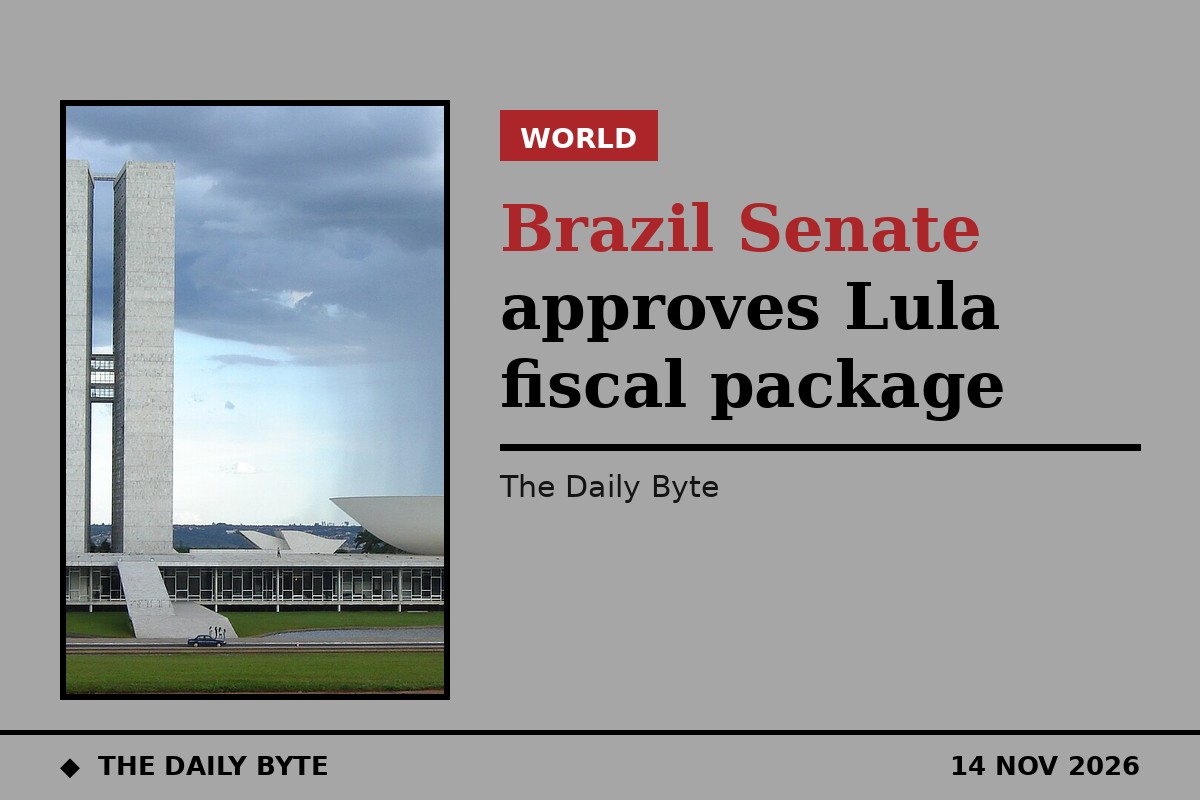
Brazil's Federal Senate has approved the main text of President Luiz Inácio Lula da Silva's fiscal adjustment package, a set of spending and tax measures the government says could improve the public finances by up to R$60 billion (about $10.8 billion) in 2027.
The base text of Complementary Law Project 299/2026 was approved on Thursday night, 12 November, by 45 votes to 31, after an urgency request passed by the narrower margin of 40 to 38. The proposal was reported by Senator Eduardo Braga and formally filed in the Senate by Senator Jaques Wagner, a leading member of Mr Lula's Workers' Party.
What the package contains
The measures give the government broader powers to contain public spending. They include a 10 per cent linear cut in tax benefits granted to sectors of the economy, limits on the use of tax credits by companies, and wider authority for the executive to freeze discretionary spending when needed.
The package also reduces the cap on real growth in public spending from 2.5 per cent to 2 per cent in years when additional fiscal containment measures are triggered. It sets a deadline for Congress to regulate so-called super-salaries paid above the constitutional ceiling.
Planning Minister Bruno Moretti told a congressional hearing that the package was expected to have a fiscal impact of between R$50 billion and R$60 billion next year, with larger savings in subsequent years. He said the measures would give the government more tools to curb spending and review tax expenditures.
Why the government wants it
The package is intended to protect the government's target of a primary surplus equivalent to 0.5 per cent of gross domestic product in 2027, and to accommodate spending pledges made during Mr Lula's election campaign. Mr Moretti said the government was “absolutely certain” it would achieve an effective primary surplus of 0.1 per cent of GDP next year, as set out in a 2027 budget proposal submitted to Congress in August.
Investors have been pressing Mr Lula, who was re-elected for a fourth term last month, to curb spending and put rising public debt on a more sustainable path. The government argues the package provides an additional buffer of roughly R$50 billion, with proposals to cap certain expenditures bringing the total estimated impact to R$60 billion.
What happens next
The bill is not yet law. Four amendments, known as highlights, still have to be voted on by the Senate, with that debate scheduled for Tuesday, 17 November. After that, the bill goes to the Chamber of Deputies for consideration.
The package has drawn criticism from opposition senators and industry groups, who said it was rushed through and could harm businesses or prompt legal challenges. Workers' Party lawmaker Lindbergh Farias warned that pushing the package through Congress without broader debate could fracture the governing coalition.
In a separate vote, the Senate also approved a measure barring the blocking of resources from the Fust fund, which supports internet access for public schools, and requiring the fund to prioritise high-quality internet for basic-education schools, especially in rural and remote areas.


