Brazil Unveils Roadmap to Cut Dependence on Fossil Fuels
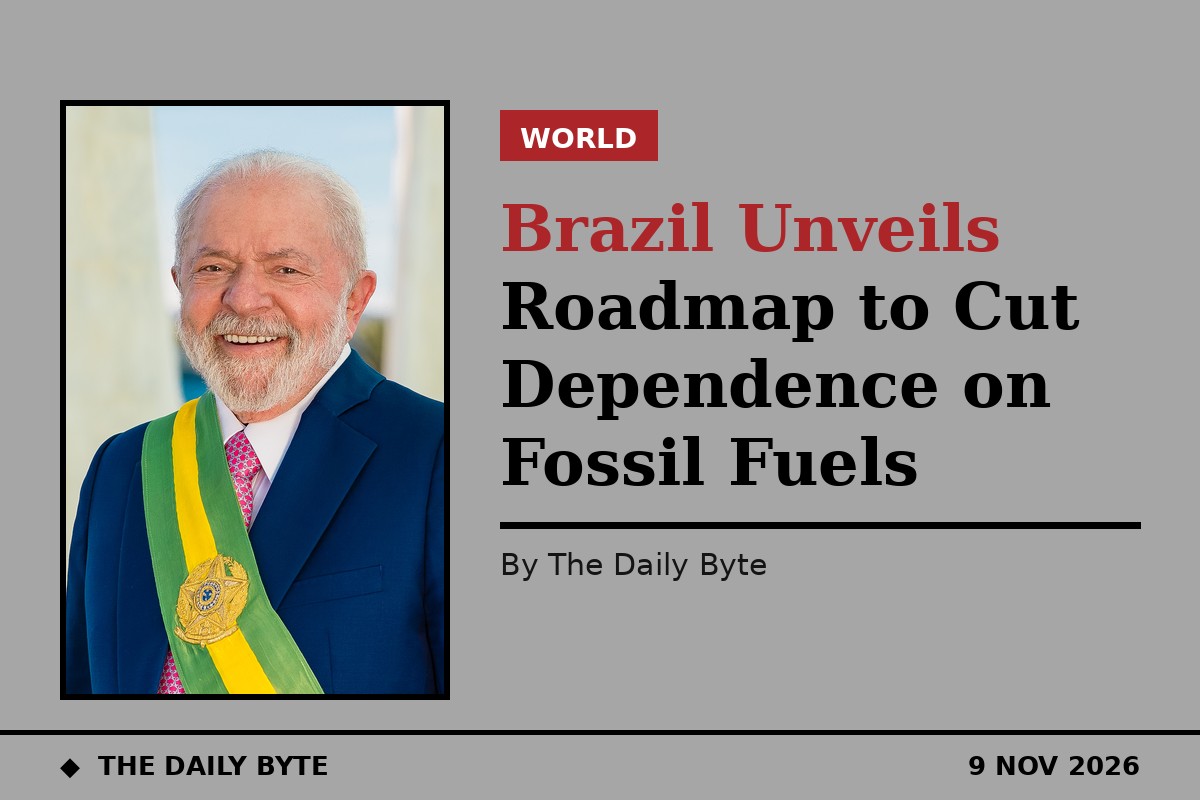
Brazil has set out the rules for writing a national roadmap to reduce its dependence on fossil fuels, approving 18 guidelines that will shape the country's energy transition in the years ahead.
The resolution was published on Friday 6 November by the National Energy Policy Council (CNPE), Brazil's top energy policy body, and mandates the preparation of a National Roadmap covering energy security, economic growth and public participation while advancing the country's climate commitments.
What the resolution does
The resolution does not create the roadmap itself. Instead, it sets 18 directives for an inter-ministerial working group, coordinated by the Ministry of Mines and Energy, which will draft the plan. The group will have 270 days to complete the document once its members are appointed, with a possible 90-day extension.
The finished roadmap must draw on Brazil's national energy transition plan, known as Plante, its climate plan, its nationally determined contribution under the Paris Agreement, and its ecological transformation plan. It sets no production ceiling and no exit date for oil, gas or coal; what exists now is a timetable and a set of policy questions.
Road to COP31 and COP32
Brazil plans to present the organised drafting process at COP31 in Antalya, Turkey, which runs from 9 to 20 November, and the roadmap is targeted for conclusion in 2027, with COP32 as the milestone. Brazil's COP30 presidency presented a separate, voluntary global phase-out roadmap on 3 November.
President Luiz Inacio Lula da Silva, who was re-elected on 25 October, called on world leaders to draw up roadmaps to overcome dependence on fossil fuels at the COP30 climate talks in Belem in November 2025, which Brazil hosted. Around 80 countries backed the initiative. An initial presidential decree required ministries to draft a resolution by 3 February 2026, but the administration missed that deadline.
A country that still pumps oil
The decision comes from a country that pumps roughly four million barrels of oil a day and has identified substantial oil resources in its Equatorial Margin. Lula has said Brazil intends to lead the debate on reducing fossil fuel use even as it expands domestic oil production.
"What is important is that Brazil does not speak only in theory. Brazil puts forward proposals," Lula said. "Even so, we remain a country that will lead the debate on reducing their use, until one day we can dream of no longer needing fossil fuels."
According to the 2026 National Energy Balance, renewable sources accounted for 49.5 per cent of Brazil's total energy matrix in 2025, significantly higher than the global average of 14.5 per cent recorded in 2023.
The CNPE also approved the National Energy Transition Plan on the same day. Its first cycle runs from 2026 to 2029 and covers 15 blocks, 24 action lines and 68 actions, alongside measures on electric mobility, waste-to-energy, energy data and the cooking-gas market.
Source: Argus Media and Devdiscourse.