Brent crude holds near $96 after 3.3% jump
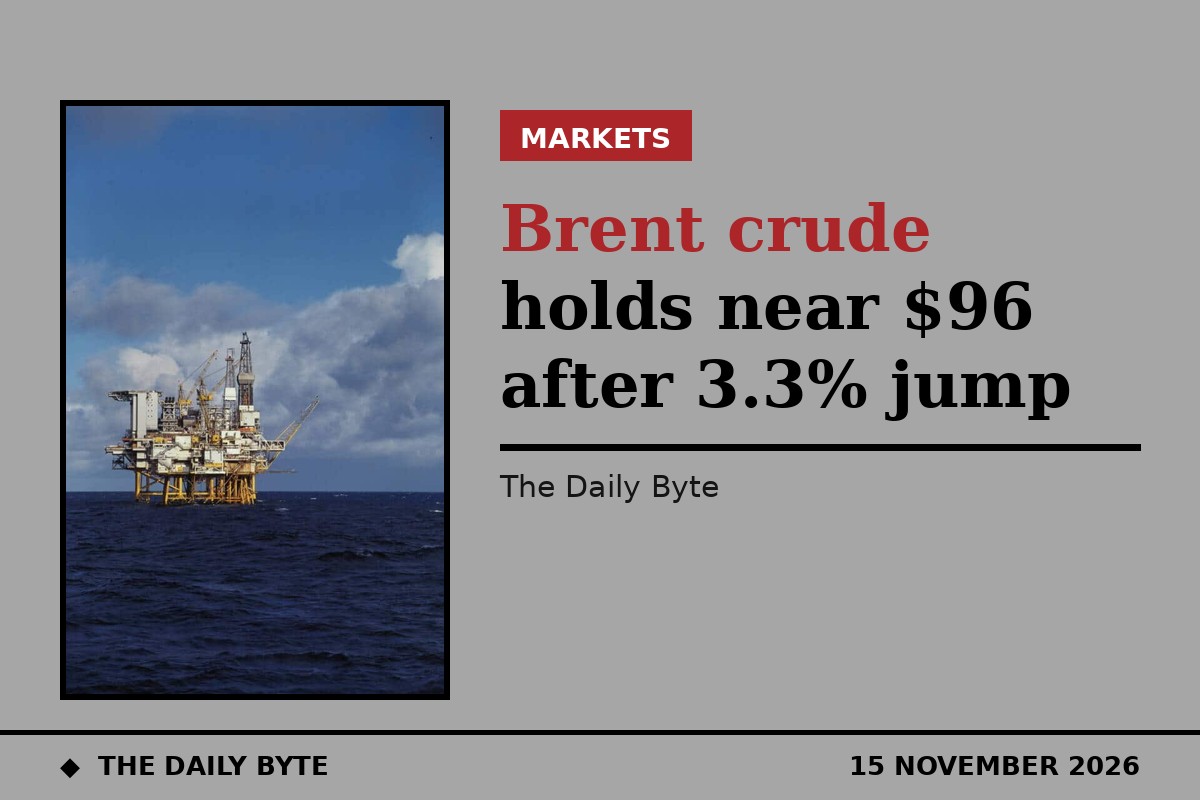
Brent crude held near $96 a barrel over the weekend after jumping 3.3% on Thursday, as worries about Middle East supply outweighed forecasts of a growing oil surplus.
The international benchmark gained $3.06 to settle at $95.82 a barrel on Thursday 12 November, after claims of attacks on Saudi energy facilities and disruption to shipping through the Strait of Hormuz raised concern about global supply. US West Texas Intermediate rose $2.21, or 2.6%, to $88.74 on the same day.
Trading was quieter on Friday. Brent crude futures on London's ICE exchange edged up by $0.02 to $95.84 a barrel, while US light crude on the New York Mercantile Exchange fell by $0.18 to $88.56.
Supply fears versus surplus forecasts
The rally came despite a bearish backdrop. Analysts have pointed to signs of an oil surplus, with Gulf exports recovering and global stocks rising, and the International Energy Agency has warned of a surplus in the market. For now, however, traders are pricing in the risk that the conflict in the Middle East disrupts shipments through Hormuz, the narrow waterway through which a large share of the world's seaborne oil passes.
The jump was also a sharp reversal from earlier in the week. On Tuesday 10 November, Brent had fallen below $90 a barrel for the first time since August, trading at $90.26, down 2.5% on the day, with US crude at $85.06. Thursday's 3.3% rise wiped out that fall in a single session and left Brent more than $5 a barrel higher than its Tuesday low.
Brent's next settlement, on Monday 16 November, will be the first market test of whether the higher level holds. With no trading over the weekend, the front-month contract was quoted at $96.29 on Sunday morning, little changed from Friday's close.
What it means for UK drivers and bills
Oil at close to $96 a barrel keeps upward pressure on petrol and diesel prices in the UK, and on the energy costs that have pushed British inflation to 3.5%. The Bank of England has cited elevated energy prices as a key reason for raising interest rates to 4% this month, and it expects inflation to reach around 5% by the middle of next year.
For the UK's North Sea producers, higher prices support revenues, while for households the cost of filling a car and heating a home remains sensitive to every move in the crude market. Traders will watch Monday's session closely for signs of whether supply fears or surplus forecasts win out.