Brent crude price set for $4.60 drop on Tuesday
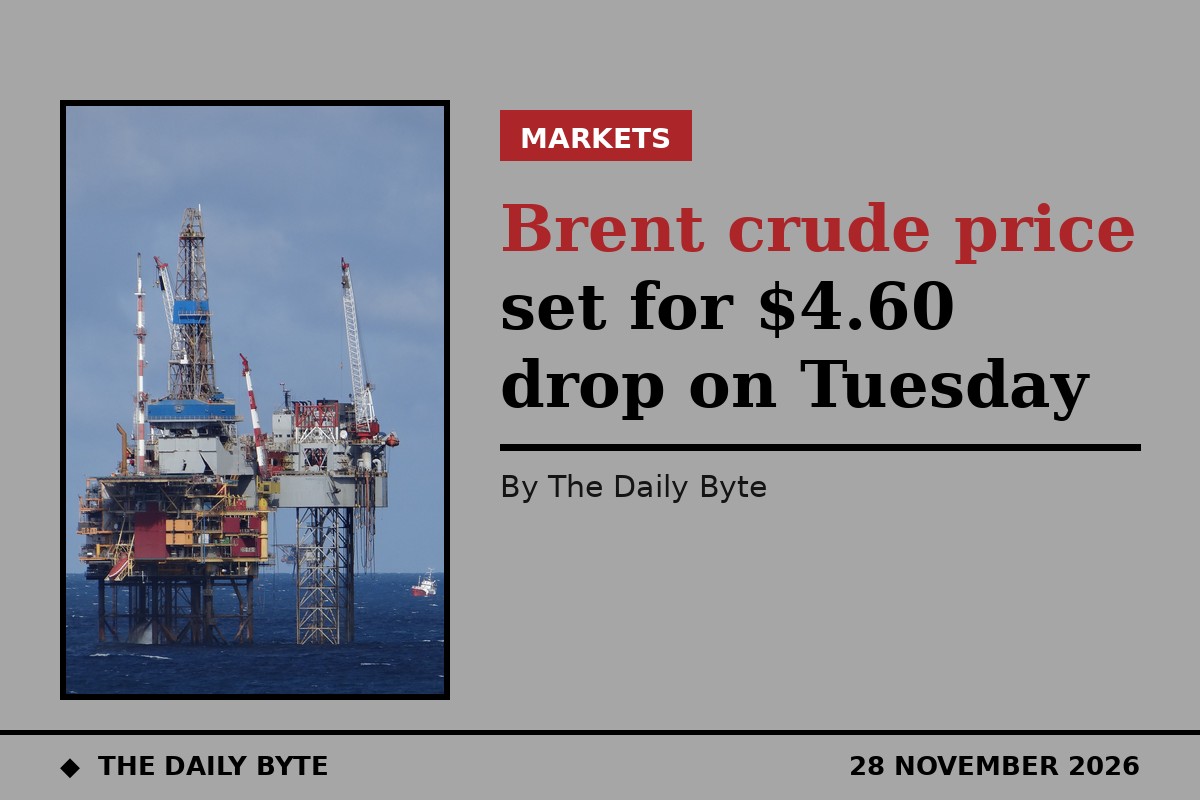
The Brent crude price quoted on most screens will fall by about $4.60 a barrel on Tuesday 1 December, even if the oil market itself does not move. The January futures contract, the one most news outlets still quote, trades for the last time on Monday 30 November. From Tuesday, February 2027 becomes the front-month contract, and it settled on Friday at $90.84 a barrel, about $4.60 below January's $95.44 settle.
January Brent settled at $95.44 on Friday 27 November, down $1.13, or 1.2 per cent, from Thursday's $96.57, according to ICE Brent data reported by CNBC. It traded as high as $98.06 earlier in the session. For the week it still gained 3.1 per cent, rising from $92.57 the previous Friday.
The gap between the two contracts was visible all week. At 12:28 UTC on Friday, January traded at $96.51 and February at $92.01, a difference of 4.7 per cent, Oil Price Live reported. March stood at $88.93, May at $84.92 and December 2027 at $77.58. Every later month costs less than the one before it, a sign that buyers are paying more for barrels that arrive sooner.
Why the gap is so wide
January's premium over February has grown all week, from about 2.9 per cent at last Friday's settlement to 4.4 per cent on Wednesday and 4.9 per cent on Friday, according to Oil Price Live. That is wider than at the last contract expiry, when December ended just under 4 per cent above January. Rory Johnston, founder of the research firm Commodity Context, told Reuters that "we were oversold" when Brent slipped under $90, pointing to thin stockpiles, slower traffic through the Strait of Hormuz and what he called a "known, acute risk" to about 15 per cent of the world's oil supply.
Some price feeds and charts switch to the next contract earlier, once most trading has moved on, so Brent figures from different sites can differ by several per cent this week, and a chart can show a sudden fall that no trader caused, Oil Price Live noted. Reuters and Bloomberg usually keep quoting January through Monday's close and switch to February the next day.
A strong week inside a weak month
The week's gain came after attacks on energy sites in Saudi Arabia. Yemen's Houthis said on Wednesday that they had attacked the Ras Tanura refinery, and on Thursday a strike in Jazan killed a refinery worker from Nepal, with Riyadh blaming the Houthis. Iran's Revolutionary Guards also said mines had hit two more tankers near Khasab in Oman, a claim nobody else has confirmed. For most of November, prices had slid: Gulf producers were shipping more crude again, the International Energy Agency sees supply running about 2 million barrels a day ahead of demand this quarter, and President Trump has held back from a new large-scale strike campaign against Iran. On Monday, January settled at its lowest in three months after Mr Trump said further strikes could wait until next year. Three straight gains followed, worth about 8 per cent by Thursday's settlement.
Measured on January alone, Brent has lost about 15 per cent since its 30 October settlement, putting it on course for its first monthly loss since June, Oil Price Live reported. Bloomberg's count, which starts from the December contract that expired on 30 October, puts the November fall at almost a fifth.
OPEC+ meets on Sunday
OPEC+ ministers meet on Sunday 29 November to set the group's output targets for 2027. Three sources told Reuters the group has agreed in principle to keep output targets unchanged in the first quarter of 2027, and keeping today's quotas in place into early 2027 is on the table, according to two people who spoke to Reuters. Iraq and Kazakhstan are still disputing the capacity audit that is meant to shape new quotas.
January WTI, the US benchmark, last traded at $83.33 on Friday, down 0.42 per cent from Wednesday, according to CNBC. Brent's 52-week high is $126.41, set on 30 April 2026, about 24 per cent above Friday's settle. Monday is both the first trading session after the OPEC+ decision and January Brent's last trading day. On Tuesday, the number on the screen changes; the oil does not.


