Brent Ends Week Higher Despite Friday Fall
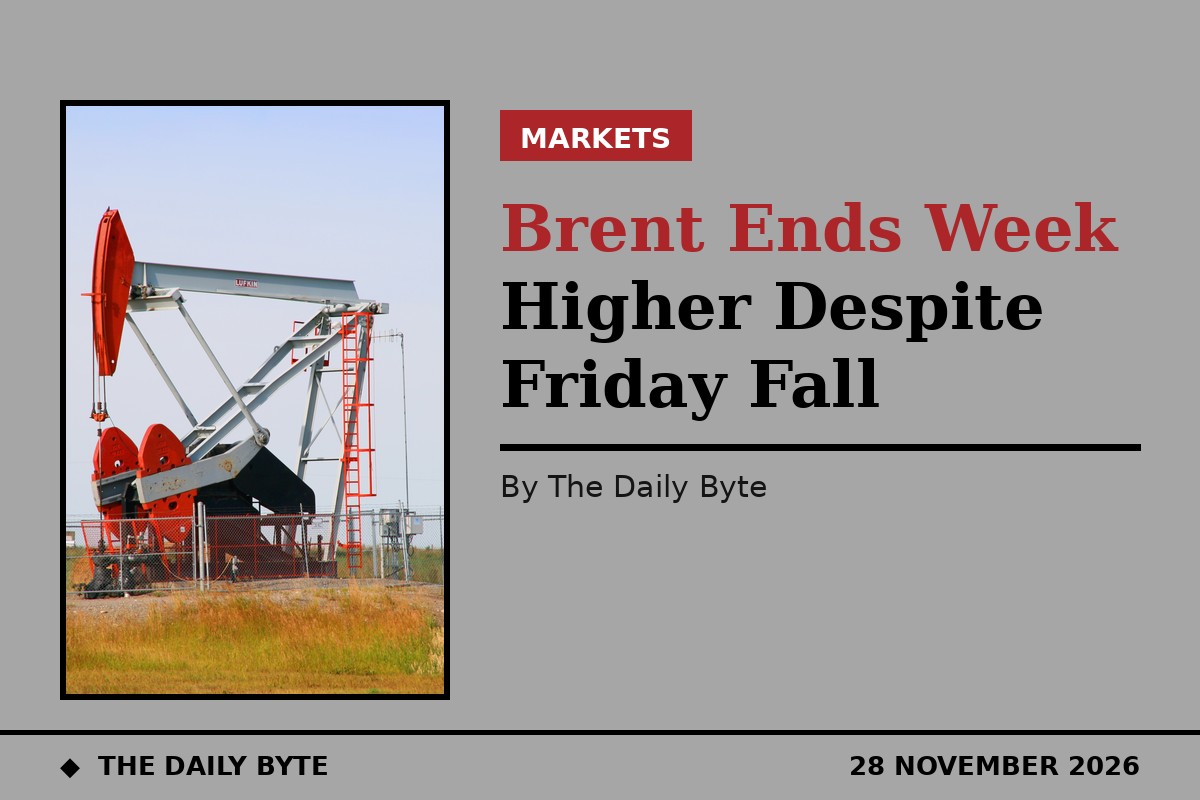
Brent crude slipped on Friday but still closed the week higher, recording its first weekly gain in November as attacks on tankers and energy sites in the Middle East kept supply fears at the front of traders' minds.
Brent futures fell $1.13, or 1.2%, to settle at $95.44 a barrel on Friday 27 November, Reuters reported. The contract had touched its highest level since 9 November earlier in the session but stayed short of the $100 mark. US benchmark West Texas Intermediate settled at $83.08 a barrel, down 60 cents, or 0.7%, from Wednesday's close. There was no Thursday settlement for WTI because of the US Thanksgiving holiday.
For the week, Brent gained about 3%, snapping a three-week losing streak, while WTI finished the week lower. The weekly rise was Brent's first in November, a month in which prices had been dragged down by talk of a growing surplus.
Supply fears return to the market
The rally in the early part of the week was driven by a run of attacks on Middle East energy infrastructure. Iran has continued to attack ships passing through the Strait of Hormuz, the narrow channel that carries a large share of the world's seaborne oil, disrupting exports. Yemen's Houthis have struck Saudi Arabian facilities, claiming attacks on Ras Tanura, the kingdom's largest refinery and a major crude export hub, on Wednesday 25 November.
A day later, a projectile struck Saudi Aramco's Jazan refinery on the Red Sea coast, killing a worker and temporarily halting some operations, Saudi Arabia's Energy Ministry said. The US military said on Friday it had disabled a commercial ship on Thursday after it tried to run the US blockade of Iran, while an adviser to Iran's supreme leader said Tehran would keep the Strait of Hormuz shut while vowing to break the embargo.
"Attacks on Middle Eastern energy facilities and tankers have brought supply disruption back into focus," Mark Schaefer, a director at brokerage Liquidity Energy, told Reuters. Data provider Kpler put oil flows through the Strait of Hormuz at just 31% of prewar levels, according to preliminary figures cited by Dow Jones Newswires, with delays to some November and December cargoes raising doubts over the reliability of near-term Middle East supplies.
OPEC+ meets on Sunday
Attention now turns to Sunday's meeting of OPEC+, the group that includes Saudi Arabia and Russia, which will discuss output policy for 2027. Three people with knowledge of the talks told Reuters the group is set to keep first-quarter 2027 output targets unchanged. Existing production agreements are due to expire at the end of this year, and the meeting will also assess members' sustainable production capacities, which feed into individual quotas for next year.
Iraq is in negotiations with OPEC to raise its production ceiling as it looks to develop its energy sector, oil minister Basim Mohammed Khudair said on Friday. Analysts cautioned that the meeting may not settle much: MUFG said the impact of the gathering on prices is likely to be tempered by the outlook for the regional conflict, while Commerzbank analyst Barbara Lambrecht said it could end without a final decision, leaving current quotas in place for now.
Capital Economics senior climate and commodities economist Hamad Hussain warned that long-running tensions inside the group could surface over quota decisions, adding that a more fractious and less cohesive OPEC+ would lead to greater oil price volatility and skew the balance of risks towards lower prices over time.
The $100 question
For now, the market is testing how far the supply scare can carry prices. ANZ analysts Brian Martin and Daniel Hynes said in a research note that Brent can still push above $100 a barrel without another major escalation in the Middle East, but that increasingly requires evidence of constrained deliverable supply.
Pressure on supplies has not been confined to the Gulf. Ukraine has stepped up drone attacks on Russian oil refineries since the end of October, with the latest incident causing a fire at the Slavyansk ECO refinery in Russia's southern Krasnodar region. Separately, fires disrupted activity at Thailand's Bangchak refinery and Venezuela's Amuay refinery on Thursday.
With the OPEC+ decision due on Sunday and Hormuz flows still running well below normal, traders will be watching whether the week's gain holds into December, or whether Friday's pullback from near $100 was the first sign that the war premium is starting to fade.


