Bsharri Cell Probe Widens to Hezbollah Official
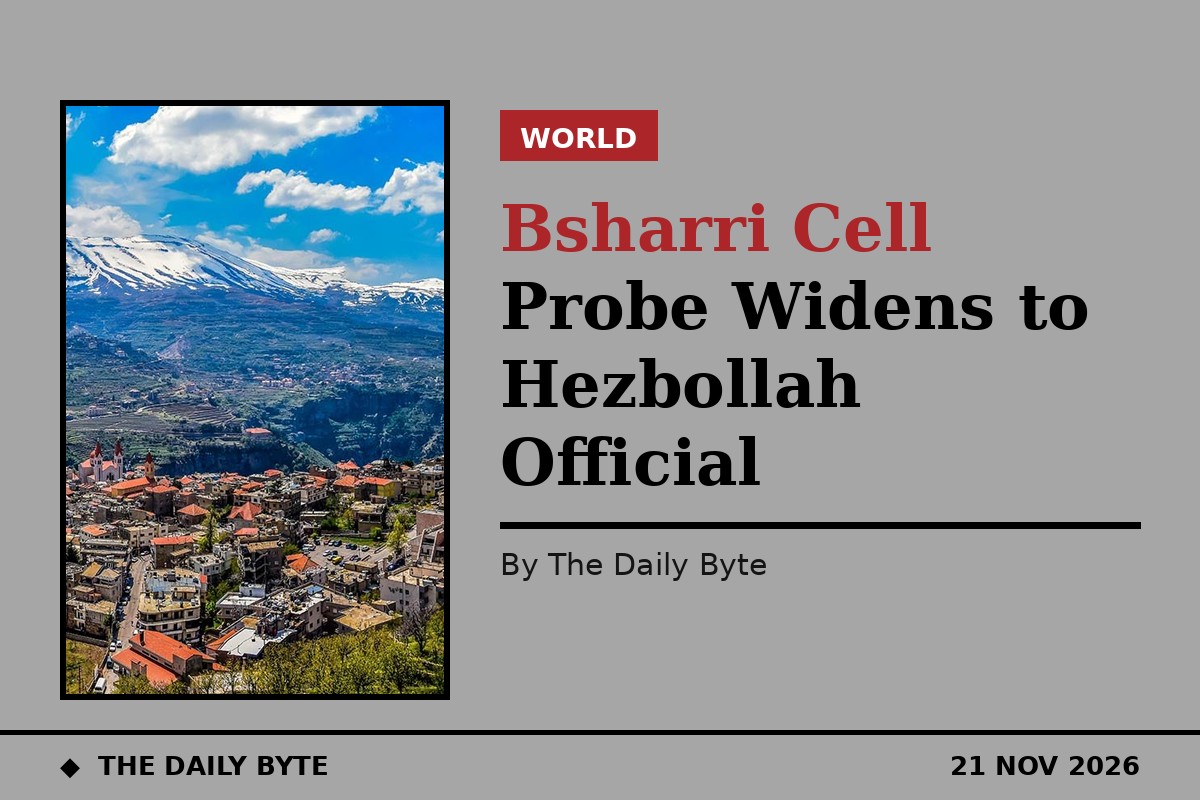
The Lebanese judicial investigation into five Hezbollah-linked men detained in the highlands of northern Lebanon has widened, with reports that a fourth Hezbollah official may be summoned for questioning in a case that is testing the state's drive to bring all weapons under its control.
Al-Hadath television sources reported on 20 November that Wael Tamer, described as Hezbollah's armoured-vehicles official in northern Lebanon, could be called in for questioning over the case of the five detainees held in the Bsharri and Batroun outskirts. No official judicial summons has been issued against him so far, the reports stressed.
The same sources said Tamer is the right-hand man of Sheikh Reda Ahmed, a Hezbollah official who is already wanted for investigation before the Lebanese Military Court in the same case. The investigation has already widened to take in the names of additional Hezbollah officials called to give testimony, including Sheikh Reda Ahmed.
The sources also said there is a personal friendship between Tamer and Tony Franjieh, a member of parliament, while stressing that Franjieh has no connection to the case and no role in the course of the investigations. Franjieh's own office issued a statement on 20 November rejecting the attempt to link his name to the file, saying it served political calculations.
What the five detainees are accused of
The five men were arrested in the Bsharri-Koura highlands, in an area straddling the districts of Bsharri and Batroun. According to Lebanese broadcaster MTV, they described their activity as preemptive reconnaissance to protect Shiite towns if internal confrontation broke out.
Lebanese broadcaster LBCI reported on 17 November that the Internal Security Forces Information Branch investigation had not concluded and was expected to be referred to the Military Court's Government Commissioner, Judge Claude Ghanem, within 48 hours. LBCI said one detainee had left his phone charging in an apartment in Bnehran, in the Koura district, while the others said their phones were in Choueifat and Beirut's southern suburbs. The broadcaster said leaking news of the arrests had harmed the investigation.
The case has drawn in senior politicians. MP Ghayath Yazbek, of the Strong Republic bloc, criticised Hezbollah MP Ali Miqdad's remarks about holding on to arms for a hundred years and his call for the release of the detainees, as well as remarks by his colleague Haj Hassan defending the freedom of movement of party members in the area.
A test of the state's weapons monopoly
The Bsharri case is running alongside a separate military-court case over a Hezbollah truck stopped at a checkpoint in early November carrying 780 kilograms of explosives, according to judicial officials. Thirteen people were charged on 30 October over a half-ton shipment, and on 17 November a military investigative judge dismissed procedural objections filed for five defendants in that case, who are described as Hezbollah-affiliated and at large.
Both cases land in the middle of the Lebanese leadership's declared policy that the state alone must hold weapons. President Joseph Aoun has said the state has decided to establish a monopoly on weapons and that any arms shipment belonging to Hezbollah will be seized, while Prime Minister Nawaf Salam has said the state alone must decide war and peace, with no weapons outside state control.
The United States has pressed the same point. Its ambassador to the United Nations, Mike Waltz, told Lebanese officials during a visit to Beirut that bringing all weapons under state control is the only way forward, and praised Aoun's decision to enter a trilateral dialogue with the United States and Israel.
For now, Tamer's possible summons remains a media report, not a judicial act. What happens next will depend on whether the military court formally calls him, and whether the Bsharri investigation produces charges or fades into the wider, still unresolved argument over Hezbollah's arsenal.


