Bulgaria Approves €686m CAESAR Howitzer Deal
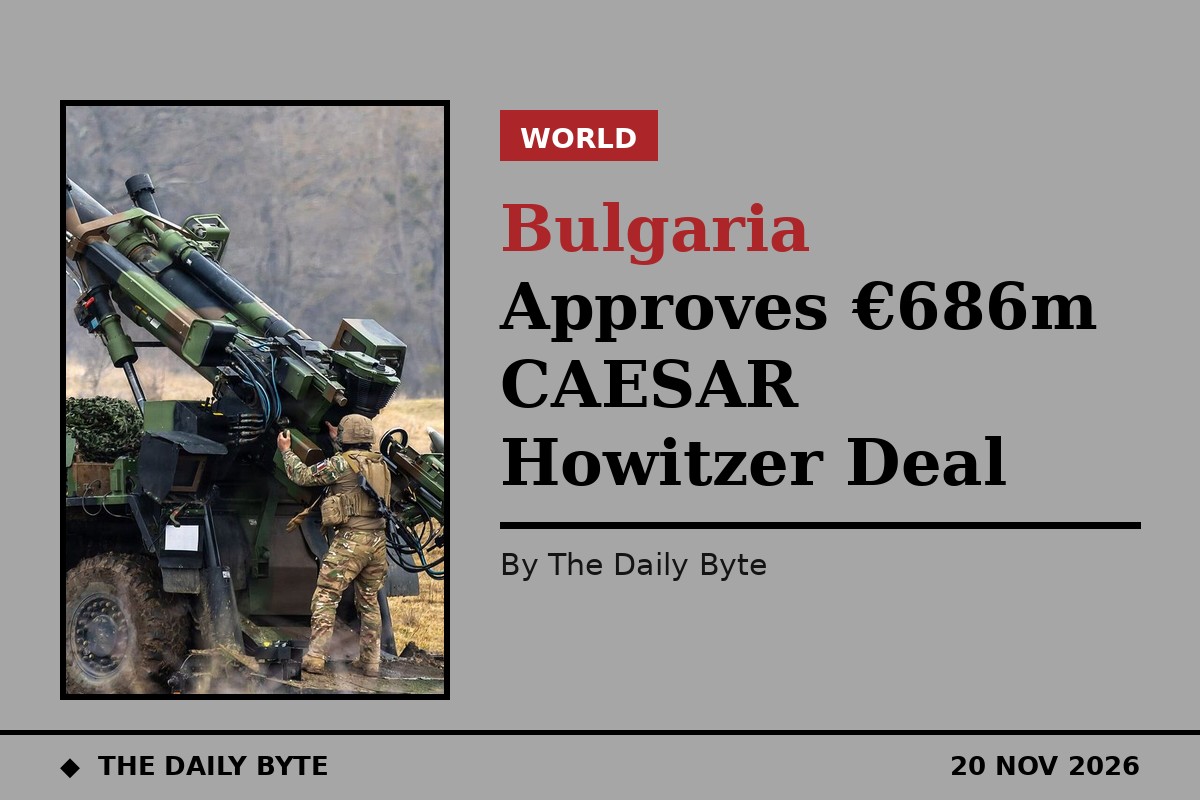
Bulgaria's parliament has approved two major defence purchases in a single day, authorising 57 French CAESAR self-propelled howitzers and five additional German IRIS-T air defence systems in new procurement worth roughly €1.61 billion. Both measures passed on 19 November and will be financed largely through the European Union's Security Action for Europe loan instrument.
Lawmakers approved the artillery investment project by 158 votes to none, with 19 abstentions. The programme covers 57 CAESAR 155mm howitzers, ammunition and supporting equipment, with an estimated maximum value of €686 million. In a separate vote, parliament ratified an agreement with Germany for the joint acquisition of five more IRIS-T SLM medium-range air defence systems, by 179 votes to none with ten abstentions.
Replacing Soviet-era guns
The howitzers are intended to replace Bulgaria's ageing Soviet-designed 2S1 Gvozdika self-propelled guns and to sharpen the army's counter-battery and indirect-fire capabilities. Bulgaria will buy them through a multinational European procurement framework involving France, Croatia and Estonia, and the systems are built by KNDS France. Deliveries are due by the end of 2030.
The price drew debate in parliament. The project had been estimated at €650 million in July, and GERB lawmaker Hristo Gadzhev questioned why the figure had risen. Defence Minister Dimitar Stoyanov said the difference was a contingency reserve, adding that it did not mean the extra funds would necessarily be spent. Gadzhev's group ultimately abstained, saying it had not received enough information about the costs.
Air defence: five more IRIS-T
The five additional IRIS-T systems, supplied by Germany's Diehl Defence, are expected to cost about €926 million, bringing Bulgaria's whole six-system IRIS-T programme to roughly €1.106 billion. Bulgaria already has a contract for one system. The expanded programme forms part of the German-led European Sky Shield Initiative, which aims to improve cooperation in European ground-based air defence.
The two programmes sit inside a much larger Bulgarian rearmament effort. The cabinet put both measures to parliament after approving them on 16 November, and Bulgaria's overall SAFE allocation is almost €3.27 billion. All projects financed through the instrument must be completed by 31 December 2030, a deadline that will shape how quickly contracts are signed and deliveries begin.
Parliamentary approval is not the end of the process. Contractual amendments and final procurement arrangements are still needed before any equipment is delivered, and the howitzer purchase remains a capital spending authorisation rather than a signed supply contract. Even so, the two votes mark Bulgaria's biggest step yet away from Soviet-era equipment and towards NATO-standard artillery and air defence, paid for in large part with EU-backed loans that must be spent by the end of 2030.


