Bulgaria Halts Arms And Aid To Ukraine
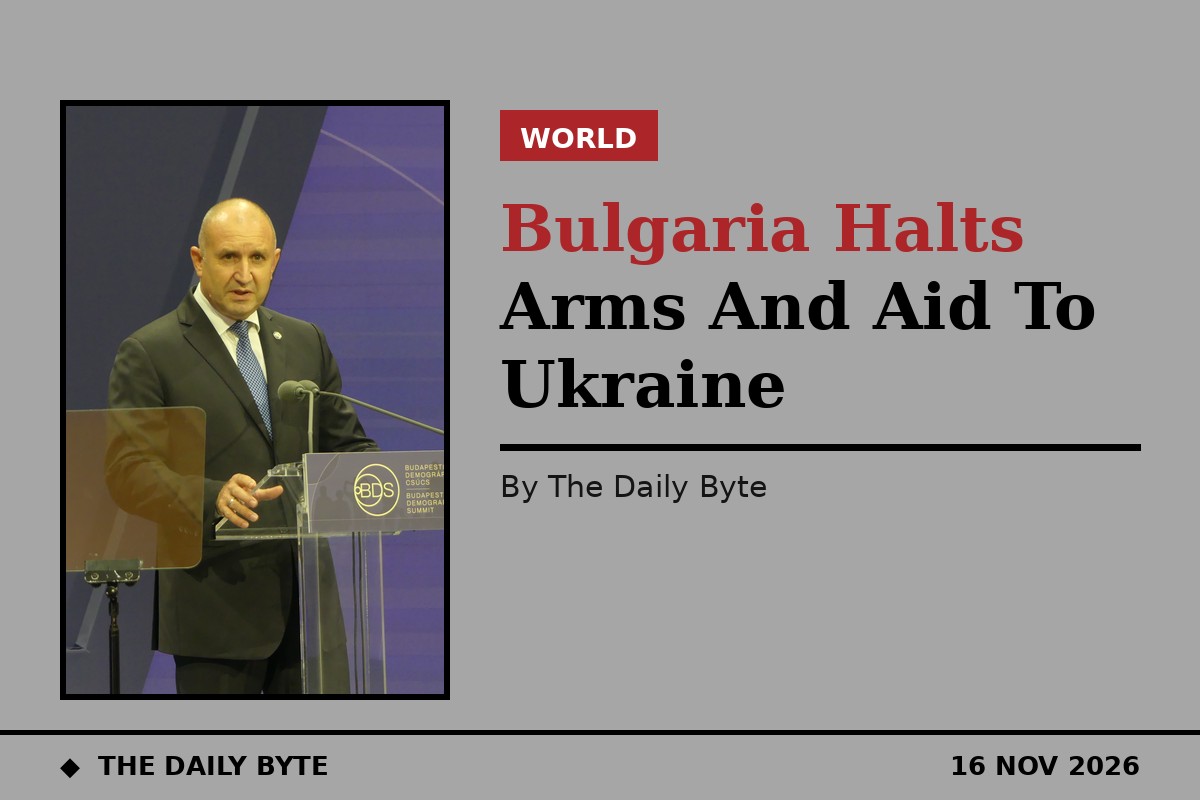
Bulgaria will send no more weapons or ammunition from its army stocks to Ukraine and will not provide new financial support for weapons purchases, Prime Minister Rumen Radev said on Friday, 13 November, at an informal European Union summit in Dublin. The announcement, made to journalists on the sidelines of the summit, marks a further step back from military support for Kyiv by an EU member state. Radev said Sofia could not keep drawing on its military reserves and pointed to Bulgaria's strained public finances as the reason it would not join new funding rounds for Ukraine.
Radev said Bulgaria was under the EU's excessive deficit procedure and faced constraints on its state reserves, leaving no room for further military contributions. He added that Sofia would not block other EU member states from providing financial assistance to Kyiv, drawing a line between ending its own military help and standing in the way of help from others. The remarks were reported by Informat.ro and by EuropeSays, both citing Bulgarian reporting from Dublin.
What Sofia will still consider
Bulgaria has not ruled out civilian help. Radev said Sofia was prepared to discuss mechanisms guaranteeing that any European funds involving Bulgaria would go strictly towards humanitarian needs, restoring electricity supplies and medical care, rather than weapons procurement. He also set a condition for any Bulgarian role as a guarantor of a new EU loan for Ukraine: part of the funding should be directed to the ethnic Bulgarian community in Ukraine, which is concentrated mainly in the southern Odesa region. Ukraine is home to the largest historical ethnic Bulgarian community in the EU, and Radev has repeatedly raised concern about casualties among ethnic Bulgarians during the war. No new humanitarian funding package was announced, and no amount was specified.
Radev rejects 'peace through strength'
Radev said Bulgaria supported diplomatic efforts aimed at ending the war, but he rejected the idea of pursuing peace through strength. He argued that continued military backing led to greater casualties, destruction and escalation, and that the conflict must be resolved through diplomacy rather than military means. The position puts Sofia at odds with EU partners pressing for a collective commitment to close Ukraine's funding gap, including German Chancellor Friedrich Merz, who has demanded a fair contribution from all member states.
A policy shift months in the making
The Dublin announcement follows a series of steps in the same direction. On 21 October, the Bulgarian government ended financing for lethal weapons purchases for Ukraine through the European Peace Facility, restricting future contributions solely to non-military assistance, according to the Bulgarian News Agency. In June, the defence minister announced plans to halt all direct weapons deliveries to Ukraine, and in July Bulgaria withdrew from the British- and French-led Coalition of the Willing. Sofia had previously been a major supplier of Soviet-standard artillery shells to Kyiv under earlier administrations.
Poland pauses too as the funding gap grows
Bulgaria is not the only ally pulling back. Polish Prime Minister Donald Tusk told NATO Secretary General Mark Rutte in Dublin that Warsaw would not make new contributions at this stage to the Prioritised Ukraine Requirements List, the scheme under which European countries fund US weapons for Ukraine, citing high domestic defence spending and Poland's budget deficit. The European Commission puts Ukraine's funding gap next year at 70 billion euros, of which the EU is expected to cover 45 billion euros. EU leaders are due to discuss budget and Ukraine financing together at a special European Council in Brussels on 26 and 27 November, where the pressure on holdouts, and on the bloc's ability to agree a package, will only grow.


