Bundibugyo Ebola Vaccine Trials Start in Bunia
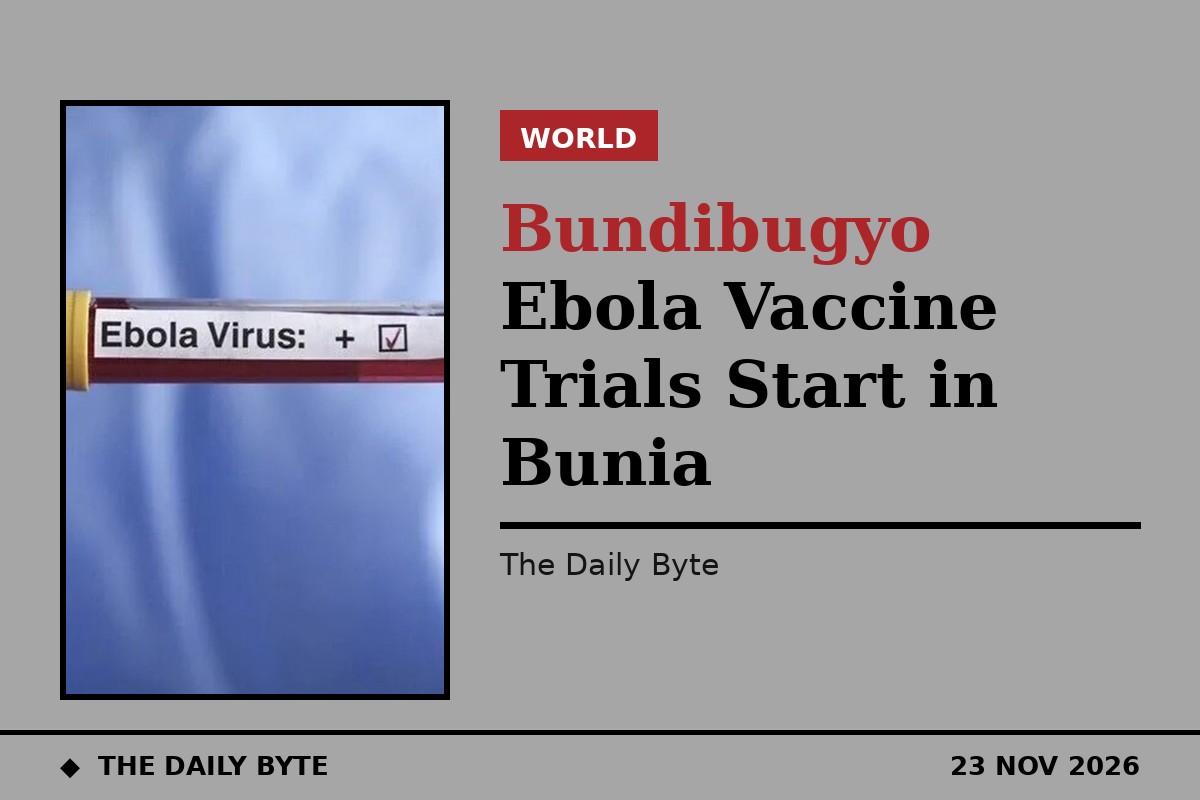
Two experimental vaccines designed specifically against the Bundibugyo strain of Ebola are set to enter Phase 2 clinical trials in Bunia, in the Democratic Republic of the Congo, on 26 or 27 November 2026, the World Health Organization (WHO) has announced. It is the first time vaccines built for this strain of the virus have reached this stage of testing.
The announcement came at a WHO news conference in Geneva on 17 November 2026. Dr Meg Doherty, head of the WHO's science for health department, said both candidates had been approved the previous week to advance to Phase 2 of the Tumaini randomised controlled trial, which is running in Bunia, the capital of Ituri province at the centre of the outbreak.
What the two vaccines are
One candidate, ChAdOx1, is an adenoviral vector vaccine developed by the University of Oxford together with the Serum Institute of India. The other, mRNA-1469, was developed by the United States biotechnology company Moderna using the mRNA technology used in Covid-19 vaccines. Both have already passed smaller Phase 1 trials.
Phase 2 testing will check whether the vaccines are safe and whether they trigger a strong immune response. Only candidates that pass those checks can move to Phase 3, where researchers test how well they actually protect people. The Tumaini trial, launched on 23 October 2026, is designed as a single framework that can take in new vaccine candidates as they become ready. It began with Ervebo, a vaccine already licensed against the more common Zaire strain of Ebola, being tested at full Phase 3 level to see whether it offers any protection against Bundibugyo. More than 140 people have already enrolled, and the WHO expects participation to rise into the thousands as the trial expands to more sites.
Why Bundibugyo vaccines matter
There is currently no licensed vaccine or treatment for Bundibugyo virus disease. Vaccines built for the Zaire strain cannot automatically be assumed to work against Bundibugyo, a different species of the Ebola virus. That gap has left health workers fighting the current outbreak without the vaccine tool that helped contain previous Ebola epidemics in the country.
The outbreak, declared on 15 May 2026, remains severe. As of 17 November 2026, the WHO counted 11,613 confirmed cases and 5,678 deaths in the Democratic Republic of the Congo, a case fatality ratio of 48.9 per cent, across 68 health zones in eight provinces. Between 400 and 500 new cases are still being reported every week. Kenya has recorded nine cases and two deaths. On 18 November, the WHO Director-General confirmed that the outbreak remains a public health emergency of international concern, as reported in the WHO's Disease Outbreak News update of 20 November 2026.
Insecurity is hampering the response
WHO Director-General Tedros Adhanom Ghebreyesus said the frequency of attacks in eastern Congo had increased since the end of October and was seriously affecting the response. Attacks on health workers are a particular concern because they disrupt treatment and discourage people from seeking care at Ebola treatment centres. The WHO has described insecurity as one of the greatest obstacles to expanding the response, a point also made in AFP's reporting of the announcement.
Frequently asked questions
When do the Bundibugyo vaccine trials start? Phase 2 testing of the two candidates is expected to begin on 26 or 27 November 2026 in Bunia, in Ituri province, Democratic Republic of the Congo.
Which vaccines are being tested? ChAdOx1, developed by Oxford University and the Serum Institute of India, and mRNA-1469, developed by Moderna. Both were designed specifically against the Bundibugyo virus.
Is there already a vaccine for Bundibugyo Ebola? No. There is no licensed vaccine or treatment for the Bundibugyo strain. The Ervebo vaccine, licensed for the Zaire strain, is being tested in the same trial to see whether it offers any cross-protection.
How big is the outbreak? As of 17 November 2026, the WHO counted 11,613 confirmed cases and 5,678 deaths in the Democratic Republic of the Congo, with 400 to 500 new cases reported each week.


