Carney unveils $142bn budget to make Canada master of its own destiny
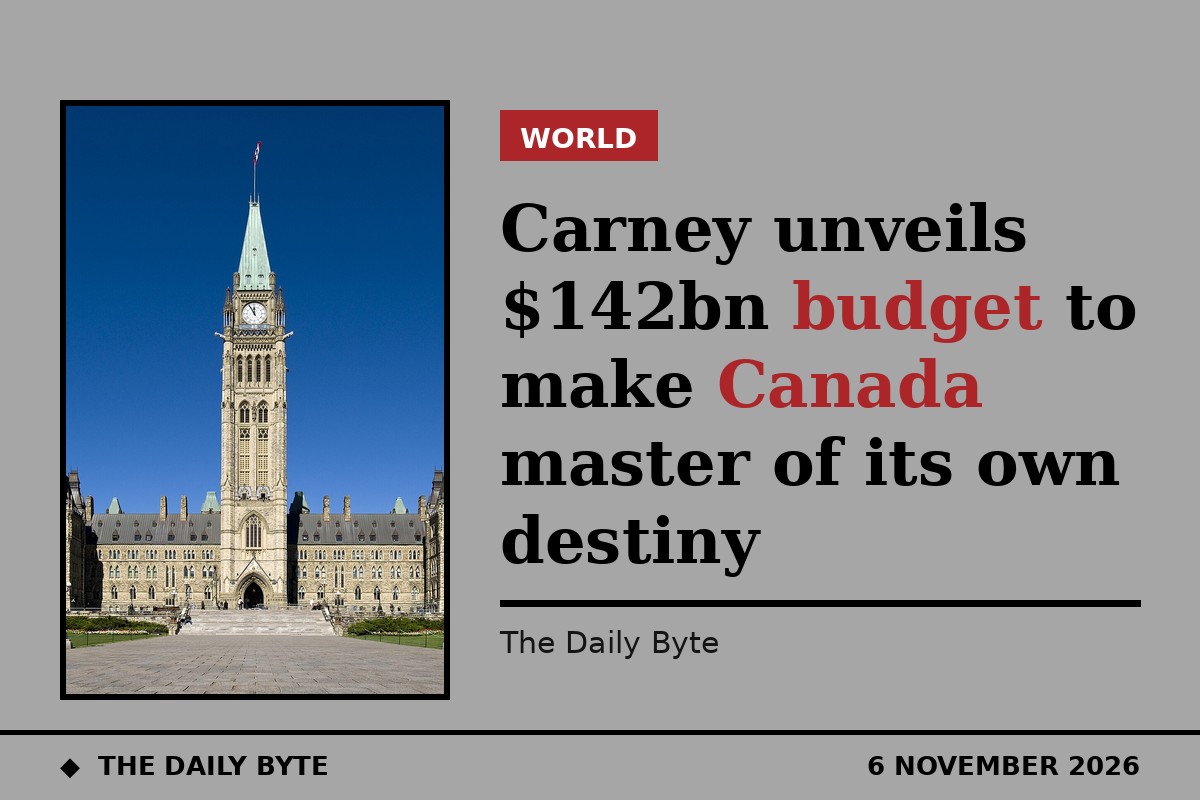
Canadian Prime Minister Mark Carney's government has unveiled a federal budget aimed at making Canada less dependent on the United States, as President Donald Trump's trade war reshapes the relationship between the two allies.
Finance Minister Francois-Philippe Champagne presented the budget, titled "Masters of Our Destiny", in the House of Commons on Thursday. It proposes C$142.1 billion in new spending and tax measures over five years, including incentives to attract investment and billions for energy, infrastructure and culture.
The government projects spending of C$603 billion and a deficit of C$62.3 billion for 2026-27, C$3 billion less than forecast in April, the Associated Press reported.
Investment at the centre
The largest single item is a previously announced productivity mega-deduction for capital investment, estimated to cost about C$36 billion over five years. The measure would allow businesses to immediately deduct qualifying investments, reducing Canada's effective tax rate on new investment to 6.4%, less than half the comparable United States rate.
The budget also advances plans for Canada's first national sovereign wealth fund, a C$25 billion initiative to invest in Canadian companies and major projects. It outlines C$7.7 billion to strengthen Canada's defence industry, with a goal of awarding 70% of military contracts to Canadian firms.
Affordability and housing
The Hill Times reported that the budget outlines C$22 billion in spending over five years for affordability measures, with about half earmarked for putting Canada on the path to end homelessness within a decade. It also pledges C$45 billion towards housing, including expanding affordable and non-market housing.
The government expects Trump's trade war to slow growth late this year and early next year, forecasting growth of just 1% in 2026 and 1.7% in 2027.