Canada Opens Door to Chinese EVs as US Tariffs Bite
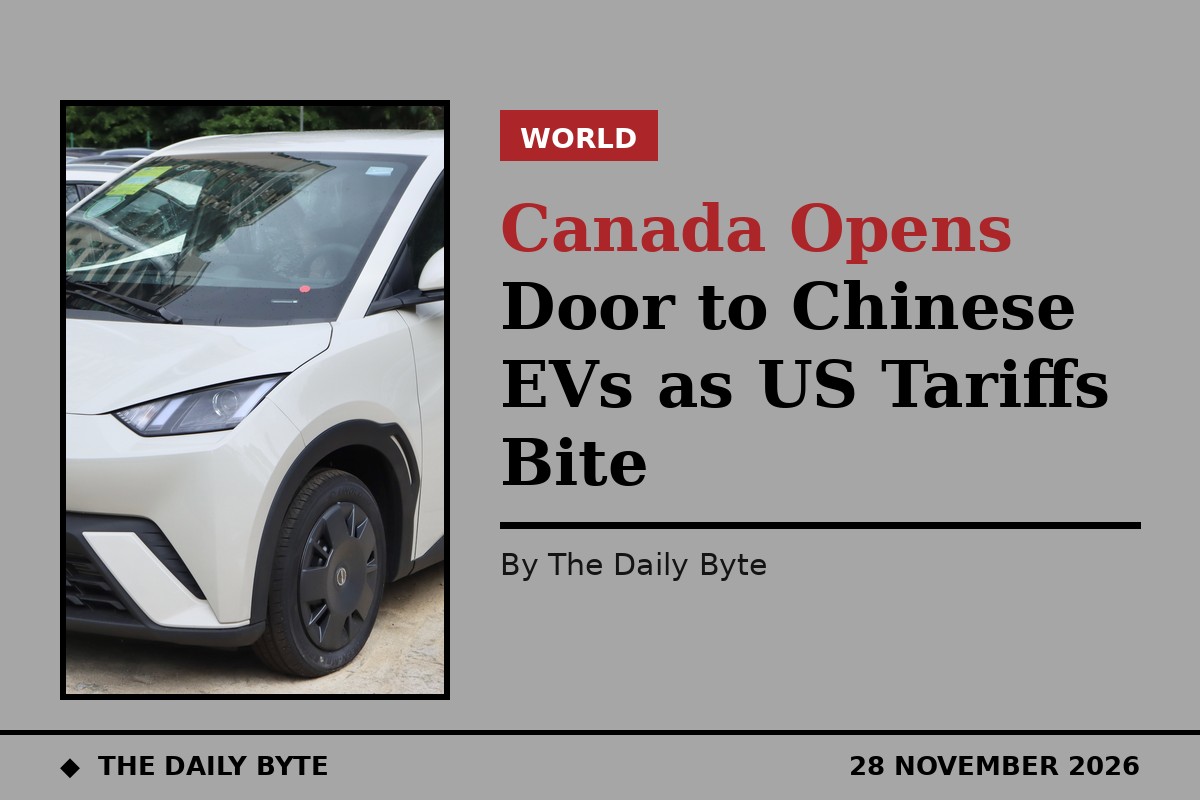
Chinese-built electric cars are starting to arrive in Canada in significant numbers, with more than 16,000 vehicles imported so far under a new low-tariff quota agreed with Beijing. The arrivals mark the first real test of Prime Minister Mark Carney's plan to open Canada's car market to Chinese manufacturers as United States tariffs squeeze the country's auto industry.
Canada has imported roughly 16,000 China-made electric vehicles so far, using about one-third of a 49,000-vehicle annual quota, according to Automotive News. Most of those imports are Tesla Model 3 sedans built in China, leaving room for Chinese brands to enter the market under the reduced tariff arrangement. Canada's trade department says two Chinese companies have completed Transport Canada safety certification, and several more could clear the process in the final weeks of 2026, with retail sales expected in the first quarter of 2027.
A deal struck in January
The quota is the centrepiece of a deal struck between Ottawa and Beijing in January 2026. Under it, Canada cut its 100 per cent surtax on Chinese-made electric vehicles to 6.1 per cent for up to 49,000 vehicles a year, a cap set to rise gradually to about 70,000 by 2030. In exchange, China lowered tariffs on Canadian canola. From 2027, 10 per cent of the quota will be reserved for vehicles with an import price of 35,000 Canadian dollars or less, rising to 50 per cent by 2030.
Geely has confirmed plans to begin selling vehicles in Canada in 2027, while BYD, Chery and Dongfeng have been building Canadian teams and talking to dealers. Showrooms in China give a sense of what may arrive: BYD's Seagull costs about 17,700 Canadian dollars and claims a range of 420 kilometres, while the Zeekr 007 offers 688 kilometres for about 44,000 dollars. International Trade Minister Maninder Sidhu toured a Chery plant in China earlier this month and told reporters Canadians could expect to see affordable Chinese electric vehicles by early 2027.
Pressure from Washington
The opening to China is driven by pressure from Washington. American tariffs on imports of Canadian-made vehicles have led to thousands of job losses, and more than 90 per cent of Canada's car exports are shipped to the United States. President Donald Trump has said tariffs on Canadian cars, trucks, auto parts and steel will rise to 50 per cent on 1 January 2027. Stellantis, which built models including the Dodge Challenger in Canada, recently announced it would sell its assembly plant in Brampton, Ontario.
Carney met Chinese President Xi Jinping in Shenzhen on 17 November for their second meeting in less than a year. The talks produced tariff relief for about 400 million dollars of Canadian agricultural and seafood exports in exchange for concessions on some Chinese steel and aluminium products, but no new commitments on vehicles. Speaking in Cambodia earlier in the trip, Carney said Canada could turn to European and Asian carmakers, including Chinese ones, to save its auto manufacturing sector if no agreement with the United States is reached.
Opposition on both sides of the border
The prospect has drawn opposition on both sides of the border. Michigan's auto industry is lobbying both governments to settle their trade dispute, warning that Chinese makers established in Canada could cost American jobs. In Ontario, Premier Doug Ford has urged Ottawa to keep Chinese-made vehicle kits out of the Brampton plant, where Stellantis plans to lease back a quarter of the site to assemble affordable electric vehicles. Ottawa says any Chinese investment must involve genuine manufacturing in Canada, not simply assembling imported parts, and that joint ventures should include Canadian equity.
For Canadian drivers, the debate will shape which electric vehicles reach dealer lots and what they cost. The federal electric vehicle rebate is set to fall by 1,000 dollars on 1 January, adding urgency for buyers. Carney has said Canadian jobs and local supply chains are central to the government's plan, and that the arrangement will be reviewed over three years to judge whether it delivers the expected benefits.


