Canada Groups Urge Carney to Fix Spy Bill C-22
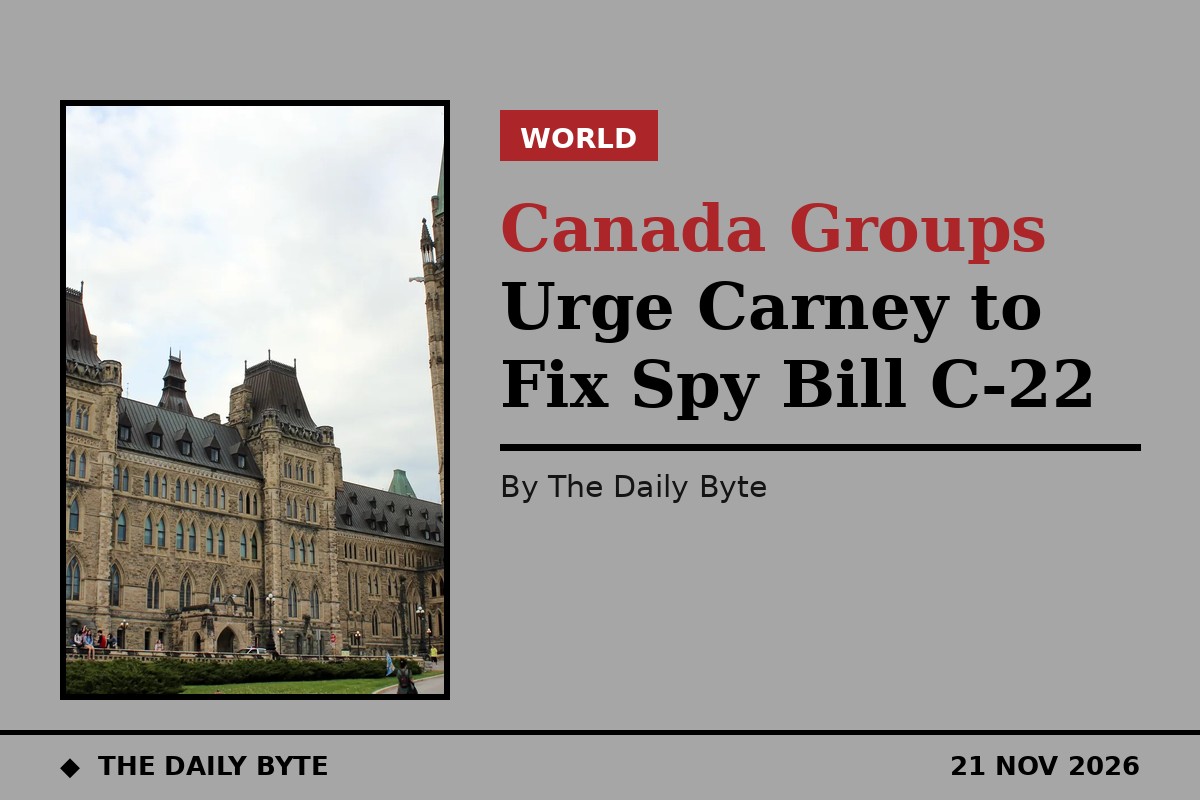
More than two dozen privacy, refugee and civil liberties groups have urged Canadian Prime Minister Mark Carney to intervene in the Senate's review of Bill C-22, warning that the government's lawful access bill still threatens encryption and the privacy of millions of Canadians.
OpenMedia and 25 leading organisations and experts delivered a joint letter to Carney on 19 November, asking him to back targeted amendments before the Senate finishes its consideration of the bill. The Standing Senate Committee on National Security, Defence and Veterans Affairs is hearing its final round of witnesses before considering amendments and a final vote, which could come before its December recess.
The groups say the House of Commons made only limited changes before passing the bill to the Senate, cutting the maximum metadata retention period from one year to six months and adding a narrow clause limiting compelled decryption. They warn that the bill's most far-reaching powers remain intact.
What the groups want changed
The letter asks Carney to direct his government's representative in the Senate to bring forward two amendments. The first would strike the power to require providers to retain metadata on all users, in Canada or abroad, records that can show who contacted whom, when and where. The second would forbid any regulation or secret ministerial order that would require a provider to access, intercept or circumvent end-to-end encrypted communications.
The groups also want all such obligations to be subject to full judicial authorisation and to be public by default, so that secret orders cannot be used to force companies to build government access into their systems.
"The Prime Minister wants to govern a sovereign Canada economically integrated with Europe, and whose values celebrate protecting people most at risk. Yet his own legislation undermines this vision," said Matt Hatfield, executive director of OpenMedia. "No democracy should force basic services to keep a 'filing cabinet' of sensitive data on millions of its citizens suspected of no crime, just in case police want it one day."
The letter argues that population-wide metadata retention and secret access orders sit uneasily with European and international human rights standards, putting at risk Canada's data-protection adequacy status with the European Union and its ambition to become the EU's first associate member. It also warns that the powers would hit privacy-first services Canadians use as alternatives to United States technology companies, and would put some of the most marginalised people in Canada at greater risk, including survivors of intimate partner violence, human rights defenders and diaspora communities facing transnational repression.
Tech companies warn they may pull out
The letter follows warnings from technology companies at a Senate hearing on 16 November. Meta's Robyn Greene told senators the company could not comply with the bill as written and still provide secure end-to-end encrypted services. Meta's Rachel Curran said the company would review its options, including whether to pull services such as WhatsApp from Canada. Signal's Udbhav Tiwari went further, saying his company would leave rather than weaken security for Canadians.
Apple and Google are due back before the Senate's national security committee on 23 November. Apple privacy executive Erik Neuenschwander told MPs in May that building a back door would create an opening for hackers, not just police, while Google Canada's Jeanette Patell said secret ministerial orders could force companies to build interception capabilities, and that police already had tools to preserve data in specific investigations.
"There is no back door that only the good guys can walk through," said Natalie Campbell of the Internet Society. "At a time when criminals are using AI technologies to find and exploit vulnerabilities faster than ever, Canada needs strong encryption, no exceptions."
A second attempt at the powers
Bill C-22 is the government's second attempt to pass these powers. They first appeared in Bill C-2, the so-called Strong Borders Act, in June 2025, which would have let police and the Canadian Security Intelligence Service demand information about people's online accounts without a warrant. More than 300 civil society organisations demanded the measures be withdrawn, and in October 2025 the government dropped lawful access from its border legislation. It reintroduced the provisions as a standalone bill, C-22, in March 2026, with the most contested part carried forward intact.
Ottawa says authorities still need legal authorisation to obtain personal information, and the bill bars requirements that would create a systemic vulnerability in a service. The government has said the powers are needed to help police and intelligence agencies prevent and investigate modern crimes. For now, the bill remains before the Senate committee, which can recommend changes before it returns to the chamber for a final vote.


