Canada Seeks Interim US Tariff Deal by Year-End
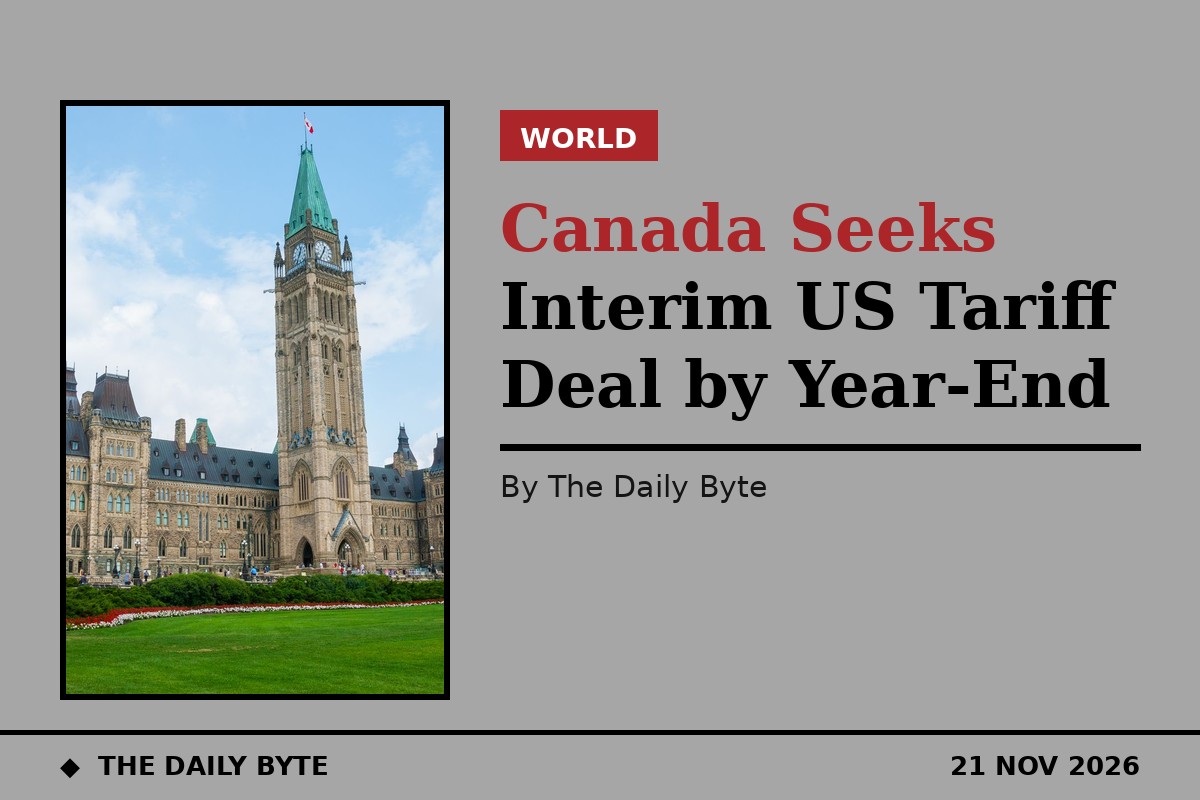
Canada is seeking a smaller, faster tariff arrangement with the United States before the end of the year, after its trade minister told a federal advisory committee that Washington has shown little movement on tariff relief. The shift in approach was described to CBC News by sources who spoke after a meeting on Thursday, 19 November, between Canada-U.S. Trade Minister Dominic LeBlanc and the federal government's Canada-U.S. economic advisory committee.
Ottawa is no longer holding out for a grand bargain. Instead, it wants a temporary arrangement that eases the most pressing duties now, in the hope that progress there can open the way to a formal review of the Canada-United States-Mexico Agreement, known in Canada as CUSMA, the free trade pact that underpins most of the country's exports.
Two sets of duties on the table
Two sets of American duties are at the centre of the talks. The first is the set of tariffs imposed under Section 232 of a 1962 trade law, which covers steel, aluminum, autos and lumber. The second is a separate 50 per cent duty under Section 338 of a 1930 law, which took effect on 22 August on Canadian goods such as furniture, electronics, paper and wood products.
Even a deal struck before the year is out would not wipe the slate clean. LeBlanc told CBC's Power & Politics programme that some of the Section 232 tariffs would probably remain, although at lower rates. Ottawa wants the Section 338 duties removed entirely. LeBlanc added that cutting the tariffs could open "a formal review process that's prescribed in the CUSMA agreement".
Little progress since August
Reuters reported on 19 November that LeBlanc told the advisory committee he is in regular contact with his American counterparts but that there has been little progress since talks broke down in August. Two people familiar with the private briefing said Washington had shown little movement, and LeBlanc's office confirmed that he had briefed the committee and restated Canada's commitment to reaching a mutually beneficial agreement.
One person familiar with the briefing summarised LeBlanc's message in blunt terms: "The US understands what our red lines are and our people are saying that if the US makes movement, then we can move quickly. But so far the US has made no movement." LeBlanc has been speaking with U.S. Commerce Secretary Howard Lutnick, whose department administers tariffs imposed on national security grounds, and with U.S. Trade Representative Jamieson Greer, who led most of the dialogue in August before the talks collapsed.
The stakes are rising. Reuters reported that U.S. tariffs on Canadian steel, autos and lumber are set to rise in January to 50 per cent from 25 per cent. Companies and industry associations have warned Prime Minister Mark Carney's government that the increase could dismantle supply chains built up over decades and lead to job losses and factory shutdowns.
What an interim deal could unlock
For Ottawa, the interim arrangement is a means to an end as much as an end in itself. A deal that eases the tariff burden could kickstart the formal CUSMA review talks, which have yet to begin in earnest. The pact governs trade across North America, and its review is the larger prize behind the year-end push.
The U.S. midterm elections, in which President Donald Trump's Republican Party lost control of the House of Representatives and the Senate to the Democrats, have not changed the course of the trade negotiations, according to one of the people familiar with the briefing. That leaves the timetable tight: Canada wants an arrangement in place before the year ends, with the January tariff rise looming.
Carney: action, not intent
Prime Minister Mark Carney spoke virtually to the DealBook summit, according to CBC News, as he wrapped up a nine-day trade mission to Europe and Asia. He admitted there had been some progress, but he was clear that there was nothing ready to sign. "If the U.S. doesn't want to do a deal, we're busy," Carney said, pointing to Canada's efforts to broaden its trade relationships. CBC News reported that during the trip he brokered free trade deals with the Philippines and the 11-nation Association of Southeast Asian Nations.
Carney has set his own test for judging whether the talks are moving, saying Canada will respond to "action as opposed to intent". For now, the action Ottawa is waiting for is a sign of movement from Washington — and, by its own account, that sign has not yet come.


