Canada Seals Philippines and ASEAN Trade Deals
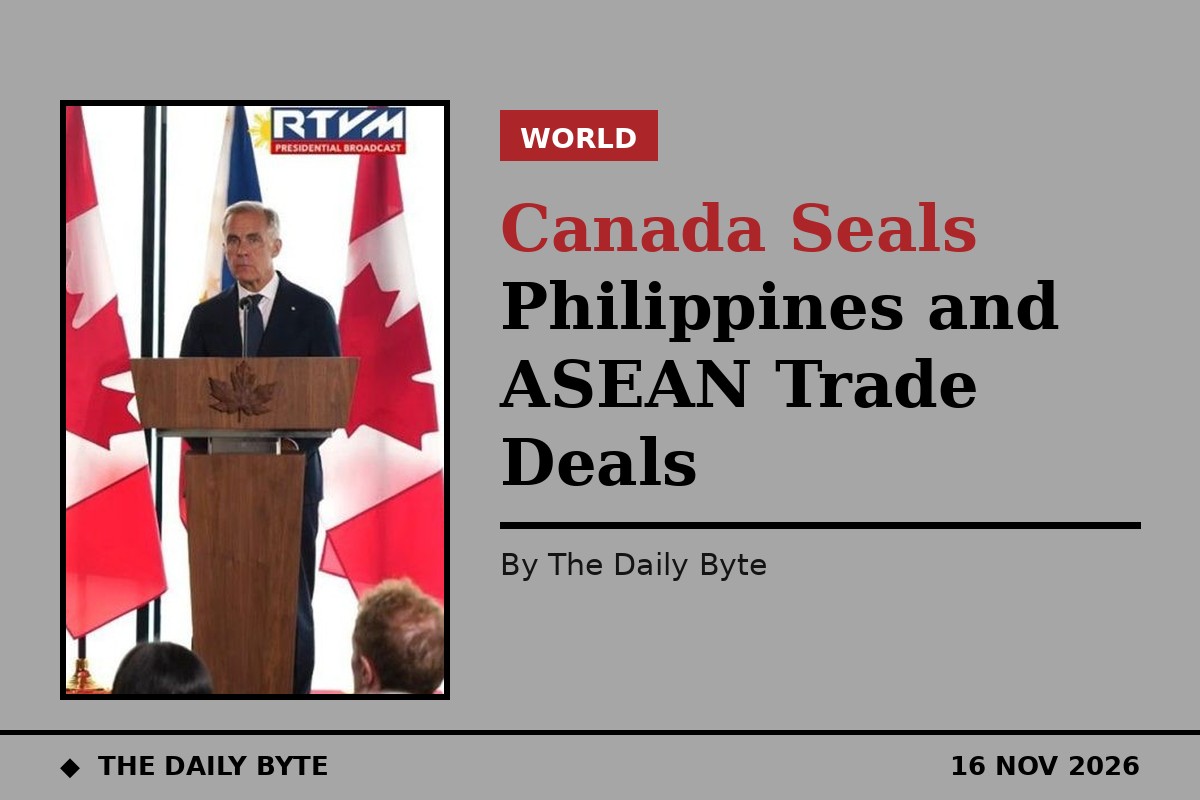
Canada has concluded negotiations for a free trade agreement with the Philippines and substantially concluded negotiations for a separate agreement with the Association of Southeast Asian Nations (ASEAN), Prime Minister Mark Carney announced in Manila on Saturday 14 November.
The two announcements came during Mr Carney's visit to the Philippine capital, where he attended the 49th ASEAN Summit as Guest of the Chair and held a bilateral meeting with President Ferdinand Marcos Jr.
Ottawa says the ASEAN agreement, once in force, is expected to add nearly C$2 billion to Canada's gross domestic product and create nearly 14,000 Canadian jobs, particularly in agriculture and manufacturing. The bloc has almost 700 million people and an economy of close to $6 trillion.
What was agreed in Manila
The Canada-Philippines agreement was fully concluded, just one year after the two countries announced their intention to pursue it. The two governments are now working towards signing it in 2027.
Mr Carney said the bilateral deal covers more than 90 per cent of tariff lines and described it as the most comprehensive trade agreement the Philippines has signed. It covers goods, services, investment, digital trade and small and medium-sized enterprises. Once signed, it would be Manila's first free trade agreement with a North American country. The Philippines has an economy of $680 billion, according to the Canadian government.
The ASEAN-Canada agreement is at a slightly earlier stage. Mr Carney announced the substantial conclusion of negotiations towards the ASEAN-Canada Free Trade Agreement, with the remaining technical and legal steps to be completed as quickly as possible and signature also targeted for 2027. Negotiations towards that agreement began in 2021.
Neither agreement is signed yet, and neither is in force. Businesses cannot claim new tariff preferences on the basis of the announcements alone.
Why Canada is looking to Asia
The deals are part of Ottawa's effort to reduce its dependence on the United States, its largest trading partner, during a trade dispute with Washington. Canada suspended trade negotiations with the US in August after last-minute demands Ottawa considered unacceptable, and the US has imposed 50 per cent tariffs on selected Canadian goods.
Mr Carney said on Saturday that he had held a lengthy conversation with US President Donald Trump and senior administration officials before travelling, and that the two countries were making progress towards a bilateral deal. "We are making progress. There is the possibility of a deal, a bilateral deal. But we're not yet there," he said, according to the Associated Press.
Ottawa also announced $5 million in assistance to help every ASEAN economy support swift ratification of the regional agreement, and $26 million in investments to support closer ties between Canada and the Philippines.
Canada said the bilateral deal could help increase its exports to the Philippines, particularly in agriculture and forest products, by as much as three times by 2035. Two-way merchandise trade between the two countries was $3.4 billion in 2025, according to the Canadian government.


