Canada and Philippines Conclude Free Trade Deal
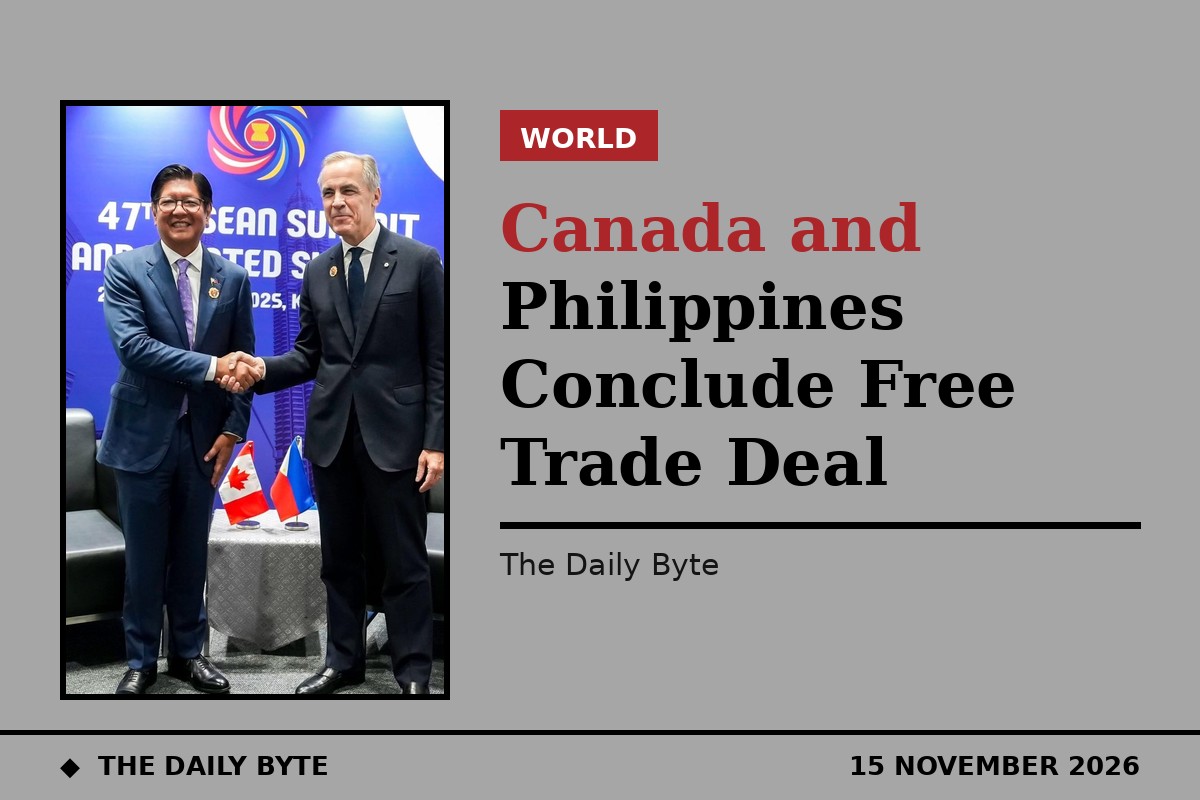
Canada and the Philippines have concluded negotiations for a bilateral free trade agreement, just over a year after the two countries announced their intention to pursue one.
Canadian Prime Minister Mark Carney and Philippine President Ferdinand Marcos Jr announced the conclusion of the talks on Saturday, 14 November, after meeting on the sidelines of the 49th ASEAN Summit in Manila. Both governments are now working towards signing the agreement in 2027.
The deal is not yet in force. The text still has to be finalised, signed and put through each country's domestic approval process before businesses can benefit from it, and existing trading arrangements remain in place until then.
What the agreement covers
The agreement covers trade in goods and services, investment, digital trade and support for small and medium-sized enterprises. It is the Philippines' first trade pact with a North American country, and it builds on the Canada-Philippines Strategic Partnership, a bilateral framework the two leaders established during Marcos Jr's visit to Canada in July 2026.
Two-way merchandise trade between Canada and the Philippines totalled $3.4 billion in 2025, up 7.4 per cent from the year before, according to the Canadian government. The Philippines has an economy of $680 billion and a market of more than 110 million people, and it is one of the fastest-growing economies in Asia.
Prime Minister Carney said that once the agreement is in force, it could increase Canadian exports to the Philippines up to three times by 2035, with particular opportunities in agriculture and forest products. The two leaders also announced $26 million in investments to support closer ties in nuclear security and safety, climate-resilient agriculture, community resilience and food security and infrastructure.
A wider deal with ASEAN as well
Carney also announced the substantial conclusion of negotiations towards a separate ASEAN-Canada free trade agreement. ASEAN, the Association of Southeast Asian Nations, has a population of almost 700 million people and an economy of close to $6 trillion. Once in force, that agreement is expected to add nearly $2 billion to Canada's GDP and create nearly 14,000 Canadian jobs, particularly in agriculture and manufacturing. The remaining steps are to be completed as quickly as possible, with the ambition of signing it in 2027.
Canada is seeking to reduce its reliance on a single trading partner and to build new markets in one of the world's fastest-growing regions. As Carney put it in Manila: "With the Philippines, we concluded a new free trade agreement in just one year, creating new opportunities for our farmers, ranchers, foresters and miners, and putting us on track to triple our exports by 2035."
The agreements were announced alongside new joint measures on defence and security cooperation, including closer cooperation between the two countries' armed forces, a new cyber security dialogue, and the extension of a programme that uses satellites to detect vessels fishing illegally.
Sources: Prime Minister of Canada; BusinessWorld.


