Canada Seeks Interim US Tariff Deal By Year-End
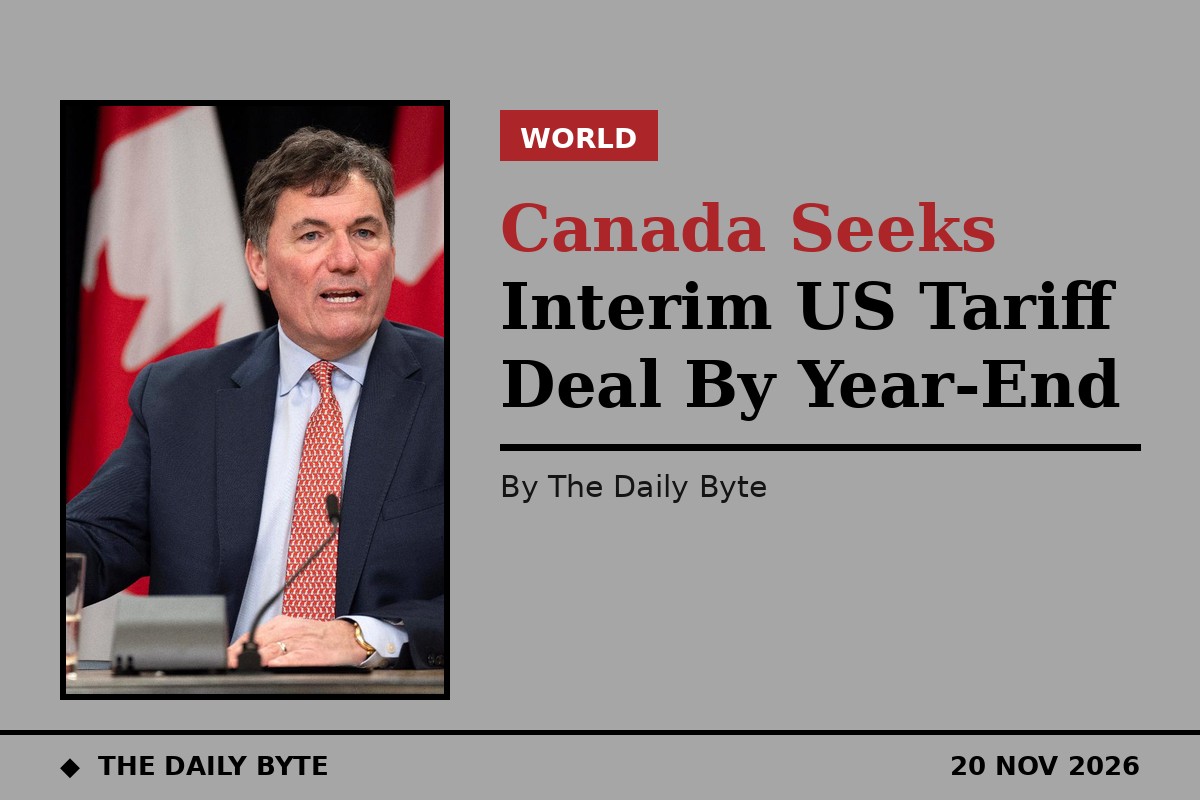
Canada is still seeking an interim tariff arrangement with the United States before the end of the year, but Washington has shown little movement, the minister responsible for trade with the US, Dominic LeBlanc, told a federal advisory committee on Thursday.
LeBlanc briefed the Advisory Committee on Canada-US Economic Relations, which includes business leaders and politicians, and said there had been little progress since talks broke down in August, two people familiar with the briefing told Reuters. The briefing was private, and the two spoke on condition of anonymity.
January deadline looms
US tariffs on Canadian steel, autos and lumber are set to rise in January to 50% from 25%. Companies and industry associations have warned Prime Minister Mark Carney's government that the increase could dismantle decades-old supply chains and lead to job losses and factory shutdowns.
LeBlanc told the committee he is in regular contact with his US counterparts, including Commerce Secretary Howard Lutnick, whose department plays a central role in administering the tariffs, and US Trade Representative Jamieson Greer, who led most of the dialogue in August before the talks collapsed.
"The US understands what our red lines are and our people are saying that if the US makes movement, then we can move quickly. But so far the US has made no movement," one of the people said, summarising LeBlanc's briefing.
Some tariffs likely to stay
Speaking to CBC's Power & Politics on Thursday evening, LeBlanc cautioned Canadians that even a deal would not remove every duty. "I think we have to be realistic with Canadians. In those particular sectors, there is an element of those tariffs that are going to remain," he said, referring to the Section 232 duties on steel, aluminum, autos and lumber.
Ottawa wants the 50% tariffs imposed in August under Section 338 removed entirely, and is seeking lower Section 232 rates. An interim arrangement covering both sets of tariffs would also open the formal review of the Canada-United States-Mexico Agreement, LeBlanc said.
The midterm elections, in which President Donald Trump's Republican Party lost control of the House of Representatives and the Senate to the Democrats, have not changed the course of the trade negotiations, the second person familiar with the briefing said. LeBlanc has also said Canada should not count on the new Congress, which takes office on 3 January, as a "magic bullet".
What happens next
LeBlanc's office confirmed in a statement that he briefed the committee and reaffirmed Canada's commitment to strike a mutually beneficial agreement with the US. It did not respond to a request for comment on further details.
The Commerce Department and the Office of the US Trade Representative did not immediately respond to requests for comment, Reuters reported. With no agreement on paper yet, Ottawa's aim remains an interim arrangement by the end of the year, before the January tariff rise takes effect.


