Canada Uneven on Clean Water Goals, Audit Finds
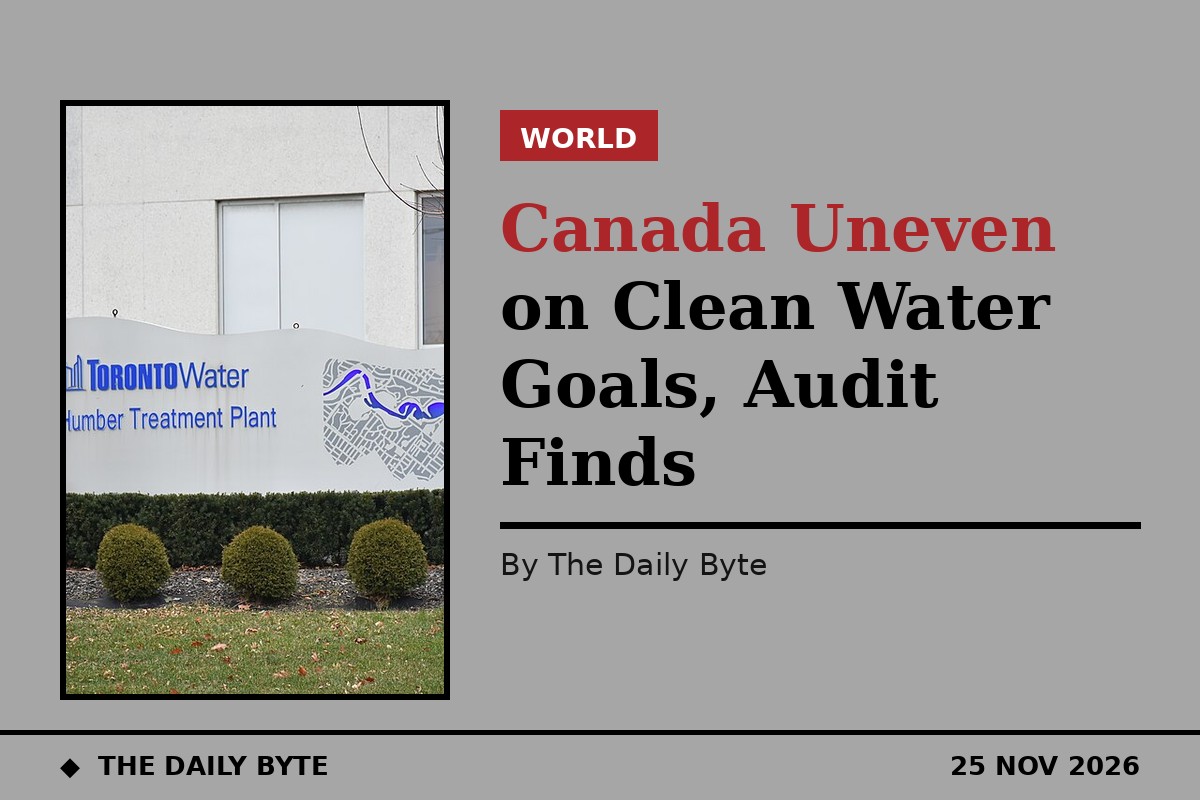
Canada is making uneven progress towards its goal of clean and safe water for all Canadians, with only four of twelve departmental targets for protecting major lakes and rivers fully met, the country's environment watchdog has found. Three reports by the Commissioner of the Environment and Sustainable Development were tabled in Parliament on Monday, 24 November.
The audit examined the work of Environment and Climate Change Canada, Indigenous Services Canada, Agriculture and Agri-Food Canada and the Canada Water Agency, looking at commitments to protect major lakes and rivers, support safe drinking water and improve wastewater quality. Overall, it found uneven progress and gaps in showing whether government action was improving water quality and protecting public health.
Four of twelve targets met
For work related to protecting and restoring major lakes and rivers, only four of the twelve departmental targets were fully met. The audit also found that some of the measures departments used did not clearly show how their activities contributed to Goal 6 of the 2022-2026 Federal Sustainable Development Strategy, the goal of ensuring clean and safe water for all Canadians.
The review of the government's own reporting was more positive. The Commissioner found that the information in Environment and Climate Change Canada's 2025 progress report on the 2022-2026 strategy was fairly presented.
Wastewater barely moved in eight years
National progress on wastewater was limited, the audit found. There was little change between 2016 and 2024 in the percentage of wastewater systems that met quality standards. Environment and Climate Change Canada did not have a clear plan to reach the federal target for all systems to meet those standards by 2040.
The finding matters because wastewater systems that fall short of standards can release inadequately treated sewage into rivers, lakes and coastal waters, with consequences for ecosystems, drinking water sources and public health.
Drinking water in First Nations communities
On drinking water, Indigenous Services Canada met its target for the water systems it funds in First Nations communities. But long-term drinking water advisories remained in place, and the audit found the department's measures did not give the full picture on progress towards ending them.
The measures focused on increasing the percentage of water systems rated as low risk, which does not by itself show whether communities still under advisories are getting safe water. The issue has been a long-running one in Canada, where some First Nations communities have lived under boil-water advisories for years.
Petitions answered on time
The third report, the Environmental Petitions Annual Report, recorded 19 petitions from Canadian residents seeking answers from federal ministers on environmental and sustainable development concerns. All ministerial responses sent during the reporting period met the 120-day deadline required by law.
The three reports were tabled on behalf of the Auditor General of Canada, and fulfil the Commissioner's annual reporting responsibilities under the Auditor General Act. The audit's central message is that while the government's reporting on its sustainable development strategy was fairly presented, the results on the ground for water, in rivers and lakes, in wastewater systems and in First Nations communities, remain patchy, with no clear plan to close the largest gap by 2040.


