Cancer Patient Left 48 Hours in Hospital Cupboard
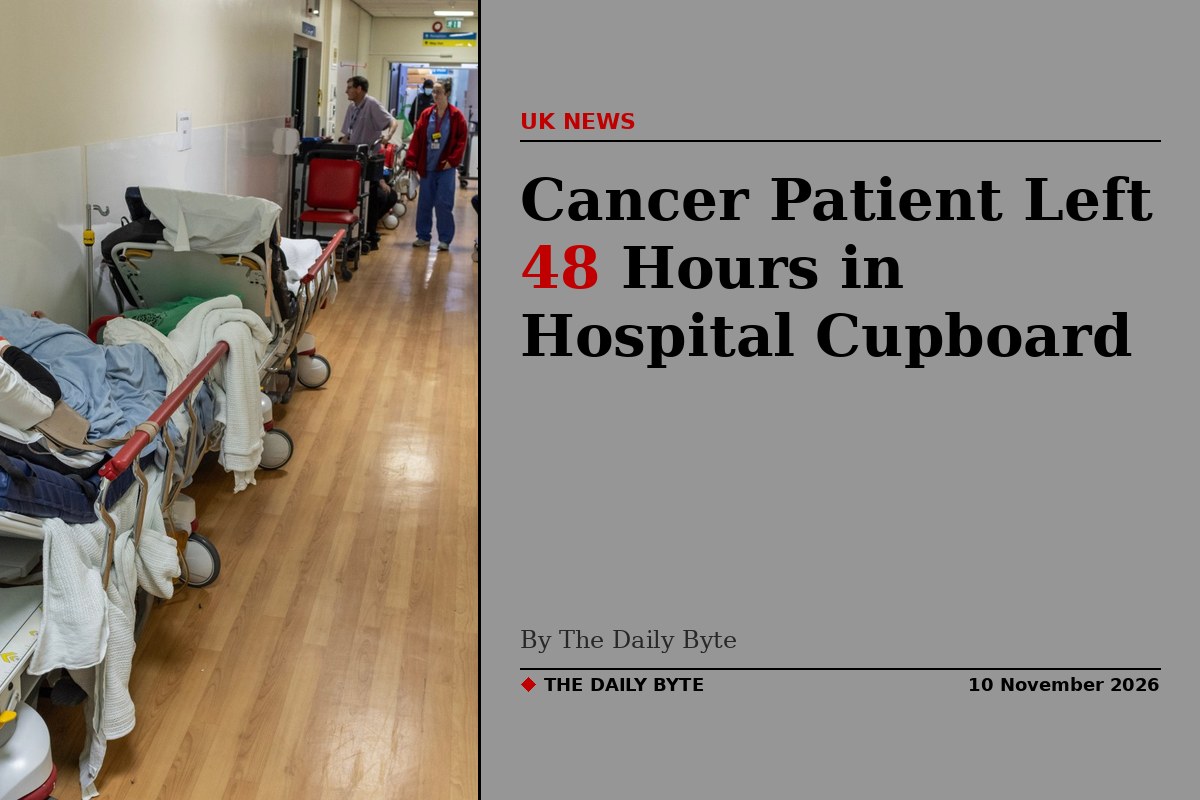
An 81-year-old woman with terminal cancer spent 48 hours sleeping on chairs in a hospital storeroom because no bed was available, in a case that has put the spotlight back on so-called corridor care in the NHS. Pam Smith, who has stage four cancer, went to the Royal Gwent Hospital in South Wales with a fever following chemotherapy treatment and was left in a room used for storage for two days.
Smith told ITV News about her experience in an investigation broadcast on 9 November. Her case was reported alongside research by ITV News and the Royal College of Emergency Medicine, which found that almost one in five patients attending accident and emergency departments across the UK were experiencing corridor care, being treated in corridors, cupboards, waiting areas or even the back of ambulances.
Corridor care means patients are looked after in hallways and other overflow spaces because no ward bed is free. It has become a familiar feature of emergency care in the UK, even though national guidance from NHS England states that treating patients in such spaces is not acceptable.
What the research found
The scale of the problem was measured in a study by the Royal College of Emergency Medicine's research network, which looked at 165 type 1 emergency departments across the UK. Across five snapshots taken in March 2025, researchers counted 56,881 patients present in the participating departments. Of those, 10,042 patients, or 18 per cent, were being cared for in escalation areas, spaces not routinely used for clinical care.
The study, published in the Emergency Medicine Journal, found that almost all emergency departments in the UK were routinely using escalation areas, and that the practice had become normal rather than exceptional. The researchers said their figures were likely to understate the true scale, because departments under the most pressure were among those that did not take part.
Children are affected too. Separate data published by the Royal College of Emergency Medicine in October 2026 showed that around one in seven children admitted to hospital through accident and emergency experienced corridor care.
No sign of rapid improvement
Leading doctors have told ITV News there is no evidence of a rapid reduction in corridor care across the UK, despite repeated promises to tackle it. In response to the investigation, the UK government said it was accelerating plans to end corridor care, without setting out a new timetable in its response.
Health leaders have warned that the problem is at its worst as winter approaches, when emergency departments face rising demand from flu and other seasonal illness on top of already full wards. Hospitals say the root of the problem is a shortage of beds to move patients into, which leaves people waiting in emergency departments for hours or even days.
Why corridor care matters
Doctors say corridor care is not simply uncomfortable. Patients cared for in hallways and storerooms have less privacy, less access to monitoring equipment and less dignity, and staff find it harder to observe them properly. Older patients and those who are seriously ill, like Smith, are among the most vulnerable to harm when care is delivered in spaces never designed for it.
Smith's case, and the figures behind it, show a problem that has been documented for years but has not gone away. The question now is whether the government's accelerated plans will translate into fewer patients spending nights on trolleys and chairs, or whether corridor care remains a routine part of emergency treatment this winter.