Carney Defends 'Brutal' Pace of Major Projects Bill
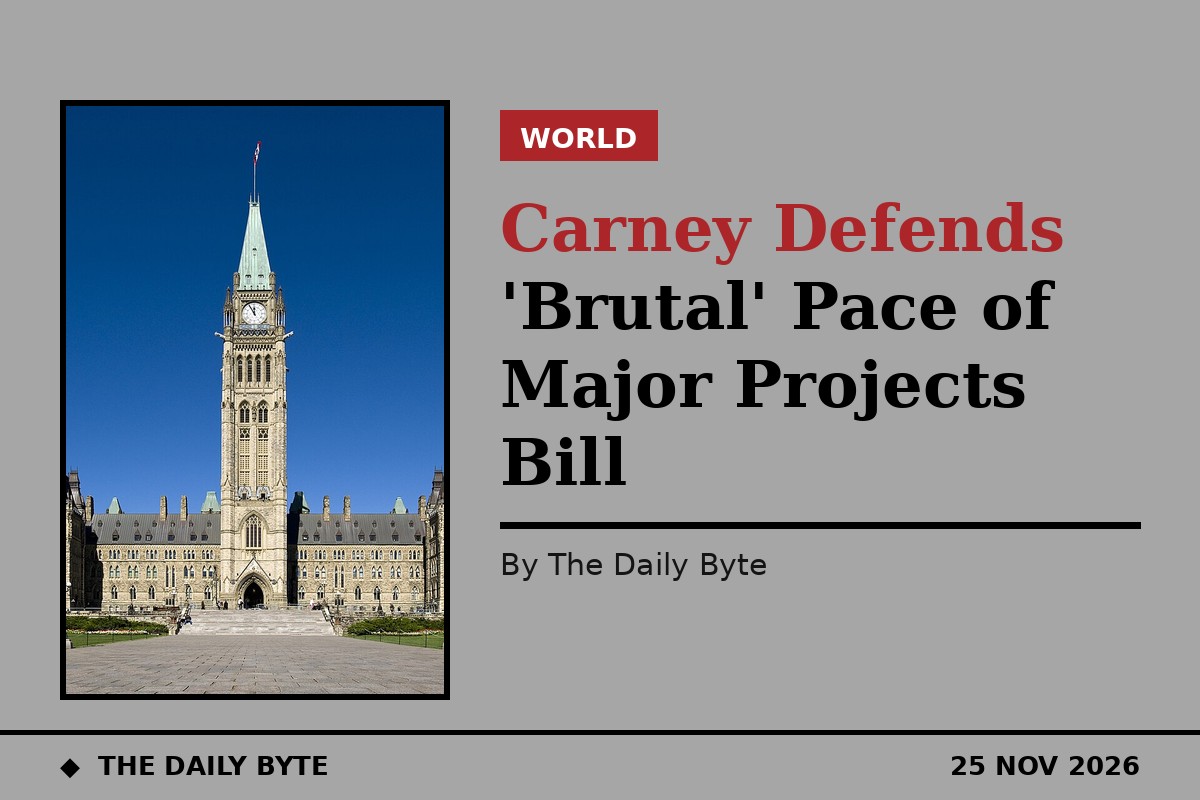
Prime Minister Mark Carney has defended the pace at which his government's major projects bill moved through a House of Commons committee, after opposition MPs called the sittings brutal.
The committee spent more than 100 hours debating Bill C-39 over seven days before wrapping up on Monday, with MPs, staff and witnesses sitting until almost midnight most days and working 15-hour days at the weekend. The Liberals used their majority to accept only minor amendments, voting down more substantial changes sought by labour and environmental groups.
Speaking to reporters after the weekly Liberal caucus meeting on Wednesday, Carney said the pace of the committee's work was not excessive and saluted the members for their efforts. Committee chair James Maloney, who also chairs the Liberal caucus, said he had never seen sittings run that way before.
What the bill would do
Bill C-39, the Building Canada Strong Act, would fast-track approvals for major projects, cut their review times and let cabinet designate zones of national interest for pre-approved projects. It would also make significant changes to collective bargaining rules in federally regulated sectors such as rail, airlines and ports.
The bill passed second reading in the House on 8 October by 296 votes to 26, and the committee voted on Monday to send it back to the House with amendments. It still needs report stage and third reading, but could become law before the December holiday break.
The legislation builds on Bill C-5, passed this year, which allowed cabinet to list specific projects as being in the national interest so they could be reviewed faster. Critics, including labour groups, say the new bill limits the right to strike, while the government says it will not lower environmental assessment standards or its duties to Indigenous peoples.


