CDC Lists Four Drug-Resistant Threats as Urgent
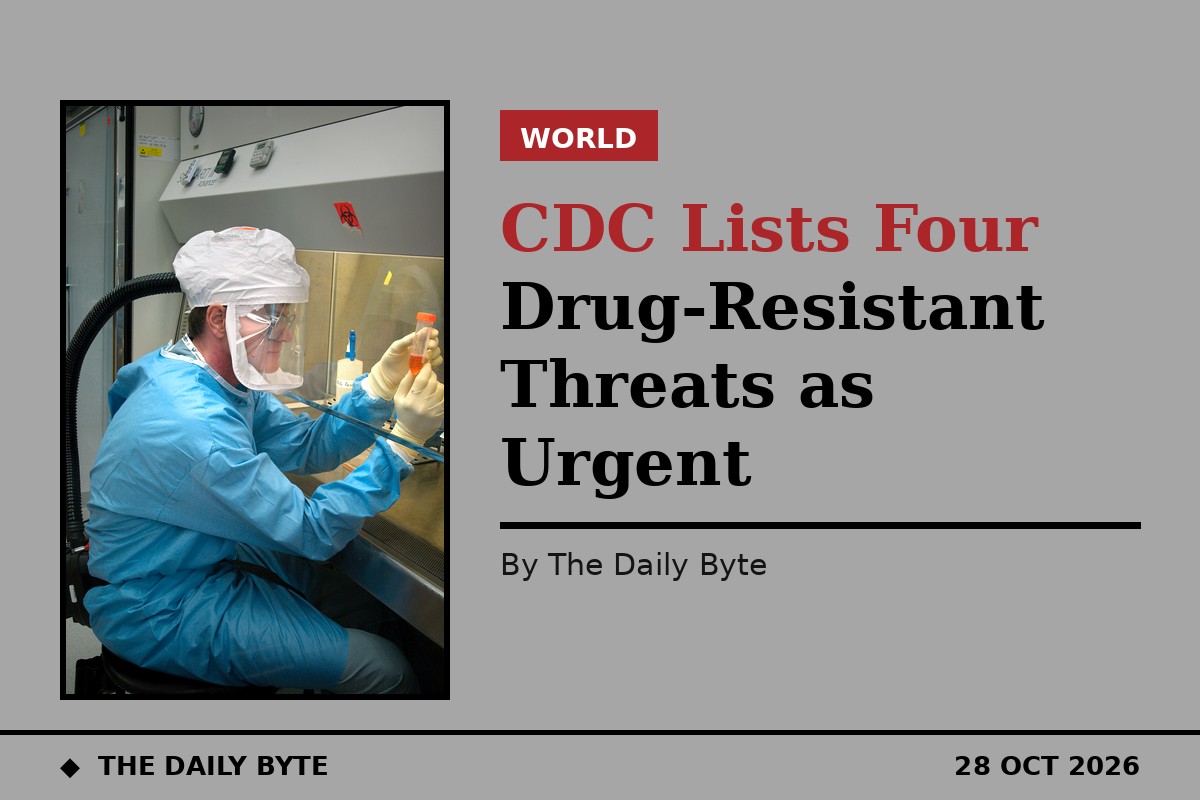
The US Centers for Disease Control and Prevention's 2026 Antimicrobial Resistance Threats Report, published on 27 October 2026 and reported on 28 October, assesses 19 drug-resistant bacterial and fungal pathogens in the United States. Together they result in an estimated 9.7 million infections and 50,800 deaths each year in the US.
Four urgent threats
The threats are categorised as four urgent, 13 serious and two concerning, plus a watch list of six additional pathogens. The four urgent threats are Candida auris, carbapenem-resistant Acinetobacter, carbapenem-resistant Enterobacterales, and drug-resistant Neisseria gonorrhoeae.
What changed in this report
Infections commonly associated with health care accounted for more than 42,000 of the deaths, according to CDC reporting summarised in coverage. The CDC cautioned against direct comparison with previous reports because methodologies and data sources were updated. Clostridioides difficile moved from urgent to serious, due in part to successful infection-prevention actions, especially in health-care settings.
Drug-resistant Neisseria meningitidis was added as a serious threat, while three pathogens, drug-resistant dermatophytes, drug-resistant Haemophilus influenzae and nontuberculous mycobacteria, were added to the watch list. The CDC recorded 4,523 Candida auris cases in the US in 2023, with cases increasing by more than 50% between 2022 and 2023. CDC Director Dr Erica Schwartz said antimicrobial resistance threatens modern medicine and puts millions of Americans at risk every year.
Sources: Becker's Hospital Review and HealthAndMe.