Family courts blueprint puts children first in cases
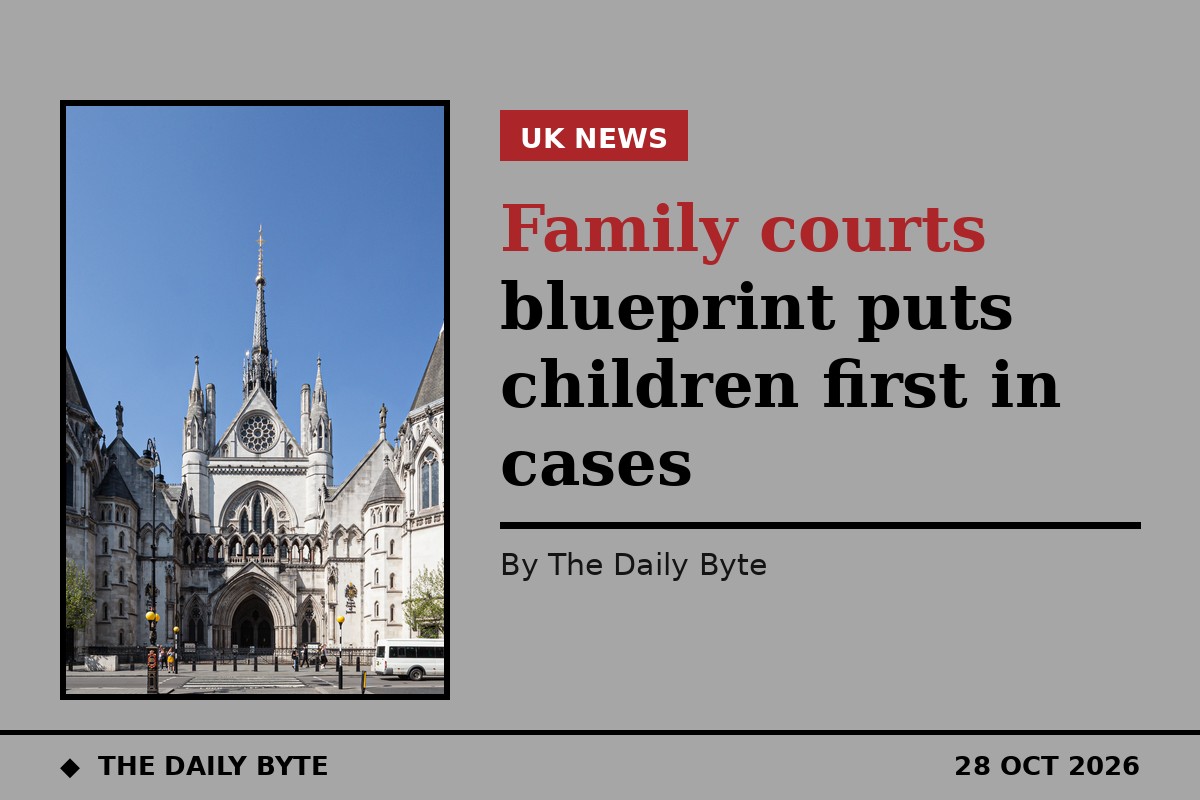
The government has published a blueprint for Child Focused Courts, the reformed model for private family-law cases in England and Wales, with a delivery update issued on 28 October. The model, formerly known as the Private Law Pathfinder, is intended to replace the existing child arrangements process in stages, reaching every family court area by March 2029. Its central idea is that courts should build a fuller picture of a child's life, wishes and safety concerns early in a case, rather than letting key information emerge gradually across a succession of hearings.
How the new process is meant to work
At the heart of the model is a Child Impact Report, usually prepared by Cafcass or Cafcass Cymru, or by a local authority in some circumstances. The report brings together the child's circumstances, their wishes and feelings, any safeguarding concerns, and the impact of parental conflict or other harm, drawing where appropriate on information from police and children's services. The aim is to help the court identify the safest next step sooner, reduce duplication, and cut the number of hearings families must attend.
What the early results show
The government says the approach is already operating in ten of the 43 family court areas, and told Parliament that cases there are being resolved up to twice as fast as the national average, with outstanding caseloads down by up to half. Cumbria is among the next areas to switch, with the new approach applying to applications about children issued there from 17 November 2026. For separating parents, the practical change is timing: safeguarding questions and the child's own perspective are meant to be considered at the outset, not added late in proceedings.
Rollout in stages means families in different areas will encounter different processes for some time, and the blueprint's test will be whether the early gains hold as the model spreads nationally. If they do, children could spend less time in uncertainty while parents are in dispute. If they do not, the reform will face the same question that prompted it: whether the family court system can resolve private-law cases both quickly and safely.
Sources: GOV.UK: Child Focused Courts target operating model and UK Parliament written questions.