Childhood criminal records reform offers second chance
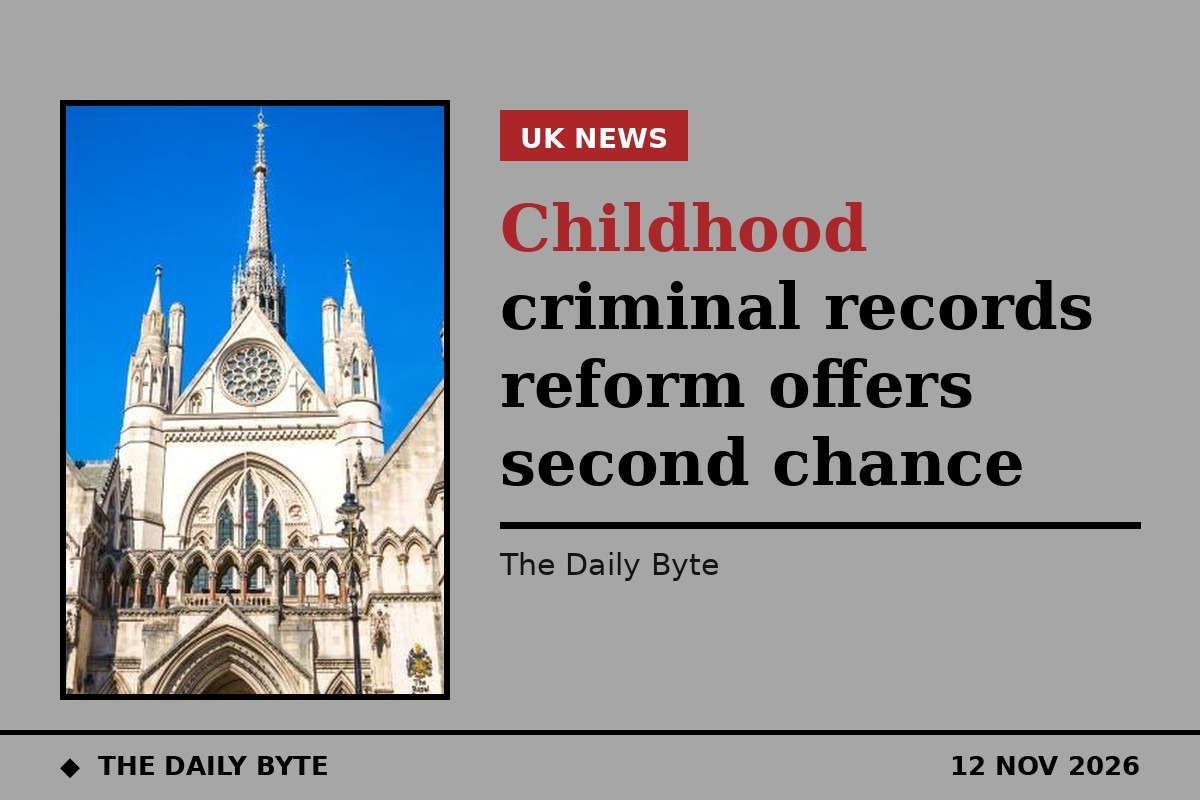
People who committed crimes as children but have since turned their lives around could be given a fresh start under government plans unveiled on Thursday 12 November 2026.
The Ministry of Justice has launched a consultation on reforming the childhood criminal records disclosure system in England and Wales, so that a conviction from childhood does not follow someone into adulthood and shut them out of jobs and education for life.
The proposals deliver on a commitment in the Government's Youth Justice White Paper, "Cutting Youth Crime. Changing Young Lives", published in May 2026. The consultation runs until 24 December 2026.
What the Government is proposing
At present, many criminal record disclosure rules do not distinguish between offences committed by adults and by children, even though young people have a greater capacity to change. That means someone convicted of robbery at 16 who has never offended again can still find their record holding them back from certain jobs years later.
The consultation proposes five changes: creating a narrower list of "specified offences" that applies only to childhood convictions; ending lifelong disclosure on standard and enhanced checks for childhood convictions that resulted in a custodial sentence of two years or less; reducing or removing the rehabilitation period for childhood convictions that resulted in a fine; removing automatic disclosure of any childhood out-of-court resolution; and removing the "drag-on" rule for childhood convictions.
Under the proposals, five offences would be removed from the list of crimes that must be disclosed for life: affray, violent disorder, supplying a controlled drug to a child, robbery and assault occasioning actual bodily harm. People convicted of those offences as children would instead have to disclose them for five and a half years if they received a non-custodial sentence, or for 11 years if they received a custodial sentence of two years or less. More than 900 offences currently require lifelong disclosure on standard and enhanced DBS checks.
Safeguards stay in place
Ministers stressed that public protection remains paramount. The reforms would not apply to people with convictions for serious violent offences, such as violent and sexual crimes, and the Disclosure and Barring Service barring scheme — which prevents people who pose a risk from working with children or vulnerable adults — would not change.
Satvir Kaur, Minister for Safeguarding and Violence Against Women and Girls, said: "There are some convictions, particularly for serious violent and sexual offences, that will always need to be disclosed. We are going further to strengthen these safeguards. However, children who have committed less serious offences should not be defined by their mistakes forever and should have the opportunity to rebuild their lives."
Jake Richards, Minister for Youth Justice, Sentencing and Technology, said: "Children who commit crimes must face the consequences. But those who turn their lives around shouldn't be condemned to carry their mistakes forever. Too often, a childhood criminal record can close doors to jobs, education and the chance to build a better future."
Why ministers say change is needed
To mark the consultation's launch, Mr Richards convened a roundtable with leading businesses, including KPMG, Timpson and Greene King, to hear firsthand how childhood criminal records can create barriers to employment and to discuss how reform could help people into work.
Penelope Gibbs, director of Transform Justice, said the current system means a child who commits an offence aged 12 and receives a community sentence will often still have to disclose that offence thirty years later, even after a crime-free life. "The Government's proposals will help rehabilitate a generation of children, and enable them to engage fully in work and society," she said.
The Government points to evidence that people who find work after leaving prison are far less likely to reoffend, and that more than 90% of businesses that employ prison leavers say they are motivated, dependable and have strong attendance records. The Milburn review has also noted that young men who are not in education, employment or training are five times more likely to hold a criminal record.
What happens next
The announcement comes ahead of Alan Milburn's review into the record number of young people not in education, employment or training, which is due to conclude later this month. The Government's wider action to tackle youth unemployment includes a £2.5 billion package that will support almost one million young people and create 500,000 opportunities.
Any reforms will require legislation when parliamentary time allows. Responses to the consultation can be sent to the Ministry of Justice by 24 December 2026.
Read the Government announcement: New proposals to stop childhood crimes closing doors for life. The full consultation document is on GOV.UK.