Chile fuel crisis hits Kast as approval falls to 24%
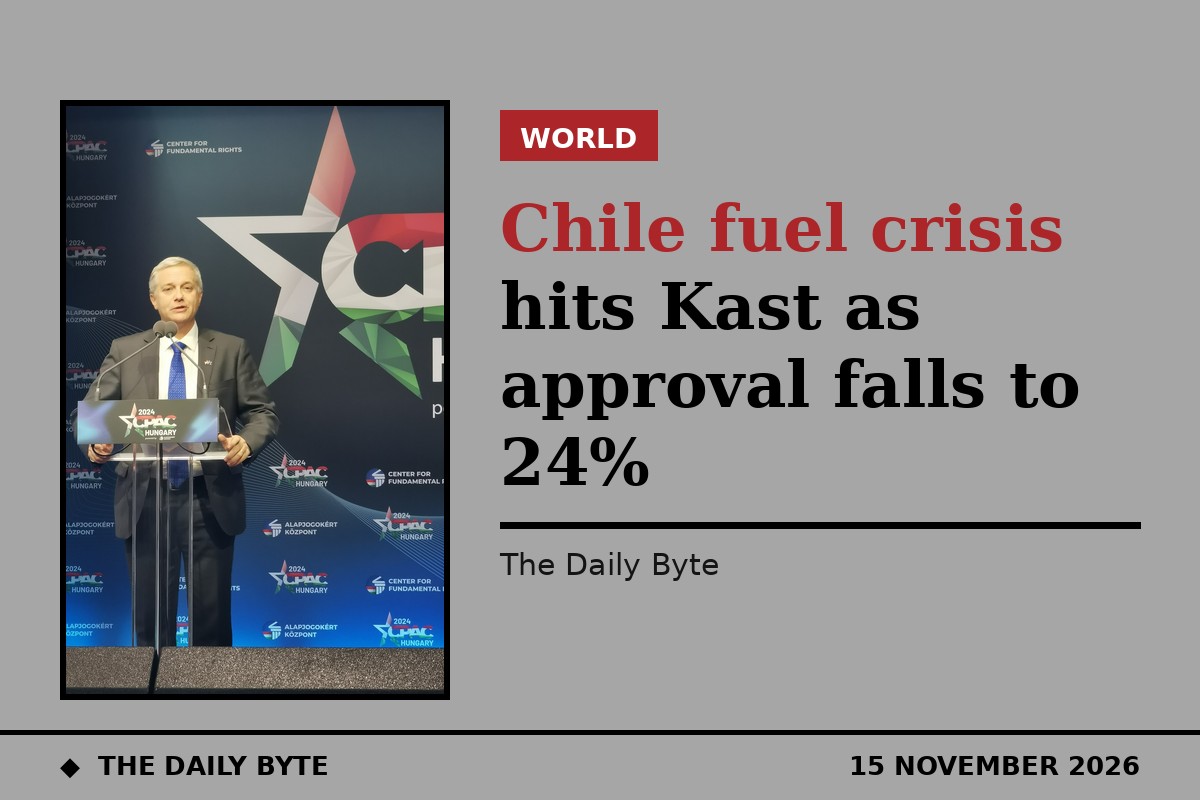
Chile's President Jose Antonio Kast is under mounting pressure eight months into his presidency, with his approval rating falling to 24% as a fuel crisis and a nationwide truckers' strike shook the country this week.
Polling cited by NPR on 14 November put Kast's approval at 24%, a sharp fall for a president who won a landslide election victory in December 2025 and took office on 11 March 2026. The fuel crisis has become the sharpest test yet of his government, which campaigned on restoring order and cutting the size of the state.
How the fuel crisis began
The trouble built up over the summer. In July, Kast's government chose not to use a state mechanism designed to cushion fuel price rises, even as global oil prices climbed during the war between the United States and Israel and Iran. Prices at the pump shot up overnight, and motorists joined long queues at petrol stations to fill their tanks before the increases took effect.
The government had also loosened Chile's fuel price stabilisation mechanism, known as MEPCO, in March, reducing the cushion it provides against price rises. By November, fuel prices had risen for a sixth consecutive time since late July, with a scheduled increase of about 40 pesos per litre triggering the strike.
Truckers blockade highways
Chile's truckers began an indefinite strike and partial highway blockades on Tuesday 10 November, after talks with the government ended without agreement. The country's powerful trucking unions blocked two major highways in an effort to force the government to act on fuel costs.
The main trucking organisations suspended their protests after an agreement announced on Thursday 12 November. Under the deal, the government will reverse planned fuel price rises of 39 pesos per litre for petrol and 42 pesos per litre for diesel, and cut diesel by a further 100 pesos per litre. Fuel price rises will also be frozen through March 2027. The measures need legislation, which has been submitted to the Chamber of Deputies.
Some independent groups kept up roadblocks after the deal, and the No+Tag movement said it would continue its actions in Santiago, arguing the agreement treated groups unequally. The government had originally proposed a shorter, 91-day freeze, but the truckers demanded four months or more.
Wider anger over the cost of living
The dispute has fed broader public anger over the cost of living. NPR reported that protests have also been fuelled by revelations that the administration signed decrees reducing the sentences of 56 prisoners, including people convicted of child rape and human rights violations from the dictatorship era, and by proposed cuts to education, science and social programmes in the government's budget now moving through Congress.
Kast acknowledged the sentence reductions were an error but continued to support the undersecretary who signed the decrees, according to NPR. His government now faces the task of getting the fuel freeze bill through Congress while its budget is debated line by line.
Kast, a 59-year-old lawyer and founder of the Republican Party, won the presidency with 58% of the vote in the December 2025 runoff, defeating the left-wing candidate Jeannette Jara, who took 42%. He campaigned on cracking down on crime and illegal immigration. The fuel crisis is the first major domestic test of a presidency that began with a large mandate but now faces falling public support.
Sources: NPR and DatamarNews.


