Chile and Japan Sign Defence and Minerals Pact
Chile and Japan have signed their first defence agreement at ministerial level and pledged closer cooperation on critical minerals, during a day of talks in Tokyo on Friday, 20 November. Chilean Defence Minister Fernando Barros and his Japanese counterpart, Shinjiro Koizumi, signed a letter of intent on defence cooperation at the Ministry of Defense headquarters in Tokyo, in the first meeting of its kind between the two countries.
The letter of intent sets out the direction for deeper cooperation between the two countries' maritime services, education and personnel exchanges, humanitarian assistance and disaster relief, and defence equipment and technology. It follows a memorandum on defence cooperation signed in August 2025 and the opening of a Chilean defence attaché office in Tokyo in January 2026.
Naval cooperation at the centre
The two ministers welcomed progress between their navies, including reciprocal port calls, joint exercises and the first navy-to-navy staff talks between the Chilean Navy and the Japan Maritime Self-Defense Force. Koizumi invited Chilean officer cadets to Japan's National Defense Academy international cadets conference for the first time, an offer Barros accepted, and the two sides agreed Chile would take part in a Japanese disaster-relief field training exercise.
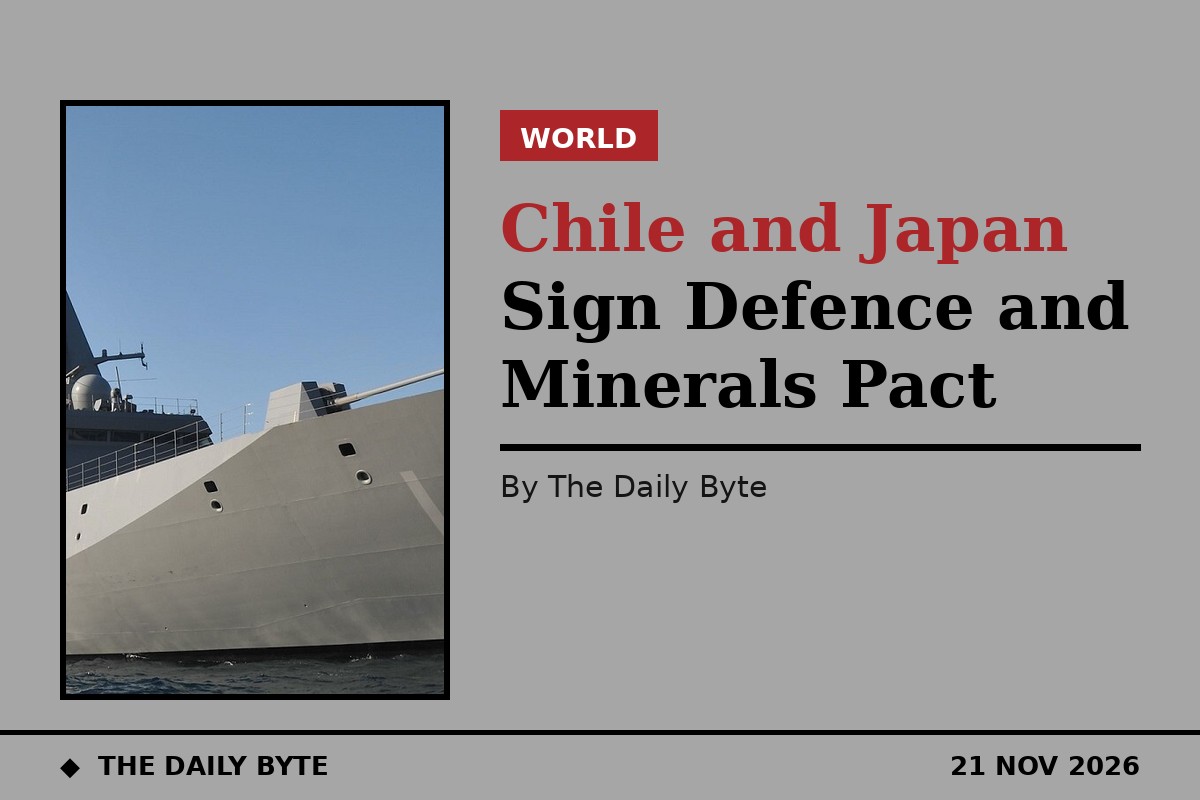
Reports in Chile say Tokyo has also offered three destroyers to the Chilean Navy, with the Murasame, Takanami and Akizuki classes under consideration. No vessel class, price or delivery schedule has been officially confirmed. The reported offer would act as a bridge while Chile builds its own next-generation frigates, with domestic production expected to reach the fleet in the 2030s, and while its flagship frigate nears the end of its service life.
Kast and Takaichi talk critical minerals
The defence talks took place alongside a summit between Chilean President José Antonio Kast and Japanese Prime Minister Sanae Takaichi. Kast said Chile would seek to strengthen cooperation with Japan on critical minerals to ensure resilience and stability in supply chains. Chile is the world's largest copper producer and its second-largest lithium producer, and both metals are central to electric vehicles and battery storage.
The two leaders cited a project at the El Teniente copper mine, run by state company Codelco, where a next-generation photonics communication network developed in Japan has been under testing since August. They also signed a memorandum of cooperation on information and communication technologies and backed a free international economic order.
A wider Pacific pivot
Barros travelled to Japan after a stop in Australia, where he signed a memorandum of understanding on defence cooperation with Deputy Prime Minister Richard Marles. The two defence ministers also discussed the potential for cooperation among Japan, Chile and Australia, and Barros visited the Hiroshima Peace Memorial during his stay. Next year marks the 130th anniversary of diplomatic relations between Japan and Chile, a milestone both sides said they wanted to use to deepen the partnership further.


