Chile's Kast under pressure as fuel protests grow
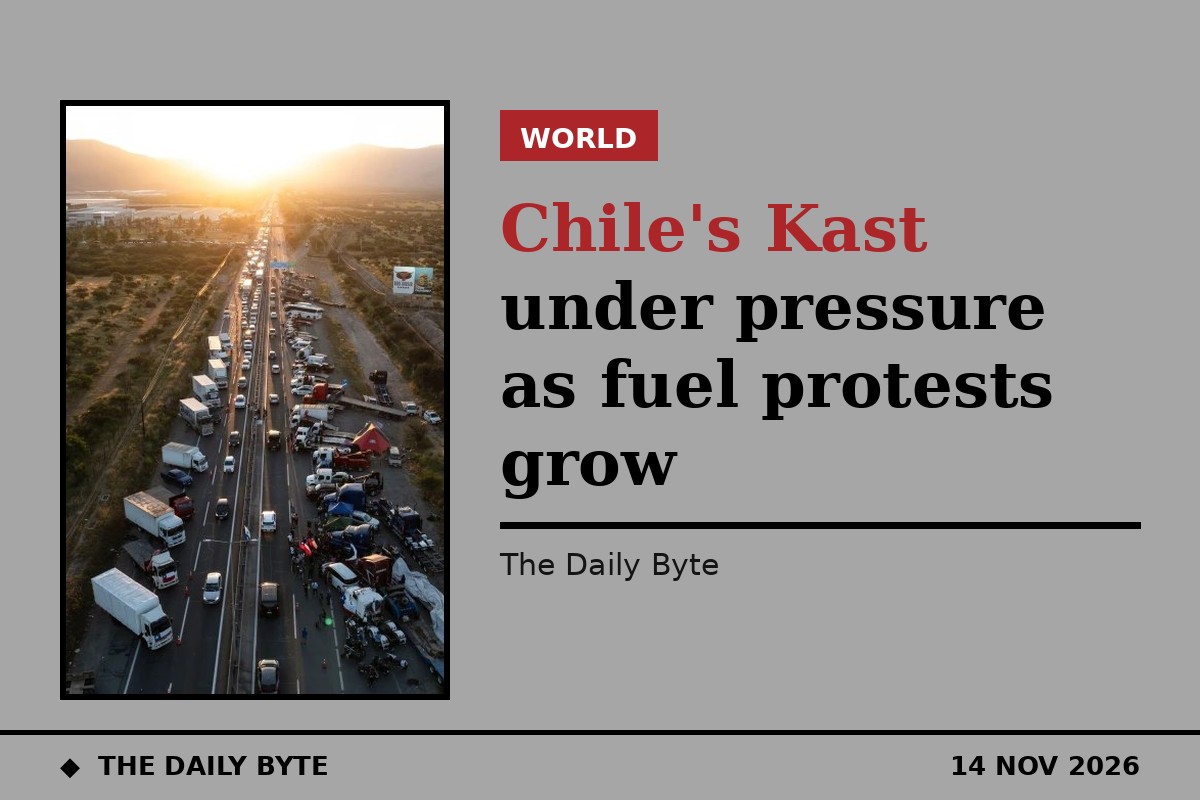
Chile’s ultraconservative president, José Antonio Kast, is under mounting pressure after just eight months in power, as protests over fuel prices and the cost of living spread and his approval rating falls to 24%. A national truckers’ strike that blockaded major highways this week ended only after his government backed down and sent a bill to Congress to reverse planned fuel price rises.
On Friday evening, protesters marched through Santiago chanting and waving flags, while heavily armed police blocked streets and fired water cannons at the crowds. The unrest follows a week in which truckers’ unions cut off two major highways, and it has turned a dispute over diesel into the biggest test yet of Kast’s presidency.
Truckers end strike after government climbdown
Truckers began an indefinite strike at midnight on Tuesday 10 November, partially blocking Route 5, the country’s main north–south highway, as well as Route 68 between Santiago and Valparaíso, and access to ports including Iquique in the north. The action was called by the Fuerza del Norte transport confederation and the No+TAG movement, which campaigns against motorway concession charges, over rising fuel prices, higher operating costs and freight rates that had not been adjusted.
After two days of negotiations at La Moneda Palace, Interior Minister Claudio Alvarado announced an agreement on Thursday 12 November with the main freight organisations. Under the deal, the government will reverse fuel price rises of 39 Chilean pesos per litre for petrol and 42 pesos per litre for diesel that took effect on Thursday, and cut diesel by a further 100 pesos per litre. The measures need approval from the Chamber of Deputies, and the bill is expected to be approved this month, according to NPR.
By Friday afternoon the government announced the strike was officially over, although some independent groups kept roadblocks in place for longer, and disagreements persisted in Temuco in the south, Datamar News reported. The dispute came at a delicate moment for exporters: Chile’s cherry season is just beginning, and fruit, salmon and wine shipments were at risk while port access was disrupted.
The sentence-cut decrees
Much of the recent anger, however, goes beyond fuel. Last month it emerged that Kast’s government had signed decrees cutting the sentences of 56 prisoners whose crimes ranged from the rape of children to dictatorship-era human rights violations. Kast has since admitted that this was an “error”, but he has stood by the undersecretary who signed the decrees.
At Friday’s march in Santiago, 30-year-old architect Simón Echavarría told NPR: “We want to protest against the measures that have set us back on environmental issues, on human rights, even reducing the sentences of pedophiles — they are implementing things that nobody asked for.”
Another marcher, 30-year-old veterinarian Patricia Pereira, said she was concerned about cuts to science funding, but that her discontent ran deeper. “Here in Chile, it was a hard-won victory for children to have free education, achieved through protests, and now even that’s also being called into question,” she said.
Fuel prices and the cost of living
Beneath the more headline-grabbing controversies is simmering discontent over affordability. In July, Kast’s government chose not to apply an anti-inflation tool available to the Chilean state to ease the rise in fuel prices brought about by the US-Israeli war with Iran. Prices shot up overnight and motorists joined long queues at petrol stations to fill their tanks before the rise came into effect.
Kast won the presidency in December 2025 by focusing on two issues whipped up in the national media — illegal immigration and public security — while avoiding mention of his hardline stances on social matters. He spent his career railing against progressive issues, reproductive rights and welfare policies from the fringes of right-wing politics. Now, with polls putting his approval at just 24%, he has floundered on the agenda he campaigned on, while the cost of living dominates public anger.
His budget proposal, now making its way through Congress, seeks cuts to education, culture, science and a host of social programmes — the same areas protesters say are already under threat.
A wider pattern across the Americas
Kast is not alone. Politicians across the Americas who aligned themselves enthusiastically with President Donald Trump are facing similar headwinds, as rising fuel prices and the cost of everyday goods fuel public discontent. In Argentina, Javier Milei faces re-election in less than a year, with 60% of the country disapproving of his leadership amid spiralling inflation. In Peru, President Keiko Fujimori faces growing discontent, with 53% disapproving of her government, according to a recent Ipsos poll.
Protests are likely to grow in Santiago if the government fails to address the rising cost of living. So far, Kast has shown little sign of doing so.


