Chile Truckers Strike Blocks Highways Over Diesel Prices
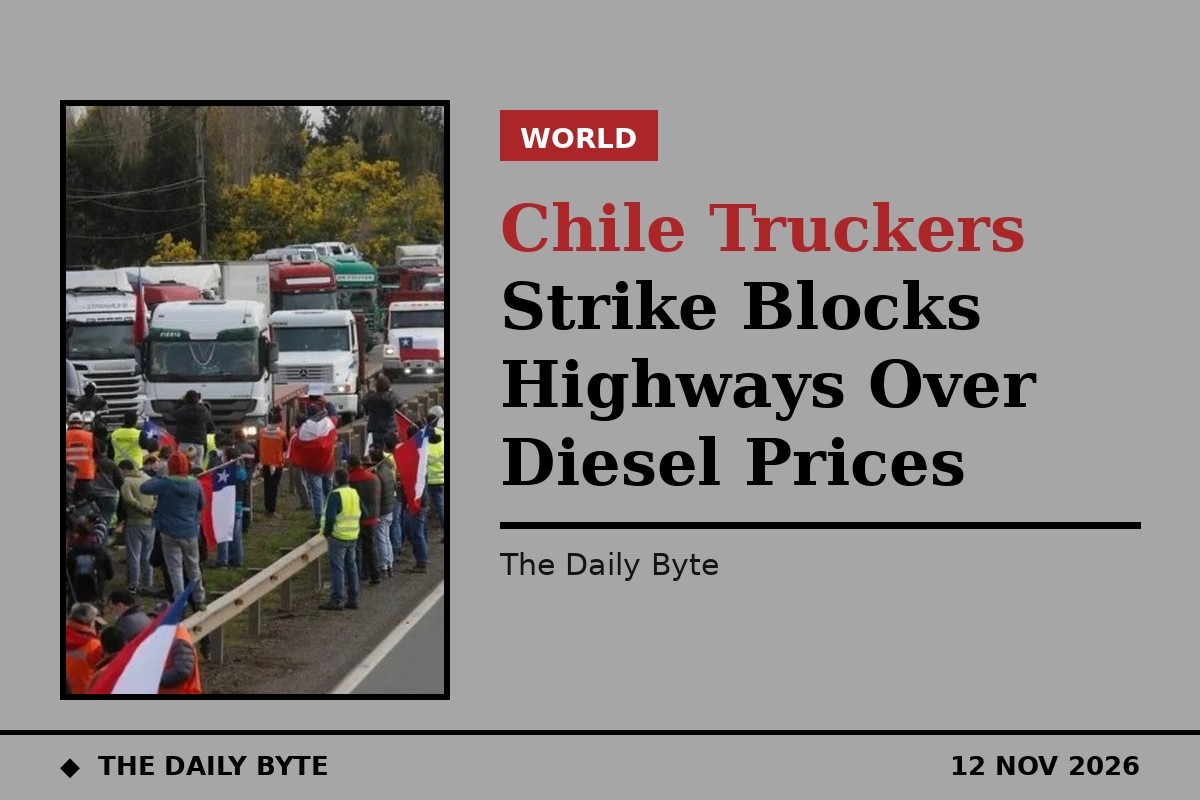
Truck drivers across Chile have blocked highways and staged an indefinite national strike over surging diesel prices, disrupting traffic on the country's main north-south route and access to ports, with no agreement yet reached with the government.
The stoppage began at midnight on Tuesday, 10 November 2026, after truckers started cutting off Route 5 North and other northern highways the night before. Drivers formed convoys that closed lanes on major roads from Tarapaca in the far north to the Santiago metropolitan area and regions further south, including Maule, Biobio and La Araucania.
The action was called by the Confederacion de Transportistas Fuerza del Norte and the No+TAG movement, which expected around 4,000 truckers to take part. The sector's two largest associations declined to join, but the blockades still brought traffic to a standstill on key routes and disrupted access to ports, including Iquique, where a cruise ship cancelled a planned stop because of the protests.
Diesel up 74% since March, drivers say
The truckers are demanding government measures to contain fuel prices, changes to MEPCO, Chile's fuel-price stabilisation mechanism, and changes to the tax burden on drivers. They also want lower toll and TAG costs, the electronic system used to pay motorway tolls.
Industry groups say the average price of diesel has risen 74% since March, driven up by the war in Iran and volatility in global energy markets. Drivers say the increases have wiped out their earnings. One lorry driver who took part in a protest near Santiago on Tuesday said he was making no profit and sometimes had to use his own money to cover clients' expenses.
The government of President Jose Antonio Kast responded on 9 November with a package of measures. It said the fuel price change due on Thursday, 12 November, would be limited to 40 pesos per litre for petrol and diesel, and it plans to send a bill to Congress that would prevent weekly fuel price increases of more than 20 pesos per litre over the next 90 days. The bill needs congressional approval before it can take effect.
Talks fail as strike continues into third day
Talks between government officials and protest leaders on Tuesday failed to reach a resolution, and a further meeting was expected on Wednesday. Economy Minister Daniel Mas called for further dialogue but warned that the government would eventually have to clear the highways.
The strike is also threatening Chile's export industries. The salmon industry has warned that the nationwide stoppage could disrupt processing operations and exports as road blockades affect freight movements and access to ports. SalmonChile president Patricio Melero said interruptions to transport could affect processing plants, essential services, staff movements and commercial deliveries, although no confirmed delays to salmon export shipments had yet been established.
Hauliers in Puerto Montt, the centre of Chile's salmon industry, have declined to join the strike, and on Chiloe, where much of the country's salmon production is concentrated, truck operators have also refused to take part after producers agreed to increase freight payments to reflect higher fuel costs.
The Kast government has faced public discontent over fuel prices for months. The truckers say the measures announced so far do not go far enough, because they leave the specific fuel tax and the structure of MEPCO untouched. Until the two sides bridge that gap, the blockades look set to continue, with copper supply chains in the mining north and export routes in the south both exposed.
Sources: Reuters, Salmon Business