Chile Wine Exports Fall 8.8% in First Nine Months
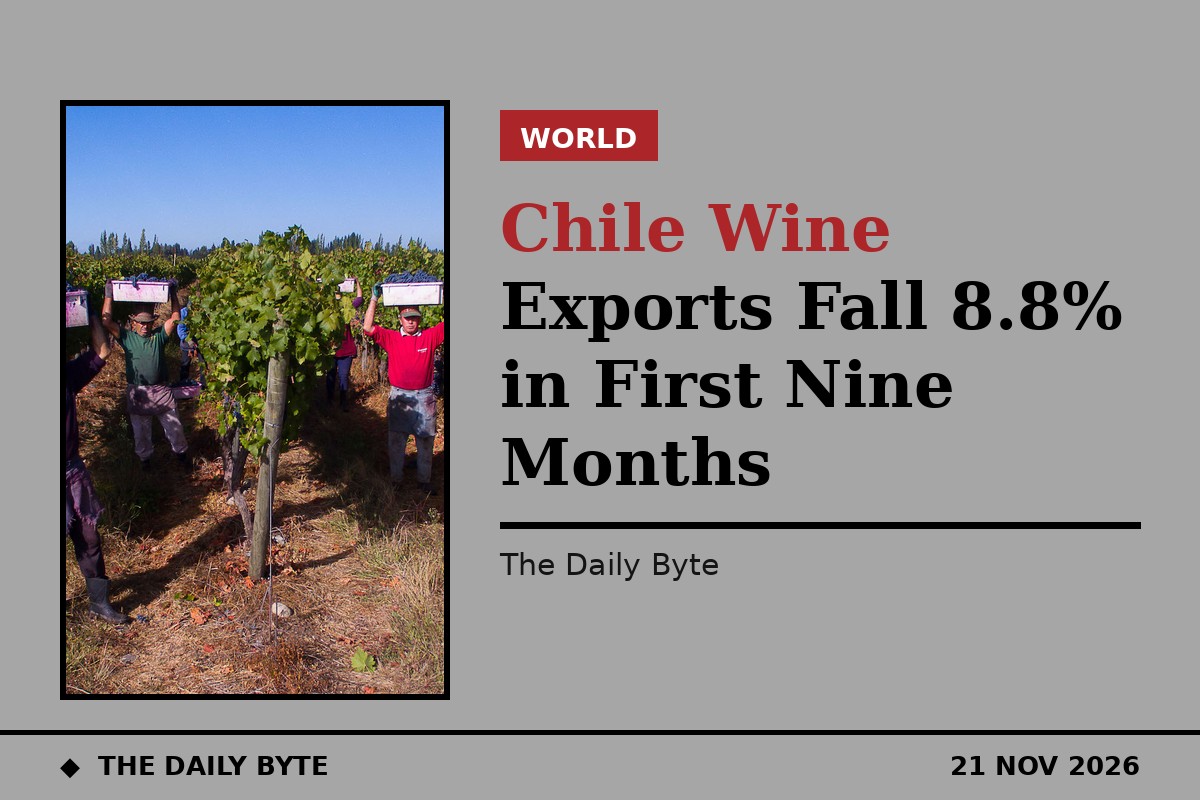
Chile’s wine exports fell 8.8% in the first nine months of 2026, new industry figures show, as weak global demand and United States tariffs squeeze one of the world’s biggest wine exporters. September shipments rose 0.3%, offering a tentative sign that the decline may be levelling off, but export revenue for the period still fell to $1.07 billion.
The figures, reported by the wine trade site Vinetur, cap a difficult year for Chilean producers. First-half export revenue was the weakest since 2021, falling 15.3% to €568.48 million as lower shipments of packaged wine cut earnings across most major markets.
The United States is the biggest problem
The sharpest losses have come in the United States, long one of Chile’s most important markets. Chilean wine shipments to the US fell 33% by value in the first half of 2026, and Chile’s share of US wine imports slipped from 6.1% to 5.4%.
The fall follows a sharp change in tariffs. Chilean wine historically entered the United States duty-free under the two countries’ free trade agreement. A temporary 10% surcharge applied from April 2025, and a 12.5% duty took effect on 24 July 2026, replacing it. Industry figures cited by Emol and Bloomberg put the loss in the United States at about half of Chile’s net decline in bottled wine export revenue.
Bottled wine exports, the backbone of the trade, fell 5.3% in volume and 5.2% in value through September. Producers have responded by restructuring and refocusing on new markets, with some vineyards selling land and cutting back grape purchases as demand fades.
One producer shows the strain
Viña Concha y Toro, Latin America’s largest winery, illustrates the pressure. Its United States sales fell 13.3% in volume and 11.8% in US dollars over the first nine months, even though shipments to American distributors returned to growth in the third quarter, rising 2.6% in volume and 5.3% in dollars. Net income for the nine months fell 7.7% to 48,917 million Chilean pesos.
The company said its domestic market was steadier: wine sales in Chile grew 1.0% in the third quarter and were flat over the nine months. Its best-selling brands, including Casillero del Diablo and Cono Sur Bicicleta, grew 25.6% in volume together.
A global squeeze
Chile’s troubles are part of a wider downturn. Global wine output stayed near record lows in 2026, at about 225 million hectolitres, or roughly 30 billion standard bottles, according to the International Organisation of Vine and Wine. It was the fourth straight year of below-average production, as heat, drought and frost cut yields, while winemakers uprooted vines in France, Spain and South America to reduce excess supply.
World consumption fell 2.7% to 208 million hectolitres last year, mainly because of economic strain, and global trade fell amid US tariff uncertainty. The United States is heading for a third weak year, with output down 5% from 2025.
There are small signs of resilience. Premium Chilean wines priced between $40 and $50 a case grew 4 to 5% in volume and value over the past year, even as cheaper wines fell. And September’s 0.3% rise in shipments, after months of decline, suggests the worst of the slide may be passing. But with tariffs still in place and demand soft, Chilean winemakers face a long road back to growth.


